Insurance guide
Is underpinning covered by insurance?
Find out whether buildings insurance ground movement cover applies to your home. Read what a standard policy includes, what the subsidence claim excess amount might be, and when a specialist report helps.
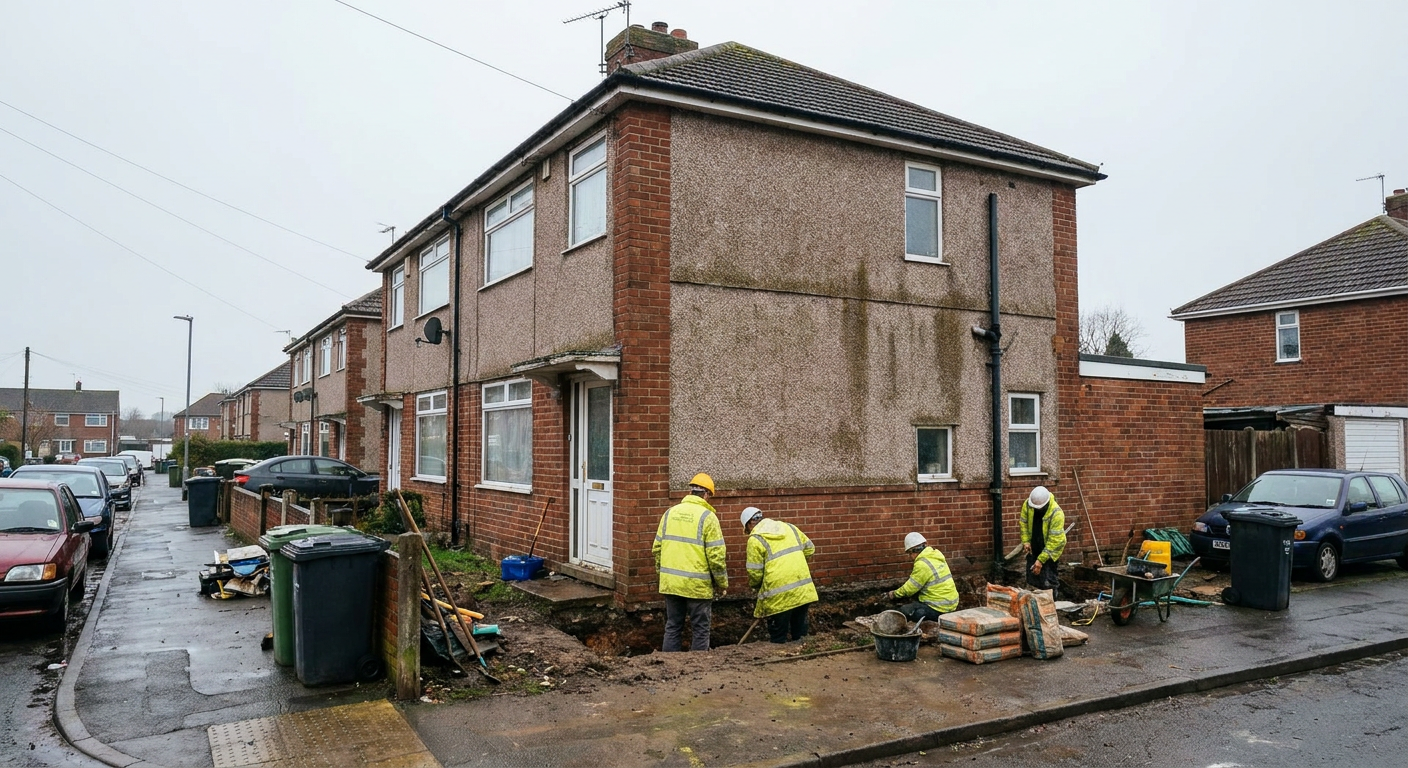
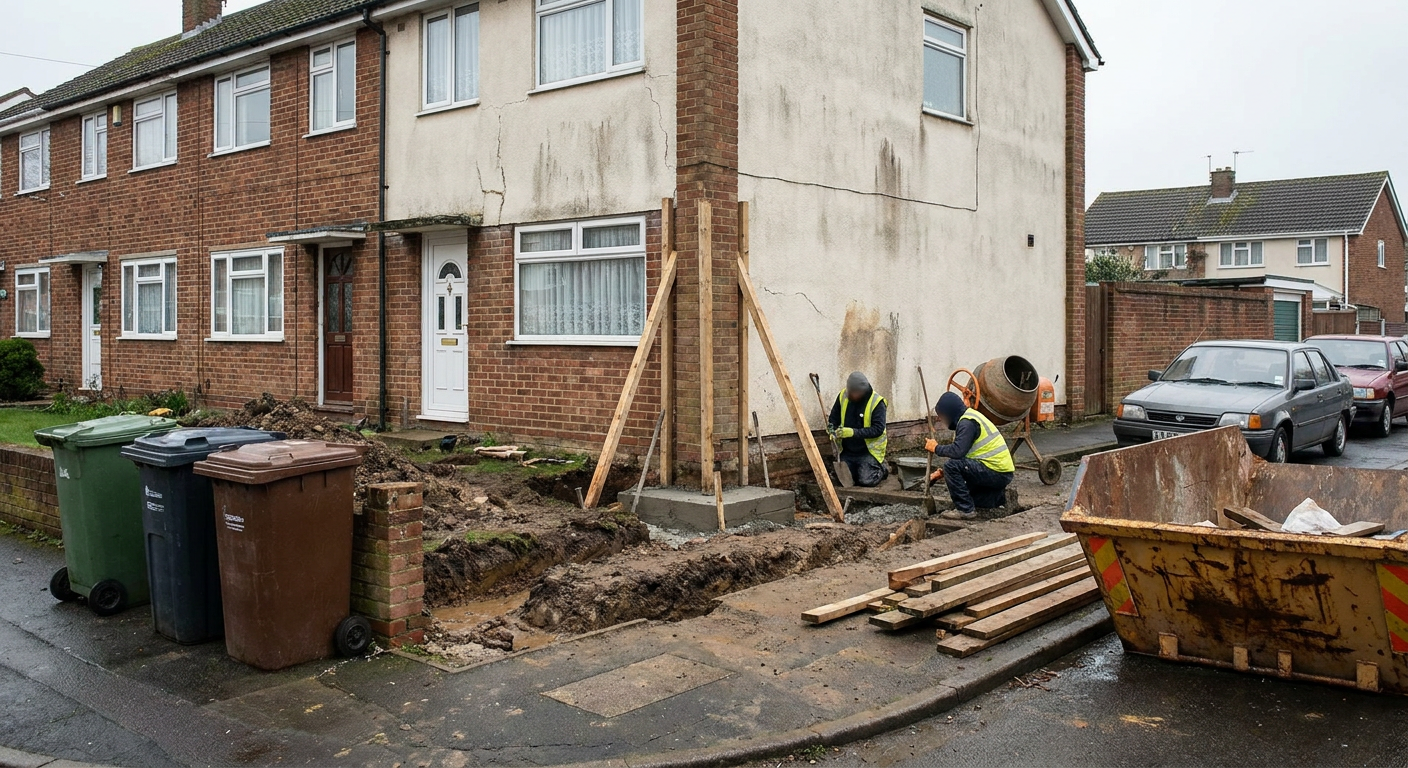
Buildings insurance and ground movement
The question of whether is underpinning covered by insurance comes up often for homeowners in Hastings who have noticed cracks widening or doors sticking. Buildings insurance ground movement cover is normally included in a standard policy, so subsidence is usually something you can claim for. But the wording matters. You should read your own documents before calling anyone, because policies differ between providers and some exclude specific causes.
Claiming for cracked walls starts with that first phone call to your insurer. They will ask you to describe the damage and may send an insurer loss adjuster for a subsidence visit to see the property. That person works for the insurance company. Their job is to establish whether the movement falls within your cover and to decide what happens next. In many cases they will arrange monitoring or testing before any repair is agreed.
A [subsidence survey](/the-repair/subsidence-survey-hastings) carried out by a specialist firm produces a detailed record of the damage. Some homeowners choose to commission one independently and send the findings to their insurer alongside the claim.
Excess amounts and future premiums
Every subsidence claim carries an excess. The subsidence claim excess amount on a buildings policy is typically higher than the excess for a standard escape of water or storm damage claim. You will find the exact figure in your policy schedule. It applies per claim, so if the problem returns and requires a second intervention, you may face it again.
After a claim is settled, your premium may rise at renewal. Some insurers also apply restrictions to future cover, such as excluding further ground movement claims or requiring ongoing monitoring as a condition of continuing the policy. These decisions sit entirely with the provider. Ask them directly what changes they intend to make before you proceed with any work.
Understanding the financial side early helps you plan. If you are considering [selling a house with subsidence](/selling-a-house-with-subsidence), buyers and their mortgage lenders will want to know the full history of the claim and any conditions attached to the insurance.
Who appoints the specialist and who pays
Insurers usually appoint their own engineers to investigate the cause of movement. They decide whether the problem needs monitoring, drainage repairs, tree management or structural work. You do not always need your own specialist report, but having one gives you an independent view of what is happening beneath your home.
If you commission a report yourself, the specialist firm writes it and you can choose to forward it to your insurer. This can be useful if you disagree with the loss adjuster's initial assessment or if you want a second opinion on the proposed method of repair. The cost of an independent report is yours unless the insurer agrees otherwise.
When it comes to the underpinning cost, who pays depends on the outcome of the investigation. If the insurer accepts the claim, they fund the approved repair, minus your excess. If they decline it, the responsibility falls to you. A specialist firm carrying out [foundation repair in Hastings](/the-repair/foundation-repair-hastings) will quote for the work regardless of who is paying.
Leaks, trees and excluded causes
Not every crack means subsidence, and not every cause of movement is covered. If the investigation finds that a leaking drain washed soil away from the foundations, the buildings insurer may treat it as a drainage issue rather than a subsidence claim. Trace and access cover might apply instead, or the water company could be responsible if the pipe sits outside your boundary.
Tree roots extracting moisture from clay soils are a common cause of movement in areas like St Leonards, where Victorian homes often sit on shrinkable ground. Insurers generally cover this, but they may require the tree to be managed or removed before approving structural repairs. Work on [underpinning in St Leonards](/hastings-and-bexhill/st-leonards) frequently involves both arboricultural advice and foundation support.
Cracks caused by old building work, poor original construction, or normal thermal expansion are typically excluded. So is damage from settlement that occurred shortly after the home was built. Knowing the difference between [settlement, heave and subsidence](/settlement-heave-or-subsidence) matters here, because insurers only pay for specific types of movement.
Timelines and choosing a contractor
A subsidence claim takes time. From the first call to the completion of repairs, expect several months at minimum. Investigations, monitoring periods and approvals all add weeks. If the ground needs to be watched through a wet and dry season to confirm the pattern of movement, the timeline extends further. Structural [monitoring in Hastings](/the-repair/structural-monitoring-hastings) uses tell-tales and gauges fixed to the wall to track these changes over time.
Once the insurer approves the repair, they will usually nominate a contractor to carry it out. You can ask to use your own firm, but the insurer must agree, and they will only pay what they consider reasonable for the scope of work. Any difference in cost would be yours to cover.
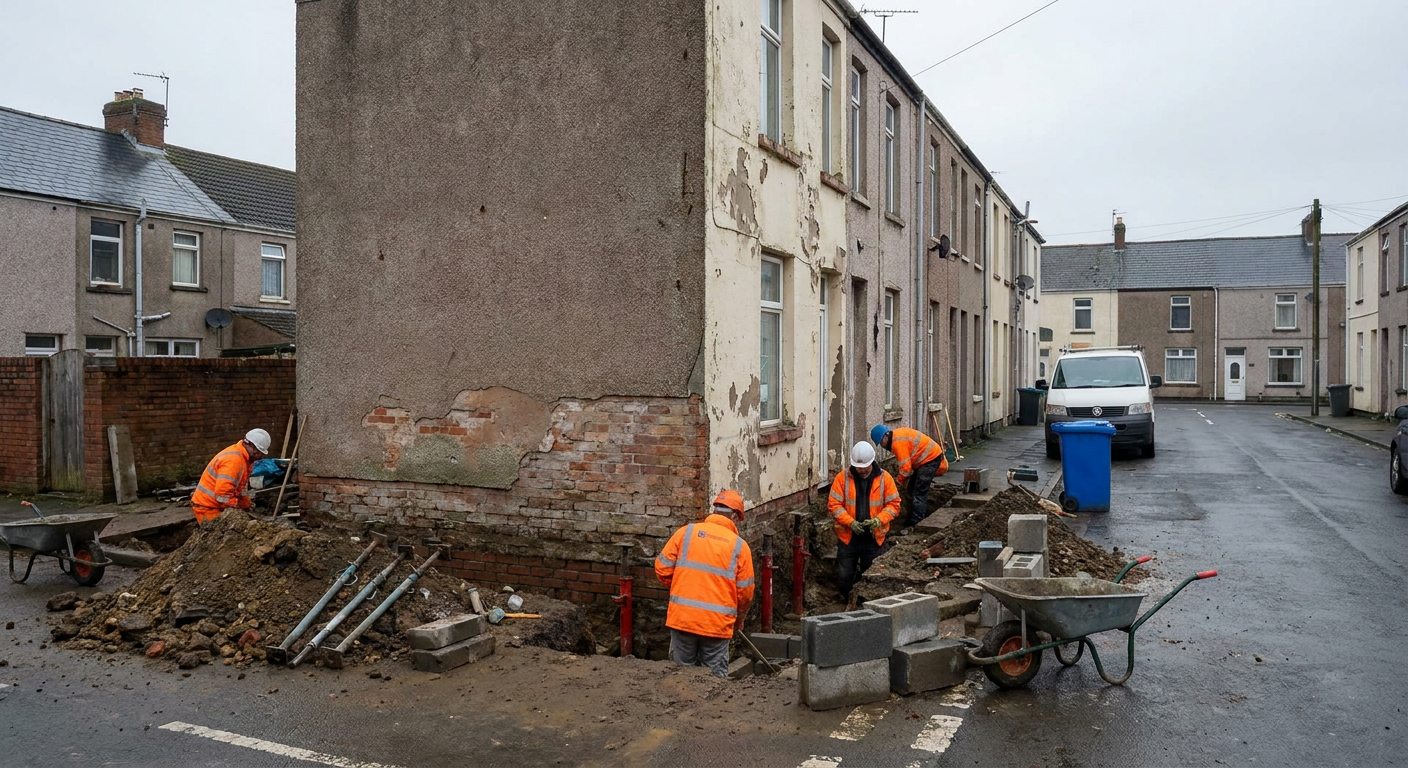
Specialist firms working on [house underpinning across East Sussex](/the-repair/house-underpinning-hastings) are accustomed to dealing with insurers and loss adjusters. Whether the method chosen is [mass concrete underpinning](/the-repair/mass-concrete-underpinning-hastings), [mini piled underpinning](/the-repair/mini-piled-underpinning-hastings) or [resin injection](/the-repair/resin-injection-hastings), the contractor handles the physical work while the insurer manages the payment.
How a subsidence claim progresses
- 1
Report the damage
You contact your buildings insurer to describe the cracking and any recent changes to the home.
- 2
Loss adjuster visits
An insurer-appointed loss adjuster inspects the property and decides if further investigation is needed.
- 3
Investigation and monitoring
Specialist firms dig trial holes or install gauges to determine the cause and extent of movement.
- 4
Repair approval and work
The insurer approves a method, and a contractor carries out the agreed foundation repair.
Insurer-appointed or independent contractor
Both routes lead to repaired foundations, but they differ in how decisions are made and who controls the process.
Selection
- Insurer appointed
- The insurer chooses the firm based on their panel agreements.
- Independent choice
- You propose a contractor, subject to the insurer agreeing to the cost.
Scope of work
- Insurer appointed
- Defined by the loss adjuster and the insurer's engineer.
- Independent choice
- Defined by your chosen specialist, then reviewed by the insurer.
Cost control
- Insurer appointed
- The insurer pays the agreed rate directly to their contractor.
- Independent choice
- The insurer pays their assessed amount; you cover any shortfall.
Communication
- Insurer appointed
- The insurer explains the schedule and who to contact if you have questions.
- Independent choice
- You speak directly with the firm doing the work on your home.
A specialist firm advises which repair method suits the ground conditions after inspecting the site.
Ask about your subsidence enquiry
Send details of the problem at your home. Enquiries go to firms that handle subsidence in Hastings. Submitting a form does not commit you to any work or a claim.
- No obligation to proceed
- Local firms respond
- Your details stay private