Describe the movement you see
Resin injection in Hastings
Resin injection for subsidence in Hastings
A crack in the wall or a sticking door might mean the ground beneath your home has shifted. Resin injection subsidence Hastings is one way to stabilise that soil without excavation. Describe what you have noticed and find out if this method suits your home.
- Less digging around your home
- Suitable for many soil types
- Work often finished in a day
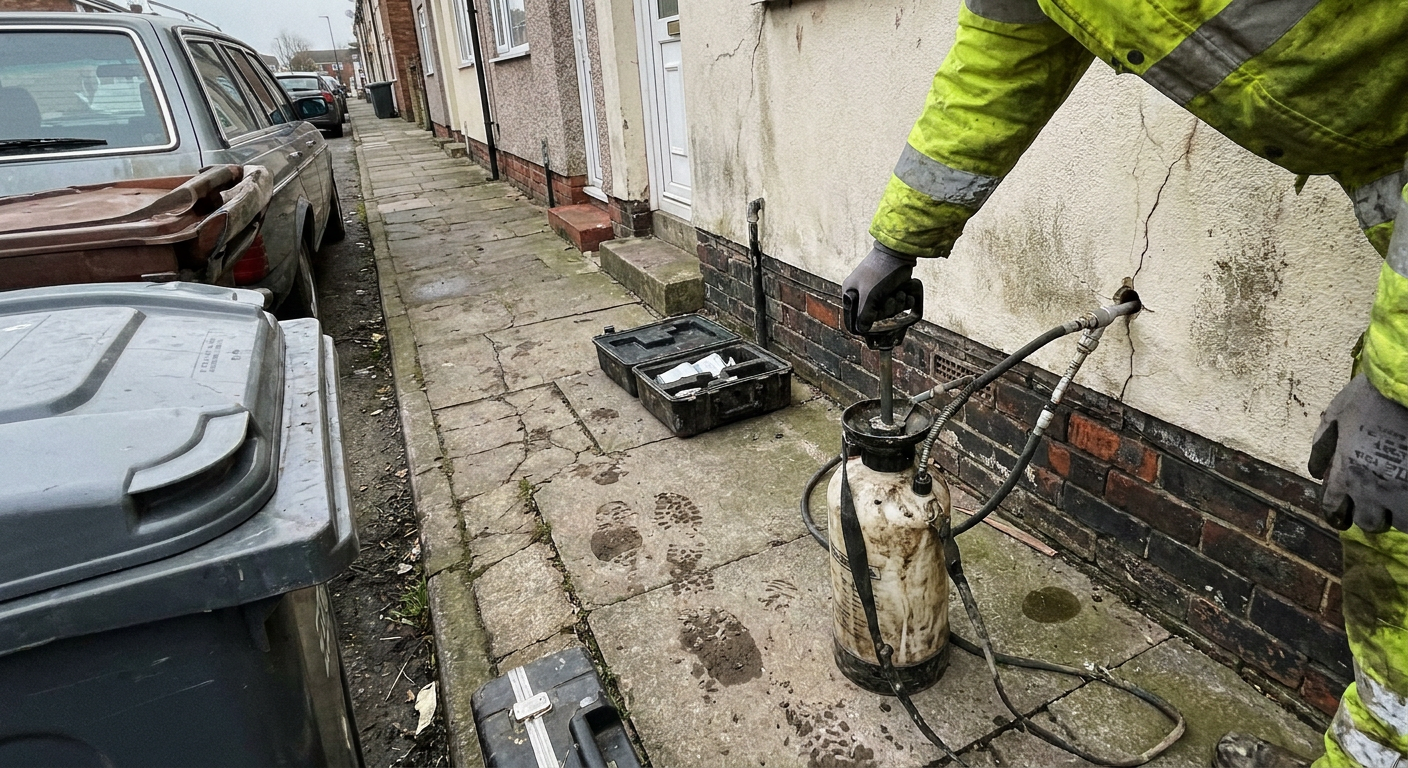
How geopolymer resin stabilises the ground
The specialist firm pumps liquid geopolymer into the soil through small holes, where it expands and compacts loose material to halt movement.
- Sandy soils and fill Geopolymer injection subsidence repair works well where water has washed fine particles away from shallow foundations, leaving voids that need filling.
- Clay shrinkage Where Wadhurst clay dries and shrinks, the resin fills gaps so the foundation rests on compacted earth again rather than bridging empty space.
- Semi-detached homes Resin injection ground stabilisation in Hastings suits terraced and semi-detached houses because the work happens through small external access points.
- Testing before any commitment Trial pits and boreholes reveal what lies below your walls. The specialist reads those results to decide whether the soil will respond to resin.
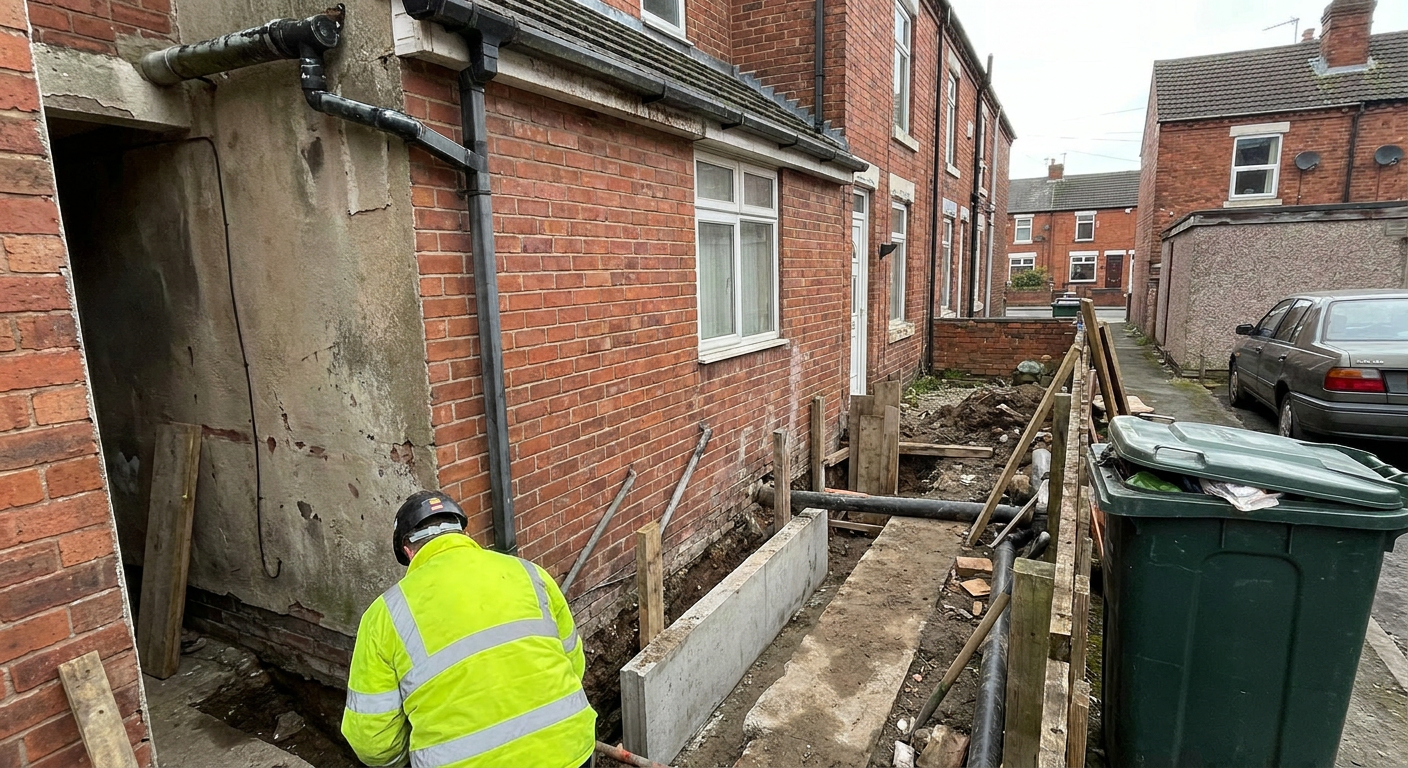
What happens when resin is used
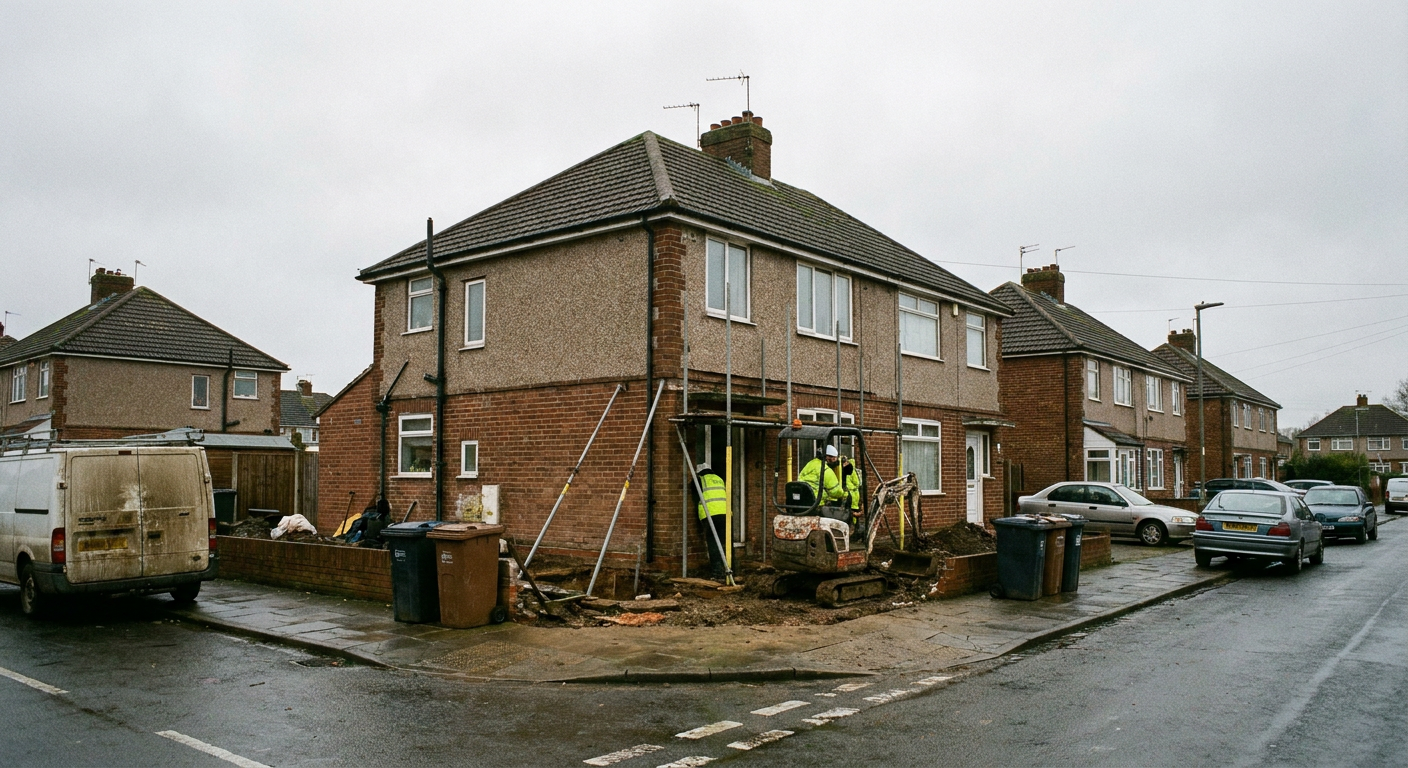
- 1
Subsidence survey
The specialist examines the cracks, checks drainage and records how far the walls have moved from their original position.
- 2
Ground investigation
Boreholes or trial pits show the soil type and moisture content at foundation depth, confirming whether resin can compact it.
- 3
Injection
Small holes are drilled beside the footing. Liquid geopolymer is pumped in, expanding to fill voids and densify the surrounding earth.
- 4
Monitoring
After the resin cures, structural monitoring tracks the wall over several months to confirm the movement has stopped.
Resin or traditional underpinning
Both methods stop subsidence, but they reach the same goal through different means. The right choice depends on the ground conditions beneath your home.
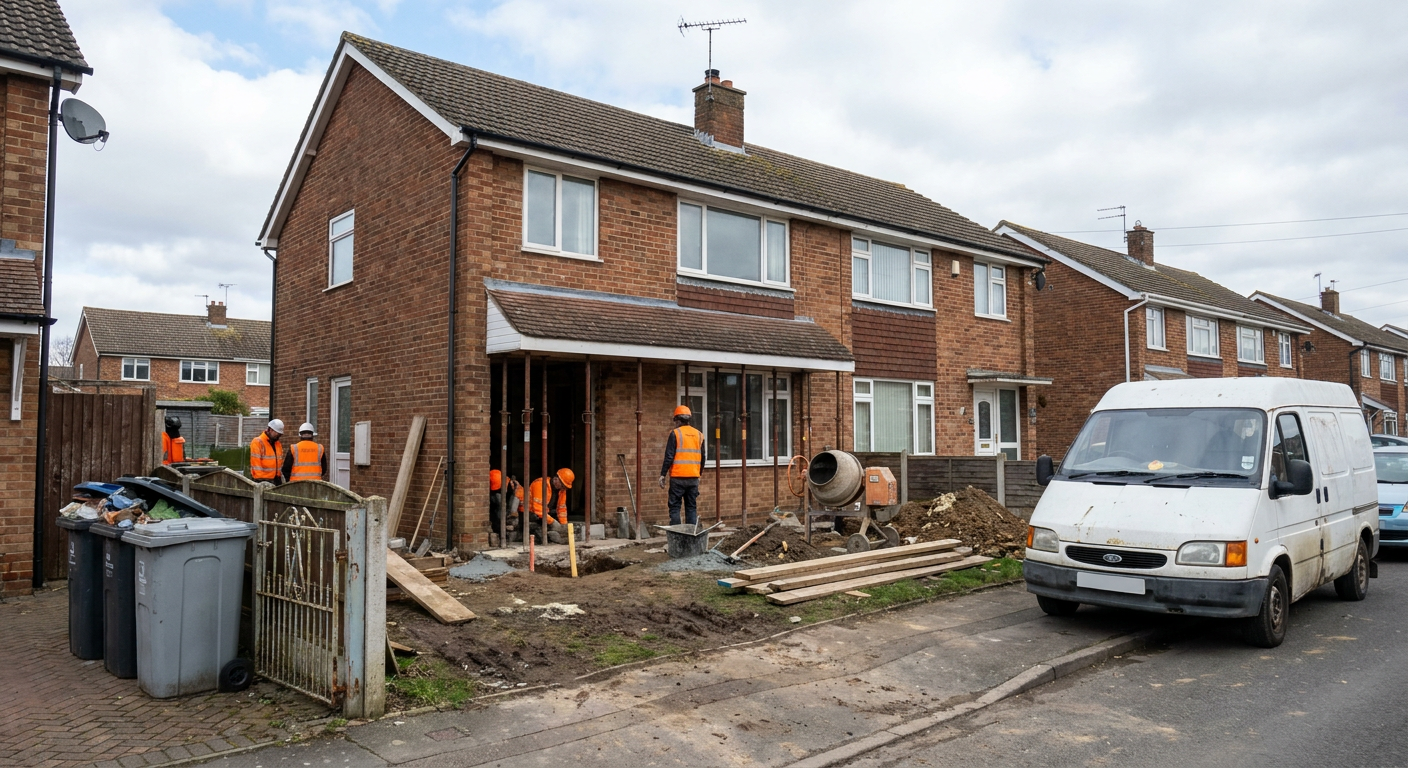
Excavation
- Resin injection
- No trenching; resin enters through small drilled holes.
- Mass concrete underpinning
- Soil is dug out in sections beneath the existing footing.
Disruption
- Resin injection
- Garden paths and driveways usually stay intact.
- Mass concrete underpinning
- Landscaping near the wall is removed and reinstated later.
Depth of support
- Resin injection
- Compacts soil immediately around the shallow foundation.
- Mass concrete underpinning
- Pours new concrete deeper to rest on firmer strata.
Time on site
- Resin injection
- Often completed within a single working day.
- Mass concrete underpinning
- Takes several days as each bay cures before the next opens.
The specialist advises which method suits after examining the soil and the extent of the damage.
Questions about resin injection foundations cost
Homeowners ask these before arranging a visit. Each answer depends on the specific ground conditions found during the survey.
- Will it lift the house back up?
- Resin primarily halts further sinking. Some controlled lifting occurs as the expanding polymer pushes against the footing, but full levelling is not guaranteed.
- Can we stay in the house?
- Yes. The equipment sits outside and the drilling produces little noise. Most households carry on normally while the specialist works.
- Will my insurer pay for it?
- Many buildings policies cover subsidence repairs. Your insurer will want the specialist report before approving resin injection as the chosen method.
- What if movement continues?
- If monitoring shows ongoing settlement, the specialist reassesses the ground. Deeper solutions like mini piled underpinning may then be required.
- Is it cheaper than digging?
- Resin injection foundations cost less in labour and reinstatement, but the total depends on how much material the ground absorbs.
Areas covered for injection foundation repair
Enquiries are taken for homes across Hastings and the surrounding East Sussex towns. The specialist firm travels to each location listed here to carry out surveys and resin work.
If your street is not mentioned, send an enquiry to check availability.
- Resin injection ground stabilisation Bexhill-on-Sea
- Resin injection ground stabilisation Hastings Town Centre
- Resin injection ground stabilisation St Leonards
- Resin injection ground stabilisation Bulverhythe
- Resin injection ground stabilisation Silverhill
- Resin injection ground stabilisation Pett
- Resin injection ground stabilisation Westfield
Tell us what you have noticed in your home
Describe the crack, the sticking door or the sloping floor. There is no charge for sending the details, and someone will reply with what to do next.
Send an enquiry