Services
Subsidence repair in Hastings: from survey to fix
A crack in your wall or a sticking door can mean different things. Find out what each repair involves, from the first survey to the finished work, and decide which path fits your home.
Finding out what is wrong with your walls
Before any digging starts, a specialist firm needs to know why your home is moving. A subsidence survey records where cracks have opened, measures how far walls lean, and checks the soil beneath the footings. The ground around Hastings changes quickly from sandstone to clay, so the cause of movement in one street might be completely different from the next.
The surveyor digs trial pits or drills boreholes to see what lies below your walls. They look for tree roots drawing moisture from clay, broken drains washing sand away, or old mine workings left behind. Once they know the cause, they recommend a specific repair. You can read more about what a subsidence survey covers in Hastings and what findings usually mean for your home.
Mass concrete and mini piling for foundations
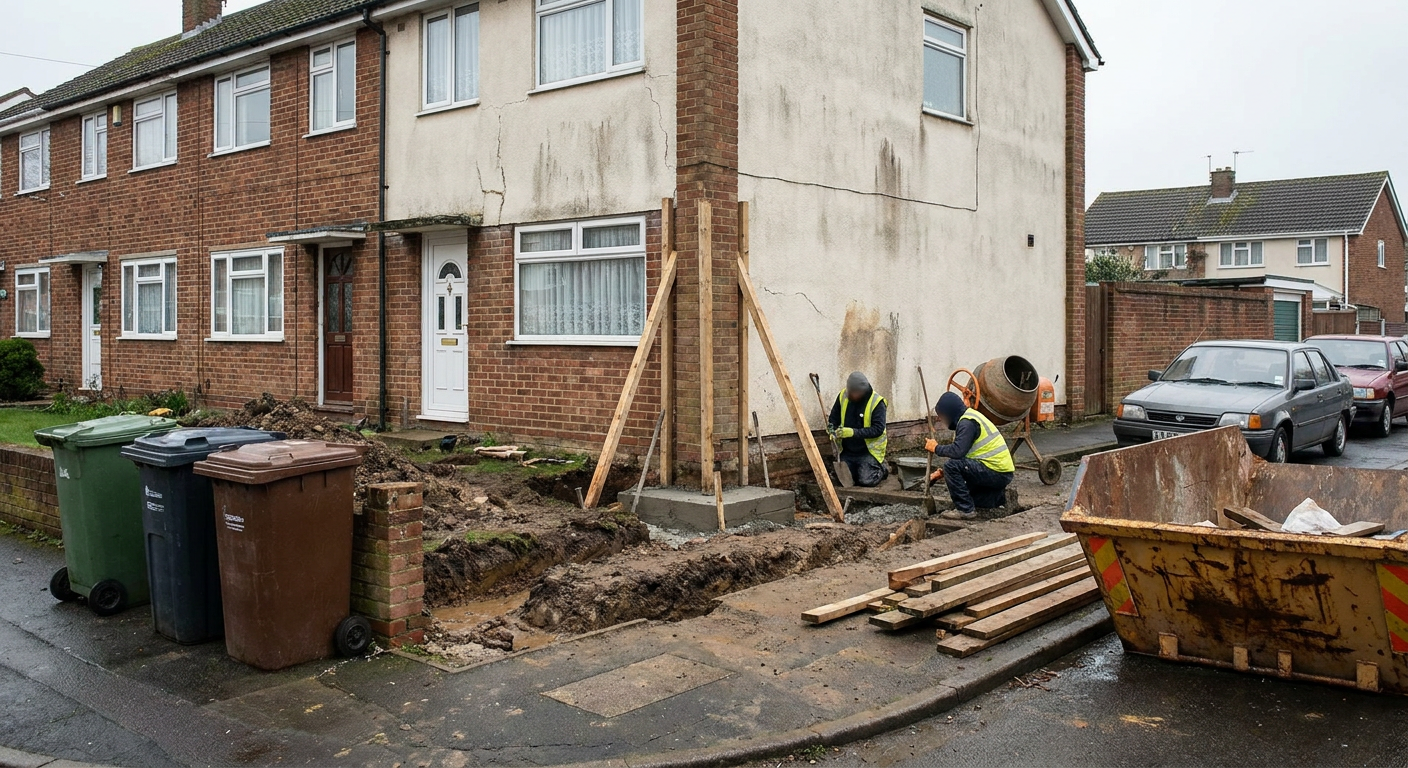
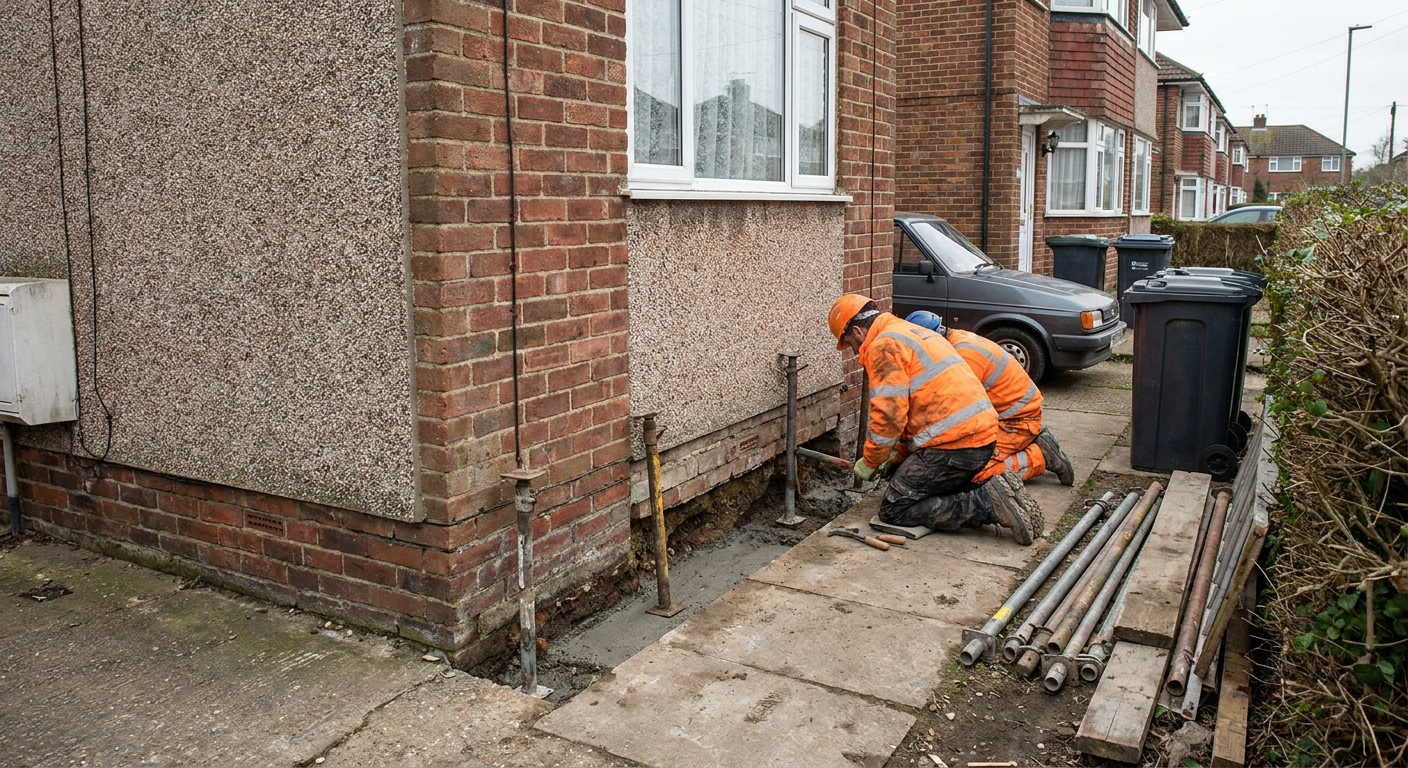
When the ground near the surface cannot hold a house steady, the foundation needs extending deeper. Mass concrete underpinning is the oldest method. A specialist contractor digs out sections of earth below the existing footing in sequence, pours concrete into each void, and lets it set before moving to the next bay. It works well where firm ground sits just below the current depth.
Sometimes the stable layer is much further down. Mini piled underpinning drives or drills steel-cased piles through weak soil until they reach rock or dense clay. The piles carry the weight of the walls past the problem zone entirely. In Hastings town centre, where homes sit close together and streets are narrow, mini piling often causes less disruption than digging large trenches. Both methods require careful planning by the specialist firm doing the work.
Repairing cracked brickwork and masonry
Underpinning stops the ground from moving further, but the cracks it leaves behind still need attention. Crack repair involves stitching fractured bricks back together with stainless steel ties and filling gaps with lime or resin mortar. Leaving cracks open invites rain into the wall cavity, which can rot timbers and damage plaster inside your home.
A specialist contractor decides whether to stitch, fill, or rebuild a section based on how wide the gap has become and whether the wall is load-bearing. Hairline cracks above window frames often point to lintel failure rather than subsidence, so accurate diagnosis matters before any work begins. The repair restores the strength of the masonry so the wall acts as one piece again.
Resin injection to stabilise loose ground
Digging is not always necessary. Resin injection pumps expanding polyurethane into the soil beneath a footing. The resin fills voids, compacts loose sand, and lifts settled concrete slabs back toward their original level. It suits homes where access for heavy plant is limited or where the ground has only shifted slightly.
A specialist firm drills small holes through the floor or alongside the wall, then injects the resin in controlled stages while monitoring the lift with laser levels. Because the material cures in minutes, the ground supports weight almost immediately. This method is used across Hastings where sandy soils wash out after heavy rain, leaving foundations without support. Read what to expect from resin injection if you suspect the ground under your home has gone soft.
Monitoring movement over time
Not every crack means urgent danger. Some movement happens slowly over years, and watching it tells a structural engineer whether the problem is active or historic. Structural monitoring uses small gauges fixed across a crack to measure opening and closing to fractions of a millimetre. Readings taken over several months show if the wall moves with the seasons or continues to drift in one direction.
A specialist sets up the monitoring points and returns to record the data. If the gauges show no change, expensive repairs might be avoided entirely. If they show steady movement, the readings prove exactly how much support the foundation needs. Learning how to monitor a wall crack yourself with simple tell-tales can give you early warning before calling anyone in.
Lowering a basement floor safely
Some older homes in Hastings have shallow cellars that owners want to turn into living space. Basement underpinning deepens the floor while keeping the walls above supported. A specialist contractor excavates in short bays, pins new concrete beneath the existing wall, and installs drainage to stop water pressure building up against the new structure.
This work demands precise sequencing. Removing too much earth at once risks dropping the wall above. The contractor calculates the safe bay width from the soil type and the weight of the house. Waterproof membranes and sump pumps usually follow the structural work to keep the finished room dry. Lowering a basement floor adds head height, but only if the ground conditions allow it.
Choosing who does the work
Every repair described here is carried out by separate specialist firms. The right choice depends on the ground, the age of your home, and how much access machinery needs. Underpinning contractors in Hastings range from small local builders to larger firms with piling rigs. Comparing them means looking at their experience with the specific soil type beneath your street.
Ask any contractor how they plan to sequence the dig, what monitoring they will use during the work, and whether their quote includes making good the internal finishes afterwards. Foundation repair covers everything from patching a single footing to replacing an entire wall base, so clarity on scope prevents arguments later. Read more about choosing a firm and what questions to ask before signing anything.
Tell us what you have noticed
Send a description of the crack or movement you have seen. Your enquiry goes to someone who handles subsidence cases in Hastings, with no obligation to proceed.
- No obligation to proceed
- Local knowledge included
- Clear next steps given
Repair options
- Subsidence survey
A subsidence survey in Hastings looks at cracks, ground conditions and drains to find the cause of movement and set out what repair is needed.
- Concrete underpinning
Mass concrete underpinning in Hastings deepens foundations bay by bay beneath a subsiding wall. See what the work involves and when it suits a house.
- Crack repair
Crack repair in Hastings covers stitching, repointing and filling after movement has been stopped. Find out which cracks matter and what comes first.
- Mini Piling
Mini piled underpinning in Hastings suits tight access and deeper unstable ground. See how the piles work, when they are used and what a survey looks at.
- Crack monitoring
Crack monitoring in Hastings shows whether wall movement is still active. Find out how gauges and readings over months guide the right repair.
- Basement underpinning
Basement underpinning in Hastings deepens foundations to lower a cellar floor or steady a damp, cracking basement. See what the work involves.
- Resin Injection
Resin injection for subsidence in Hastings fills and stiffens weak ground under footings. Learn how it compares with underpinning and when it fits a home.
- Contractors
Underpinning contractors in Hastings work on subsiding homes. See what the job involves, what to check before choosing, and who carries out the work.
- House underpinning
Home underpinning in East Sussex strengthens foundations under a subsiding house. Find the signs that point to it and what the work involves.
- Foundation repair
Foundation repair in Hastings covers cracked walls, sinking floors and failing footings. See the common signs and the usual repair methods.