Areas covered
Underpinning areas covered around Hastings and Bexhill
Every neighbourhood from Pett to Bexhill-on-Sea sits on different ground. Find out what the soil beneath your home means for cracks, subsidence surveys and foundation repair in your part of East Sussex.
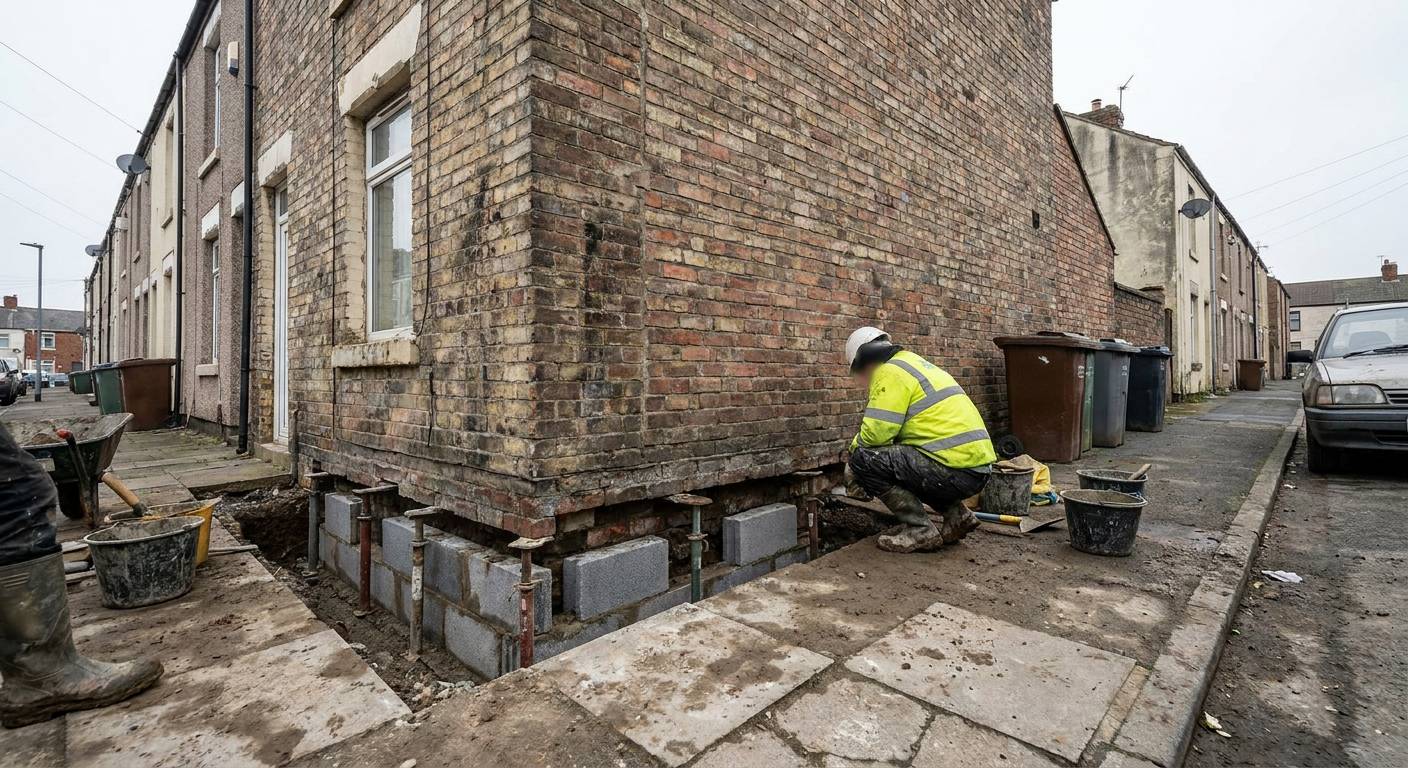
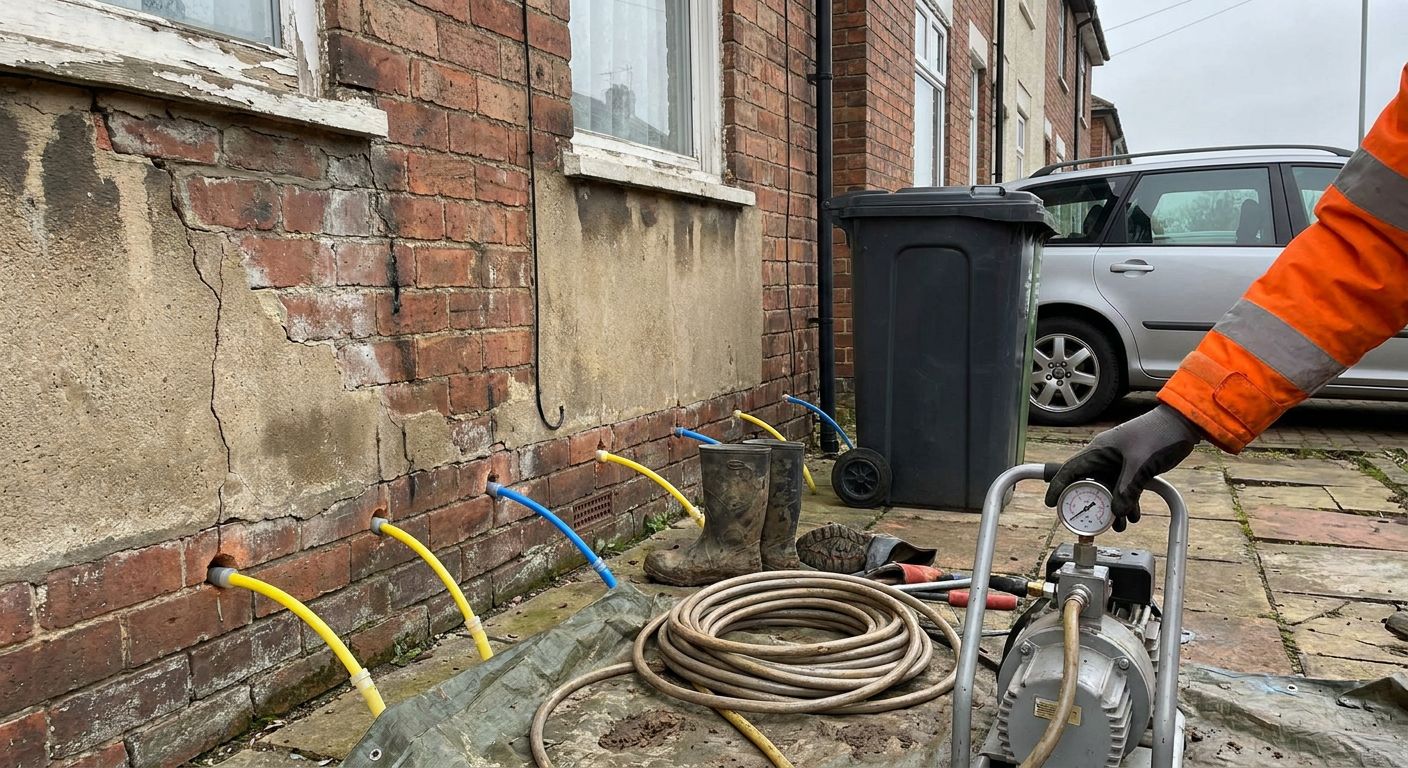
Hastings Town Centre and the Old Town
Homes in Hastings Town Centre sit on narrow streets where access for heavy plant is restricted. Many buildings here are terraced, sharing party walls that transfer movement from one house to the next when foundations shift.
The Old Town has its own complications. Sandstone caves and cellars run beneath several streets, leaving some footings supported by rock and others by infill that compresses over time. A subsidence survey in this area must account for voids as well as soil type.
Mini piled underpinning is often the method chosen for town centre homes because the rigs are small enough to work in confined spaces. The specialist firm drives piles down to a load-bearing stratum below the disturbed ground, then needles the wall onto them. Crack repair follows once the structure stops moving.
St Leonards and its Victorian terraces
St Leonards was built rapidly in the nineteenth century, and many of its large houses have shallow brick footings laid directly onto clay. That clay shrinks in dry summers and swells after heavy rain, so walls move seasonally until the cumulative shift opens visible cracks.
Victorian properties here often need basement underpinning if the lower level is being converted into living space. The specialist excavates in short bays beneath the existing walls and pours concrete to deepen the foundation, adding head height while stabilising the structure above.
Crack repair in St Leonards usually involves stitching across fractures with helical bars before filling them with a lime-compatible mortar. Monitoring the crack over several months tells the specialist whether the movement has stopped or if further intervention is needed.
Silverhill and the upper suburbs
Silverhill sits higher than the coastal strip, on ground that mixes sandstone from the Hastings Beds with patches of Wadhurst Clay. Where clay is present, tree roots extract moisture during summer and the soil contracts, pulling support away from shallow foundations.
Resin injection suits parts of Silverhill where access is tight and the ground is granular rather than solid clay. The specialist pumps expanding resin beneath the footing to compact loose soil and fill voids without excavation. This method works quickly but depends entirely on what lies below, which a trial pit or borehole confirms first.
Foundation repair here often starts with structural monitoring. Tell-tales fixed across a crack record whether it widens, narrows or stays still over the seasons. That data determines whether the specialist needs to underpin or simply stitch and fill.
Bulverhythe and the western edge
Bulverhythe borders the coast, where sandy ground is vulnerable to water washing fine particles away from beneath footings. Leaking drains accelerate this process, hollowing out the soil until the foundation drops and the wall above cracks diagonally.
Mass concrete underpinning is common in Bulverhythe. The specialist digs sections beneath the failing wall in sequence, pours concrete into each trench and pins the new block to the old footing. Working in short bays prevents the wall from losing support during the dig.
Because the ground near the sea can be unstable, a subsidence survey should check drainage runs and soakaways before any underpinning begins. Fixing the leak matters as much as supporting the wall; otherwise the same washout happens again.
Bexhill-on-Sea to the east
Bexhill-on-Sea shares much of the same geology as eastern Hastings but has its own pattern of development. Inter-war semis and post-war estates were built with varying foundation depths, so two houses on the same road can behave differently when the ground dries out.
Underpinning contractors working in Bexhill-on-Sea will typically start with a subsidence survey to map the extent of movement. Structural monitoring then tracks the cracks over time, separating seasonal thermal movement from genuine subsidence that requires intervention.
If the specialist confirms ongoing settlement, the repair method depends on depth. Shallow failures might be addressed with mass concrete, while deeper problems call for mini piling driven past the weak layer. Insurance often covers the investigation and the underpinning itself, though policy terms vary.
Pett, Westfield and the rural parishes
Outside the main towns, homes in Pett and Westfield tend to be detached or semi-detached, surrounded by mature trees and fields. Clay soils here respond sharply to root growth and seasonal rainfall, so cracks often appear after a dry summer followed by autumn storms.
Underpinning options for subsiding homes in these parishes include both traditional concrete and resin injection, depending on how far the nearest access road is from the property. Heavy concrete mixers struggle down narrow lanes, so specialists sometimes favour lighter methods or schedule deliveries carefully.
A subsidence survey in Pett or Westfield also considers agricultural drainage and nearby ponds, since changes in local water levels alter the moisture content of the clay beneath a house. Understanding that context helps the specialist choose a repair that lasts.
Ask about the ground beneath your home
Send details of the crack or movement you have noticed. A specialist firm reviews what you describe and advises whether a site visit is warranted. There is no charge for the initial enquiry and no obligation to proceed.
- No obligation to proceed
- Free initial assessment
- Local ground knowledge
Areas covered
- Bexhill-on-Sea
A subsidence survey in Bexhill-on-Sea looks at cracks, ground conditions and nearby trees to find why a house is moving and what repair may be needed.
- Town Centre
A subsidence survey in Hastings town centre looks at cracks, sloping floors and ground movement behind older terraces, and what the findings can mean next.
- St Leonards
Underpinning in St Leonards covers cracked walls, sticking doors and sloping floors, plus how foundations are checked and what repair work involves.
- Bulverhythe
Foundation repair in Bulverhythe deals with cracked brickwork, uneven floors and movement near the shoreline, with what checks and repair options cover.
- Silverhill
Cracked walls in Silverhill can come from clay shrinkage, slopes or failing footings. Learn which crack patterns matter and how they are assessed.
- Pett
Subsidence in Pett can show as stepped cracks, sticking doors and sloping floors. See what to look for in local homes and how enquiries are passed on.
- Westfield
Underpinning in Westfield suits homes where foundations have moved. Read about mass concrete and mini piled methods, and what a survey covers first.