Structural monitoring
Crack monitoring Hastings
An insurer or surveyor has asked you to watch a crack before anyone repairs it. Structural monitoring in Hastings tracks whether your home is still moving or has settled. Find out what the readings mean and what happens next.
- Clear record of wall movement
- Readings taken at set intervals
- Evidence for insurers and buyers
Ask about monitoring your home
Why do I need to watch this crack for months?
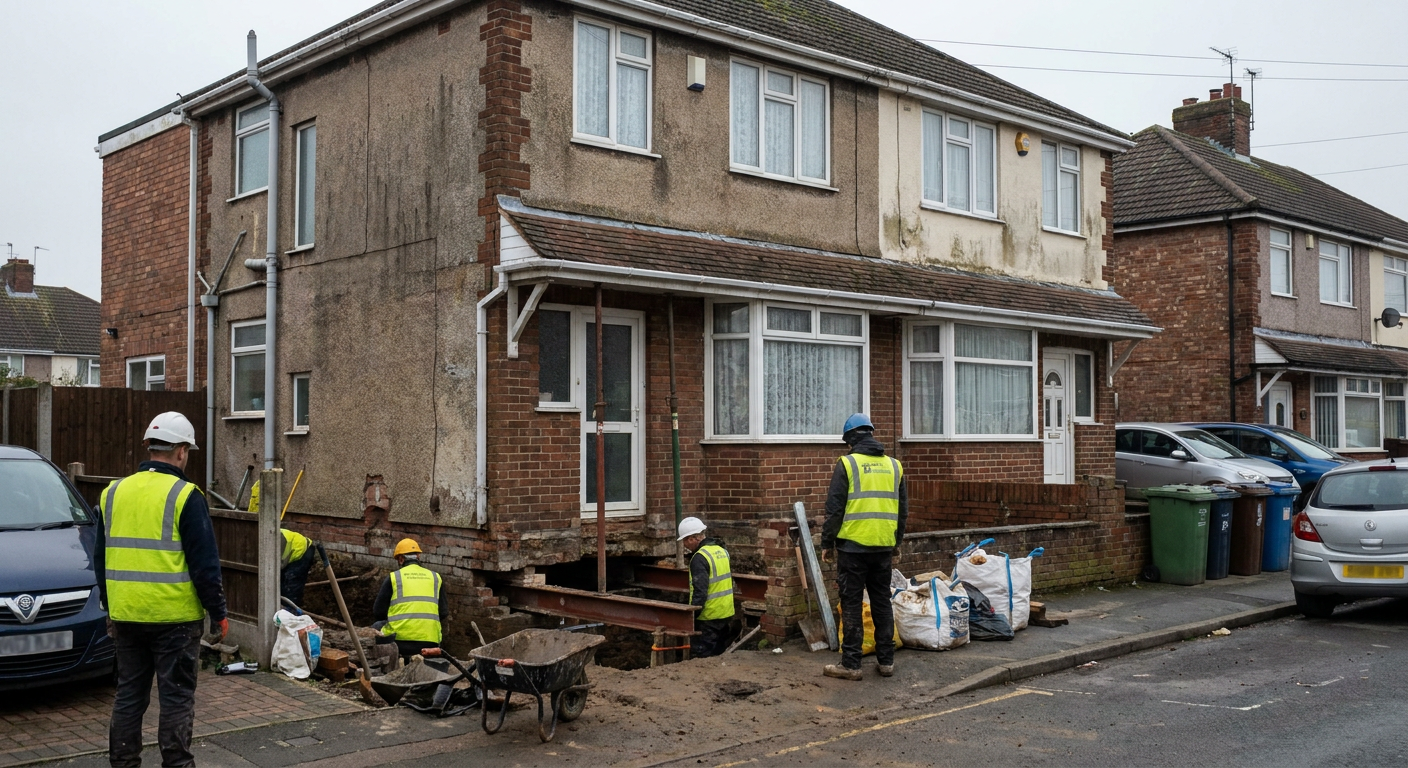
A crack appears and you want it fixed, but an insurer or surveyor asks for proof the movement has stopped first. That means measuring the gap over time so a specialist can tell whether the ground beneath your home is still shifting.
- 1
A gauge fixed across a crack
A small plastic or metal bridge screwed to the wall. It shows whether the gap is widening or staying the same.
- 2
Pencil marks on plaster
Lines drawn at the ends of a crack with dates beside them, used to see if it grows between visits.
- 3
Doors sticking in frames
A door that jams more as the seasons change can point to ongoing movement in the surrounding wall.
- 4
Gaps opening at skirting boards
A space appearing between the floor and the skirting often means the wall is settling away from the joists.
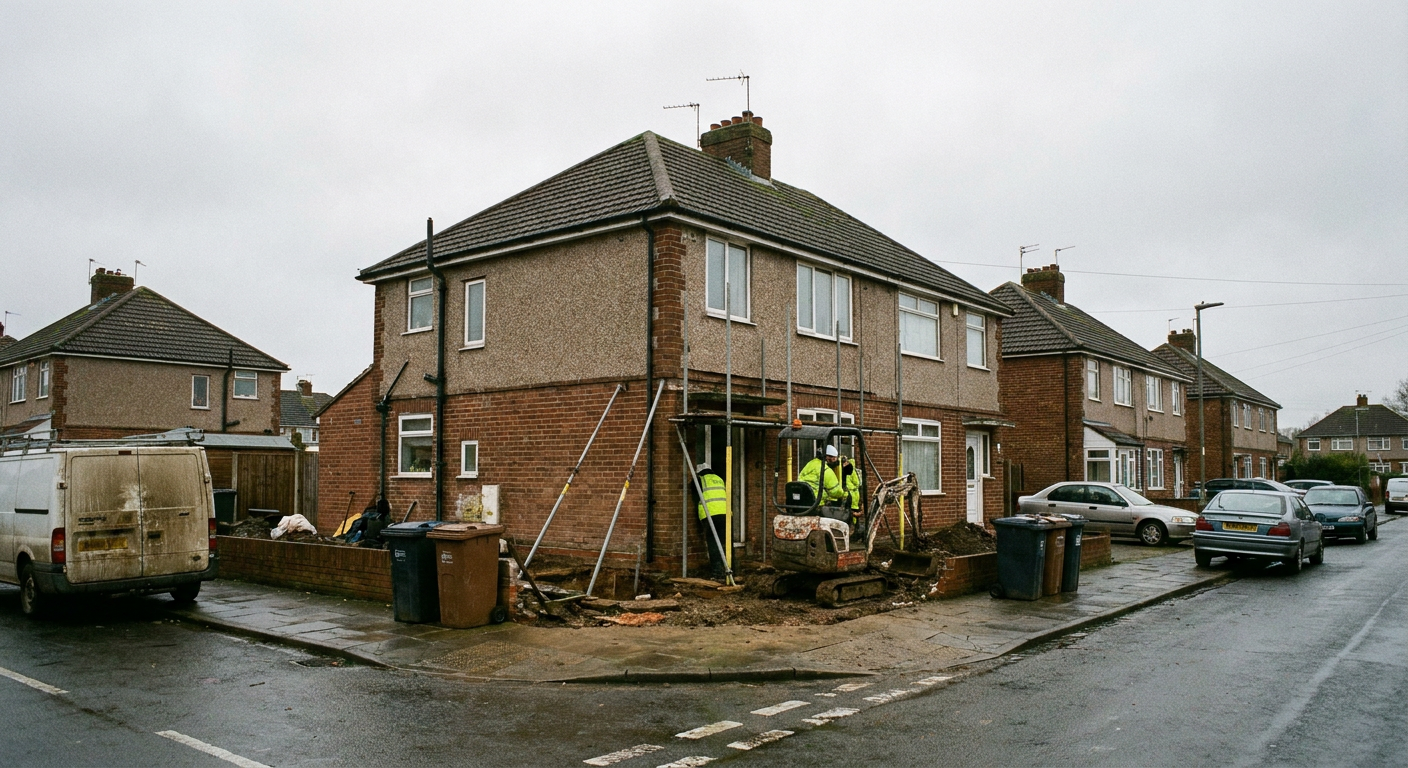
How structural monitoring works
The specialist fits gauges, takes initial readings and returns at set intervals to record any change.
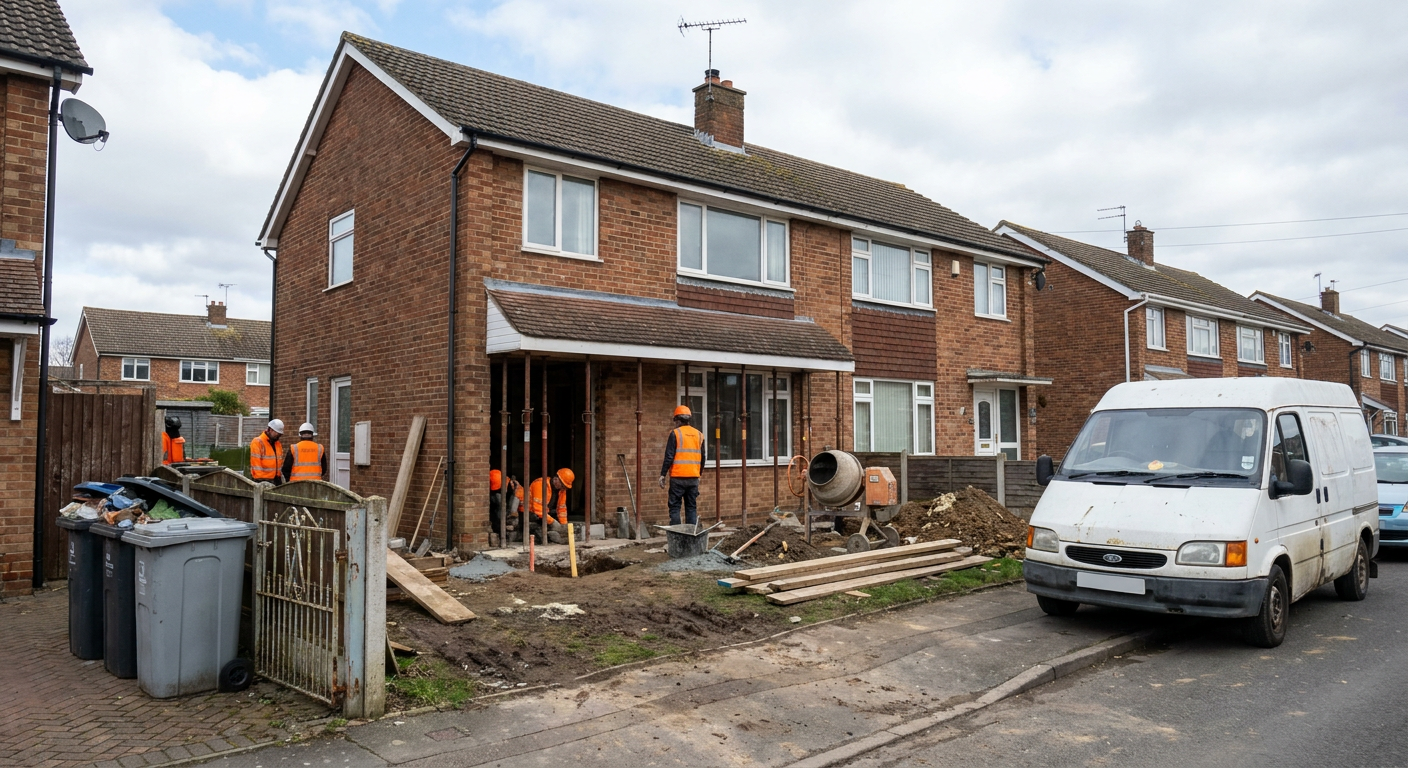
Tell-tale gauge installation
A small gauge is fixed across the crack to measure its width accurately over time.
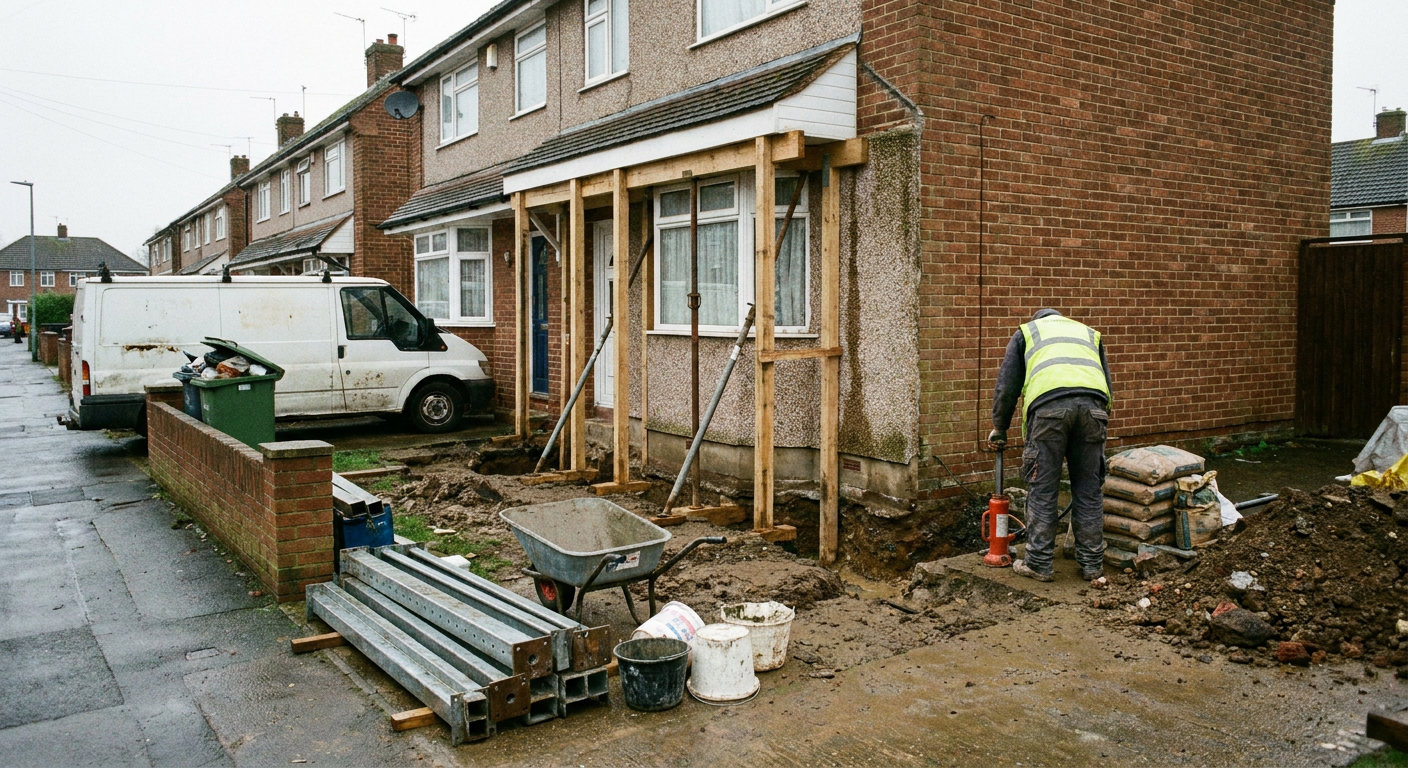
Setting reference points
Studs or optical targets are placed on walls so levels can be checked against a fixed datum.
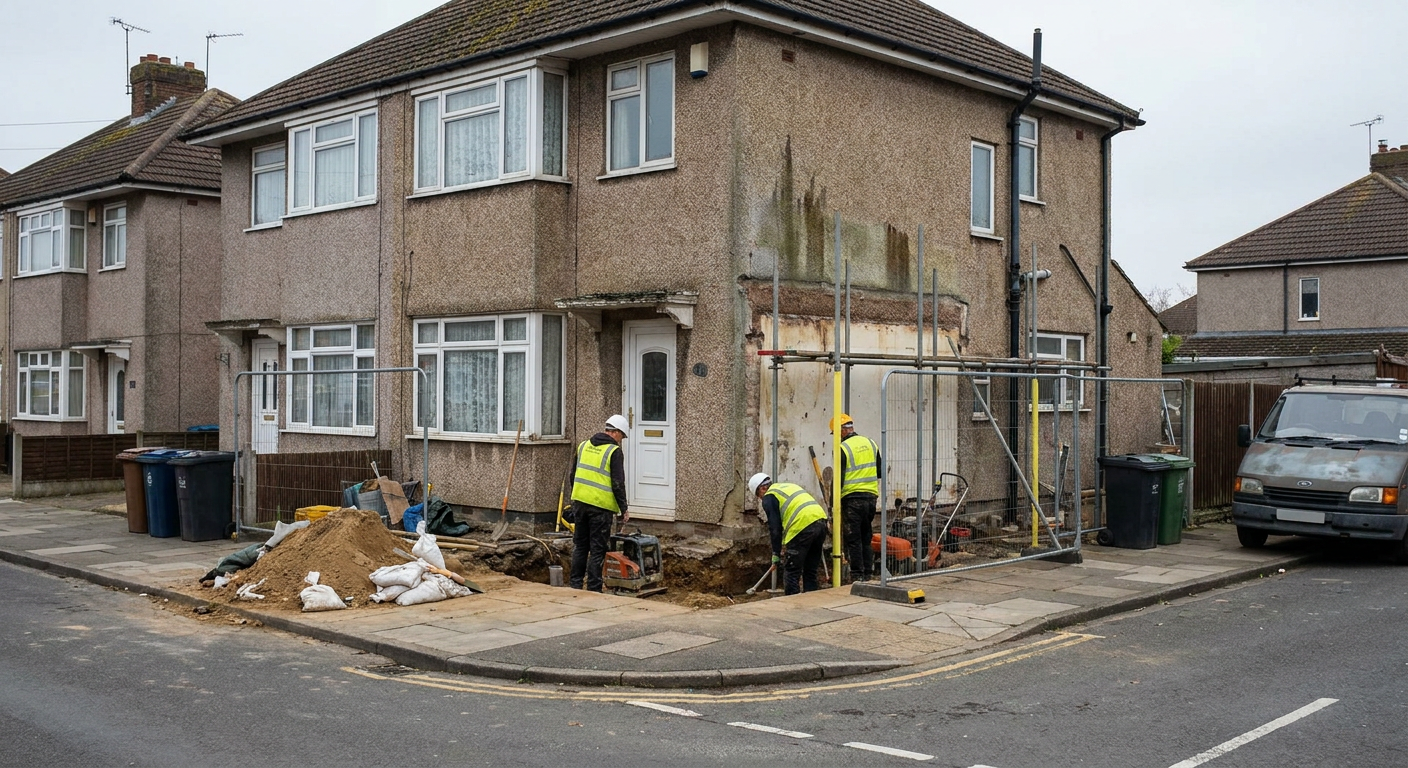
Taking level readings
The specialist uses precise instruments to record the height of each point relative to the others.
Reporting the findings
After several visits the readings are plotted to show whether the wall is still moving or has settled.
Tell-tale gauges or level monitoring
Both methods track movement, but they measure different things. The right choice depends on what the specialist needs to prove.
What it measures
- Tell-tale crack gauge
- The width of one specific crack across a wall or ceiling.
- Level monitoring survey
- The height of several points around the house relative to each other.
Where it fits
- Tell-tale crack gauge
- Fixed directly over a visible crack inside or outside the home.
- Level monitoring survey
- Requires a clear line of sight between points, usually along external walls.
What it proves
- Tell-tale crack gauge
- Whether that single crack is opening, closing or holding still.
- Level monitoring survey
- Whether the whole structure is tilting, sinking or rising unevenly.
Time needed
- Tell-tale crack gauge
- Readings take minutes once the gauge is installed.
- Level monitoring survey
- Each visit takes longer because multiple points must be recorded carefully.
A specialist decides which method suits after inspecting the home and reviewing the crack pattern.
Typical costs for monitoring work
The length of the period matters most. Insurers usually ask how long to monitor subsidence cracks, and six to twelve months is standard. More gauges, difficult access or frequent visits push a job toward the higher end of these ranges.
-
Single tell-tale gauge fitted
£150 to £300
Access to the crack and whether the wall needs preparation before fixing.
-
Three-month monitoring period
£400 to £800
Number of gauges installed and how often the specialist visits to take readings.
-
Six-month monitoring period
£700 to £1,400
Frequency of visits, number of points tracked and travel within the area.
-
Full level monitoring survey
£900 to £2,000
Size of the home, number of reference points and complexity of the layout.
-
Twelve-month monitoring period
£1,200 to £2,500
Seasonal changes captured, total visits required and detail in the final report.
These figures indicate what work of this type typically costs. Nothing here is a quotation, and only an inspection settles a figure for one property.
Areas covered for monitoring around Hastings
Enquiries are taken for homes across Hastings and the surrounding towns. Specialist firms carry out structural monitoring in Hastings, Bexhill-on-Sea and nearby villages where ground conditions cause walls to move.
If your town is not listed, send an enquiry anyway. Coverage often extends further than the names shown here.
Ask about monitoring your home today
Send the details of the crack and your address. There is no charge for the enquiry, and someone will reply to explain what a monitoring period would involve for your home.
Subsidence Help in Hastings