Guides
Subsidence advice for homeowners in Hastings
A crack in a wall or a door that sticks is worrying. These pages explain what causes movement in homes around Hastings, how a specialist firm diagnoses it, and what the repair involves.
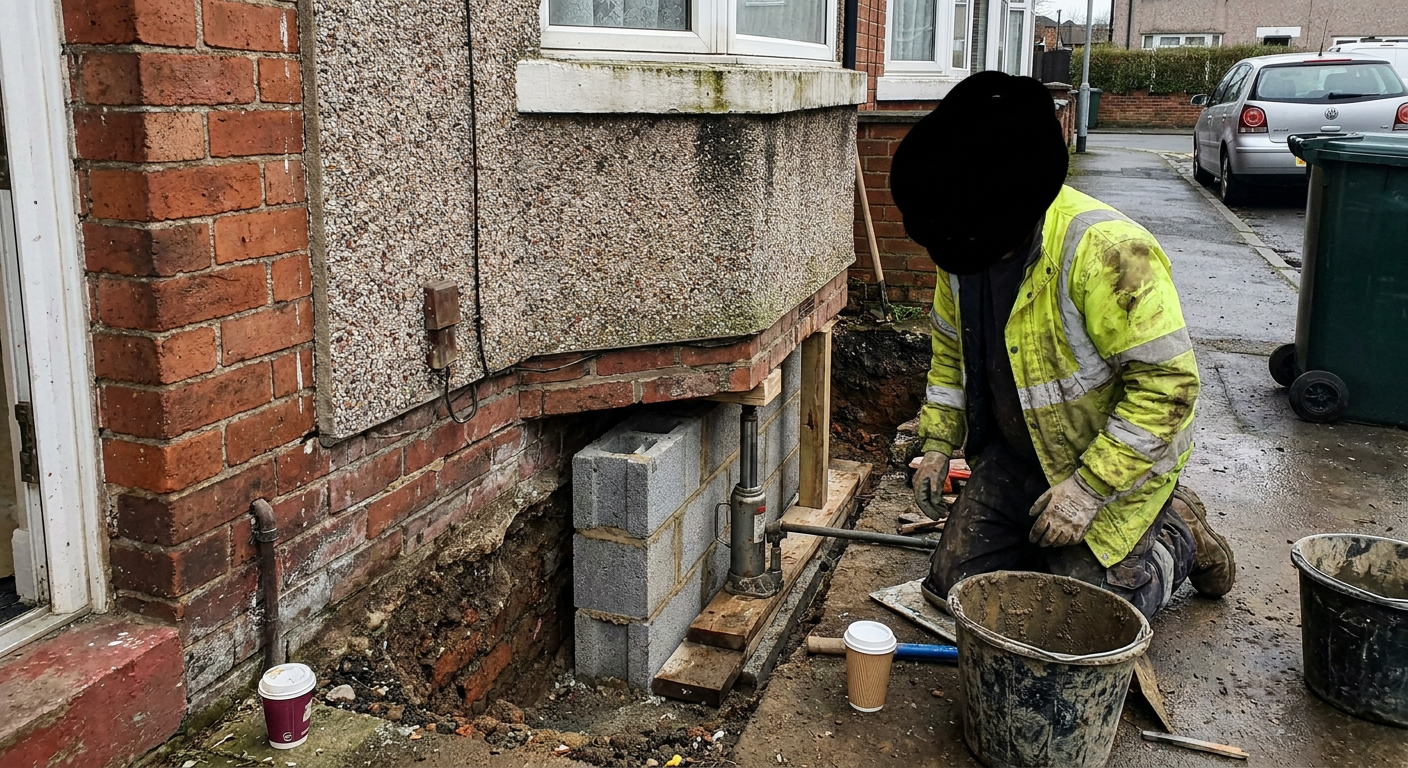
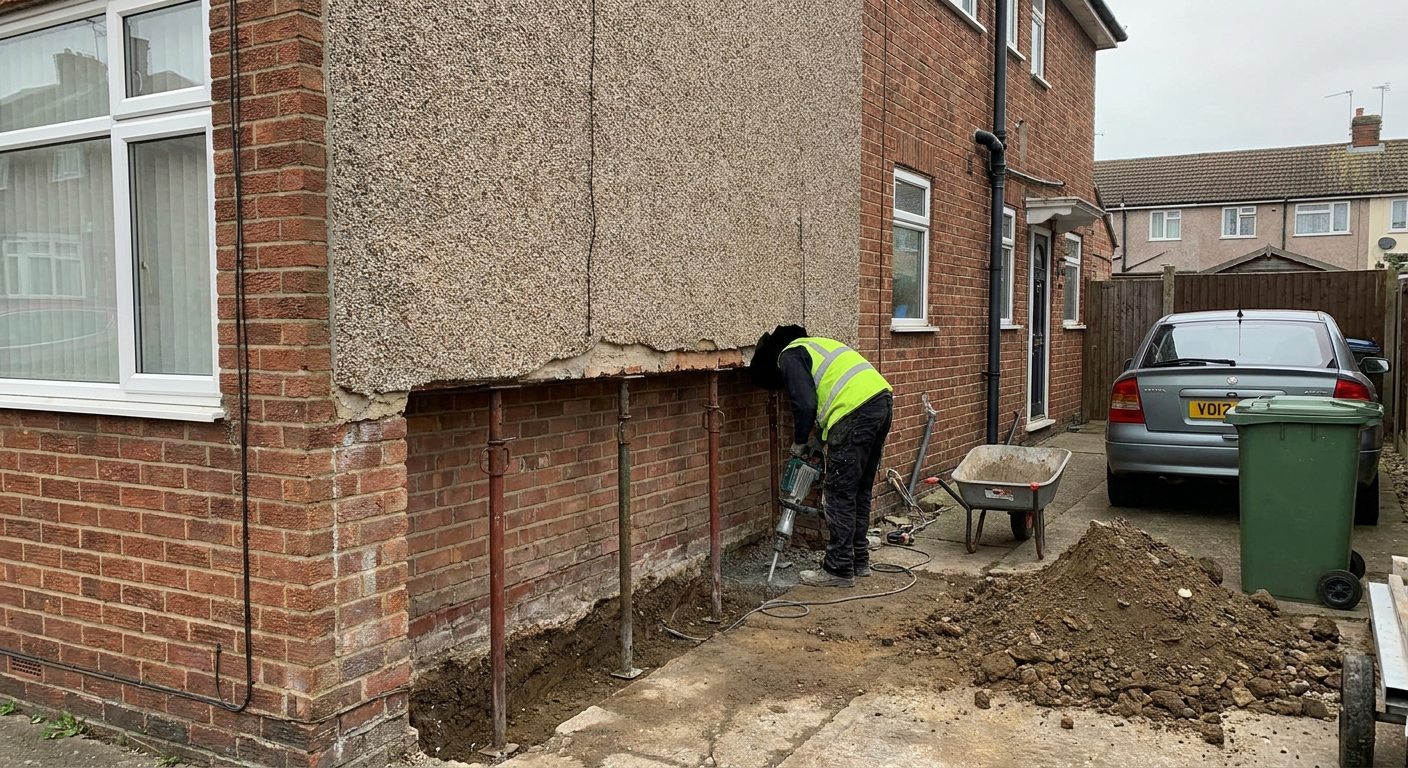
Understanding why walls move
Movement in a home usually starts below ground. Clay shrinks when it dries out, sand washes away with water, and old footings settle unevenly over time. The first step is knowing whether the problem is active or something that happened years ago and stopped.
Read about the difference between settlement, subsidence and heave to understand what is actually happening to your walls. A subsidence survey tells you the cause, because a specialist firm digs trial pits and takes soil samples before any repair begins.
Water plays a bigger part than most people expect. Heavy autumn rain can open cracks that close again in summer, and hidden spring lines or ghyll streams beneath Hastings streets wash soil away from foundations without any sign on the surface until the damage shows inside.
Repair methods used around Hastings
The right method depends on the ground, the type of house, and how far the movement has gone. Mass concrete underpinning replaces failing soil with solid concrete poured in bays beneath the existing footing. It suits older houses where the ground near the surface is unreliable.
Where stable ground sits deeper, mini piled underpinning drives steel piles down to a load-bearing layer. This is common in Hastings town centre, where narrow streets and tight spaces limit what machinery a contractor can bring in.
Resin injection stabilises loose ground without digging. A specialist firm pumps expanding resin into voids beneath the foundation, compacting the soil back into place. Crack repair stitches masonry together once the movement underneath has been stopped, so the wall acts as one piece again. Basement underpinning lowers an existing cellar floor by excavating and pouring new concrete in sequence, adding head height while supporting the walls above.
Watching the problem before acting
Rushing into a repair without evidence often means paying for work the home did not need. Structural monitoring tracks whether a crack is still opening or has settled. Tell-tales fixed across a fracture record movement over weeks or months, giving a specialist firm hard data rather than guesswork.
Monitoring matters especially if you are selling a house with subsidence. Buyers and their lenders want proof that the movement has stopped or that a repair is holding. Knowing how to monitor a wall crack yourself helps you keep a record while you wait for a survey.
Cracks above window frames and doors often look alarming but follow predictable patterns. Checking where they sit, how wide they are, and whether they taper from top to bottom tells you whether the lintel is failing or the whole wall is dropping.
Ground conditions specific to this coast
Hastings sits on layers of sandstone and clay known as the Hastings Beds. Wadhurst Clay shrinks and swells with moisture changes, pulling foundations with it. Sandstone caves and old cellars beneath the Old Town leave voids that modern houses were never designed to span.
Gardens on steep slopes add another problem. Retaining walls bulge and crack when the earth behind them gets saturated, pushing the garden downhill and dragging the house with it. Houses built on sloping ground crack because gravity pulls the lower side away from the upper side over decades.
Before any underpinning starts, trial pits and boreholes reveal exactly what lies below your walls. Water washing out sandy ground beneath a foundation leaves nothing solid to bear the weight, so the repair must reach past the washed-out zone to something that will hold.
Arranging the work and who pays
Insurance covers underpinning in many cases, but making a claim requires evidence that the damage fits the policy definition of subsidence. Understanding whether your insurer will pay changes which contractor you approach and how quickly the work starts.
Choosing an underpinning contractor means comparing firms that specialise in ground movement rather than general builders. In Bexhill-on-Sea, Silverhill, St Leonards, Bulverhythe, Pett and Westfield, the ground varies enough that local knowledge matters. A firm working in St Leonards deals with Victorian terraces on clay; one in Bulverhythe faces shingle and high water tables.
If you live in a converted flat, the freeholder and leaseholders must agree on who arranges the work and who pays. Listed buildings in conservation areas need consent before anyone digs beneath them, adding time and paperwork to the process.
Ask about a crack or a sticking door
Send a description of what you have noticed at home. A specialist firm reviews it and advises whether a survey is needed. There is no obligation to proceed.
- No commitment required
- Local ground knowledge
- Plain advice first
Guides
- Monitoring cracks
Monitoring a wall crack shows whether movement is still going on. Learn how to mark, measure and photograph a crack, and when to ask for a survey.
- Rain and cracks
Cracks after heavy rain often appear once autumn downpours soak dried clay soil. See which cracks matter, which settle down, and what to check next.
- Selling a house
Selling a house with subsidence raises questions about disclosure, surveys and lenders. Find out what buyers ask, what paperwork helps and what to expect.
- Insurance
Underpinning is sometimes covered by insurance where subsidence is confirmed, though cover varies. See what policies tend to include and what insurers ask.
- Window cracks
A crack above a window frame or door can follow a failing lintel, shrinkage or ground movement. See what the pattern, width and direction suggest.
- Sloping ground
A house on a slope cracking can point to ground creep, retaining walls under strain or uneven foundations. Learn which cracks matter and what to check.
- Settlement
Settlement, subsidence and heave look alike in a cracked wall. The difference between settlement and subsidence lies in the cause, and the signs to check.
- Help and advice
Cracked walls can mean anything from harmless shrinkage to subsidence. Find help with cracked walls in Hastings: what to check, measure and keep an eye on.