Help and advice
Help with cracked walls in Hastings homes
Find out what a crack means, who to call about wall cracks in Hastings, and how the repair process works. This page answers the questions people ask before they get in touch.
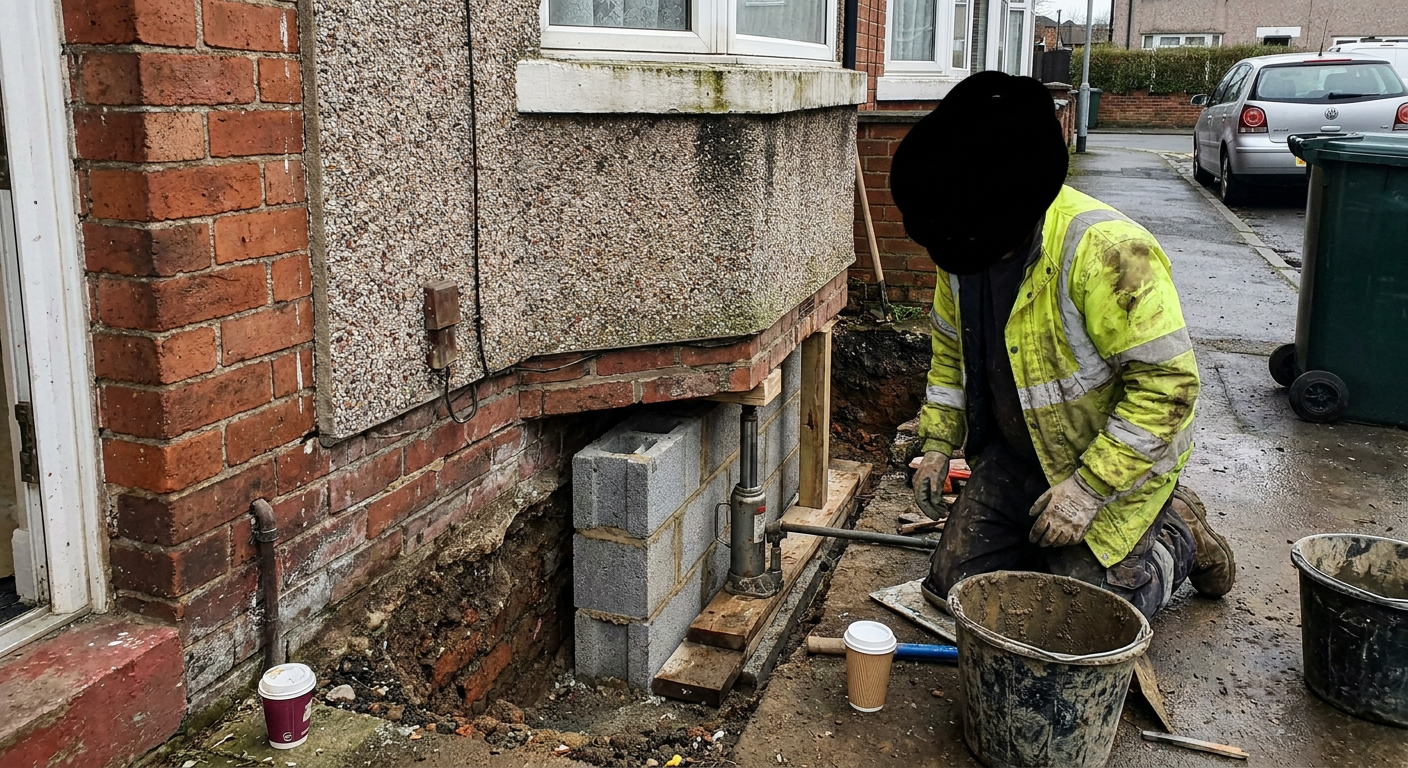
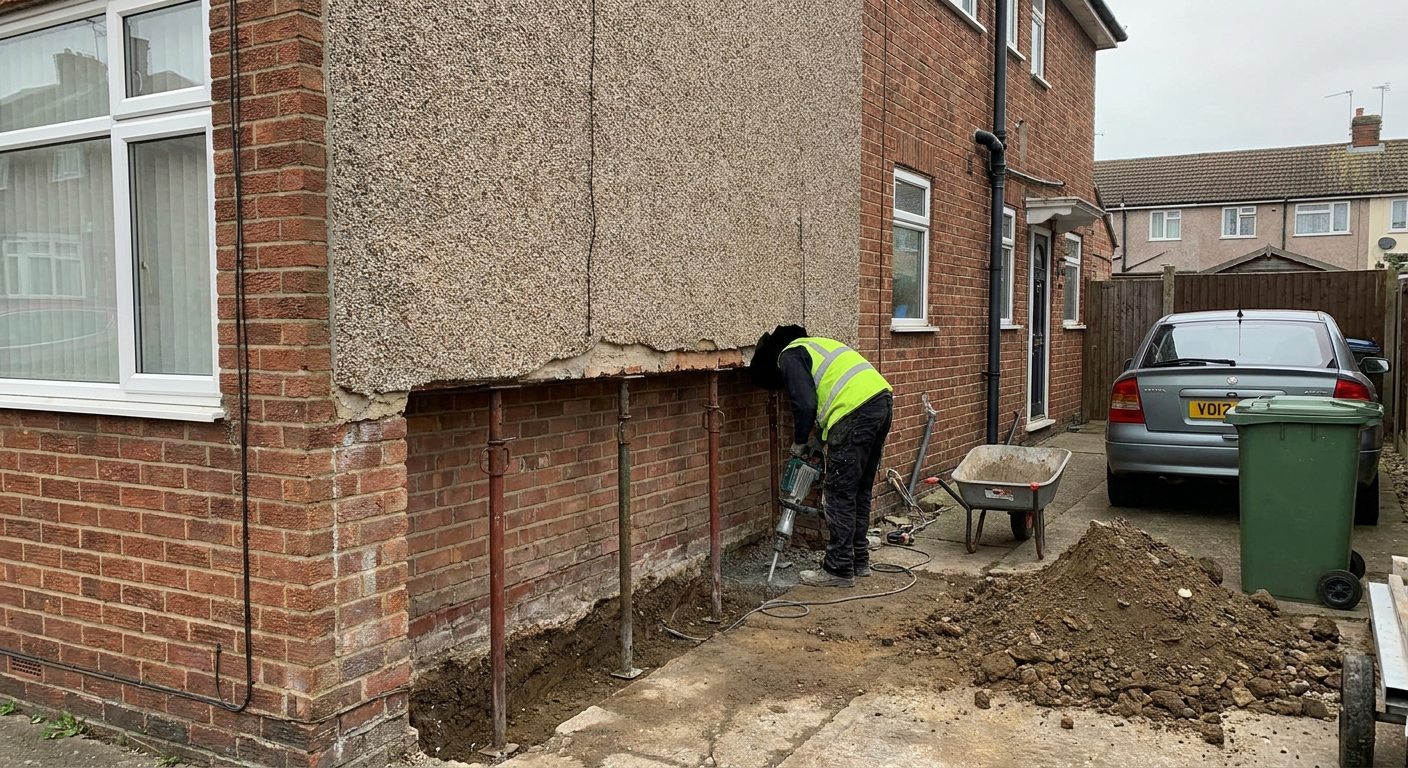
What to do when you notice a crack at home
A line appearing in the plaster is unsettling. The first thing to know is that not every crack points to subsidence. Seasonal movement, drying plaster and settling all leave marks on walls. But if a gap has widened over weeks, or if doors have started sticking, it is worth finding out what the crack means.
People often wonder who to call about wall cracks. In the Hastings area, a specialist firm handles the investigation. They look at the ground beneath the house, the type of foundation and the pattern of the damage. You can read more about what a [subsidence survey in Hastings](/the-repair/subsidence-survey-hastings) involves on its own page.
If you are looking for subsidence advice in the Hastings area, start by noting where the damage sits. Cracks above window frames behave differently from those running down a corner. A guide to [cracks above windows and doors](/cracks-above-windows-and-doors) explains why the position matters. Taking a few clear photographs before anyone arrives helps the specialist see whether the crack has changed since you first noticed it.
Making an enquiry and what happens next
The question of how to get someone out to look at cracked walls in Hastings comes up often. The process starts with an enquiry. You describe what you have seen, where it is and roughly when it appeared. From there, the specialist arranges a visit to the home.
Once an enquiry lands, the specialist reviews the details and schedules a time to attend. They walk through the affected rooms, examine the outside walls and check the ground conditions. If the situation needs monitoring rather than immediate action, they may fit tell-tales to track movement. The guide on [how to monitor a wall crack](/how-to-monitor-a-wall-crack) explains what those small markers do.
People sometimes ask whether the same firm does the survey as well as the repair work, or just one of them. These are separate stages handled by specialists in each discipline. One firm carries out the investigation; another completes the physical repair, such as [mass concrete underpinning](/the-repair/mass-concrete-underpinning-hastings) or [resin injection](/the-repair/resin-injection-hastings). The wait for an appointment depends on the season and how many enquiries are open, but the specialist confirms the expected date when you make contact.
Whether to involve your insurer first
A common worry is whether to contact an insurer before getting independent advice. Buildings insurance policies differ, and some require notification as soon as movement is suspected. Others allow you to investigate first. Reading the section on [whether insurance pays for underpinning](/does-insurance-pay-for-underpinning) clarifies what most policies expect.
If you need insurance claim subsidence help, having a record of the damage makes the conversation easier. Note the date you first saw the crack, take measurements if you can, and photograph the area in good light. Mention any recent events like heavy rain, since [autumn rain causes walls to move](/cracks-after-heavy-autumn-rain) in ways that surprise homeowners.
Some people search for a free crack assessment in East Sussex. The initial visit from a specialist is part of their process for understanding the problem. They will tell you honestly if the cracks do not need underpinning. Many turn out to be superficial, needing only [crack repair](/the-repair/crack-repair-hastings) rather than foundation work. Straight answers save time and prevent unnecessary worry about the structural survey cracked walls cost.
Ground conditions across Hastings and Bexhill
Hastings sits on varied geology. The [sandstone and Wadhurst clay](/stories/hastings-beds-sandstone-and-wadhurst-clay-under-homes) beneath local homes react differently to moisture. Clay shrinks when dry and swells when wet, so houses built on it move more than those on solid rock. Understanding this helps explain why two identical terraced houses can behave completely differently.
Older parts of the town present their own problems. Beneath the Old Town, [sandstone caves and cellars](/stories/sandstone-caves-and-cellars-beneath-hastings-old-town) alter how weight transfers to the ground. Victorian homes in [St Leonards](/hastings-and-bexhill/st-leonards) often have shallow brick footings that were never designed for modern loads. Meanwhile, houses in [Silverhill](/hastings-and-bexhill/silverhill) or [Bulverhythe](/hastings-and-bexhill/bulverhythe) might sit near [spring lines and ghyll streams](/stories/spring-lines-and-ghyll-streams-under-hastings-homes) that wash soil away slowly over decades.
When searching for underpinning contractors near Hastings, the location determines the method. Tight streets in the town centre restrict machinery, which affects [site access for underpinning](/stories/site-access-for-underpinning-on-narrow-hastings-streets). Out towards [Pett](/hastings-and-bexhill/pett) or [Westfield](/hastings-and-bexhill/westfield), space is less of a problem but the soil changes again. A specialist familiar with these local conditions knows which approach suits each street.
Choosing between repair methods
Once the cause is known, the specialist recommends a method. [Mini piled underpinning](/the-repair/mini-piled-underpinning-hastings) reaches past weak surface layers to rest on deeper, stable ground. It suits homes where the topsoil is unreliable or where tree roots have dried the clay out significantly.
Alternatively, [foundation repair](/the-repair/foundation-repair-hastings) might involve strengthening existing footings without going as deep. For properties with basements, [lowering the floor](/the-repair/basement-underpinning-hastings) requires careful sequencing to keep the walls supported throughout. Each method addresses a specific failure mechanism.
If you are [selling a house with subsidence](/selling-a-house-with-subsidence), buyers and their lenders will want proof that the correct method was used. Knowing the difference between [settlement, heave and subsidence](/settlement-heave-or-subsidence) matters here, because the wrong diagnosis leads to the wrong fix. The specialist explains which category the movement falls into and why the chosen repair matches it. Houses on sloping ground face additional forces, as [walls move downhill](/houses-on-sloping-ground) when the earth creeps, requiring different restraint than a house on flat land.
What shapes the cost of repairing cracked walls
Every home in Hastings sits on different ground, so no two repairs follow the same path or require the same amount of work.
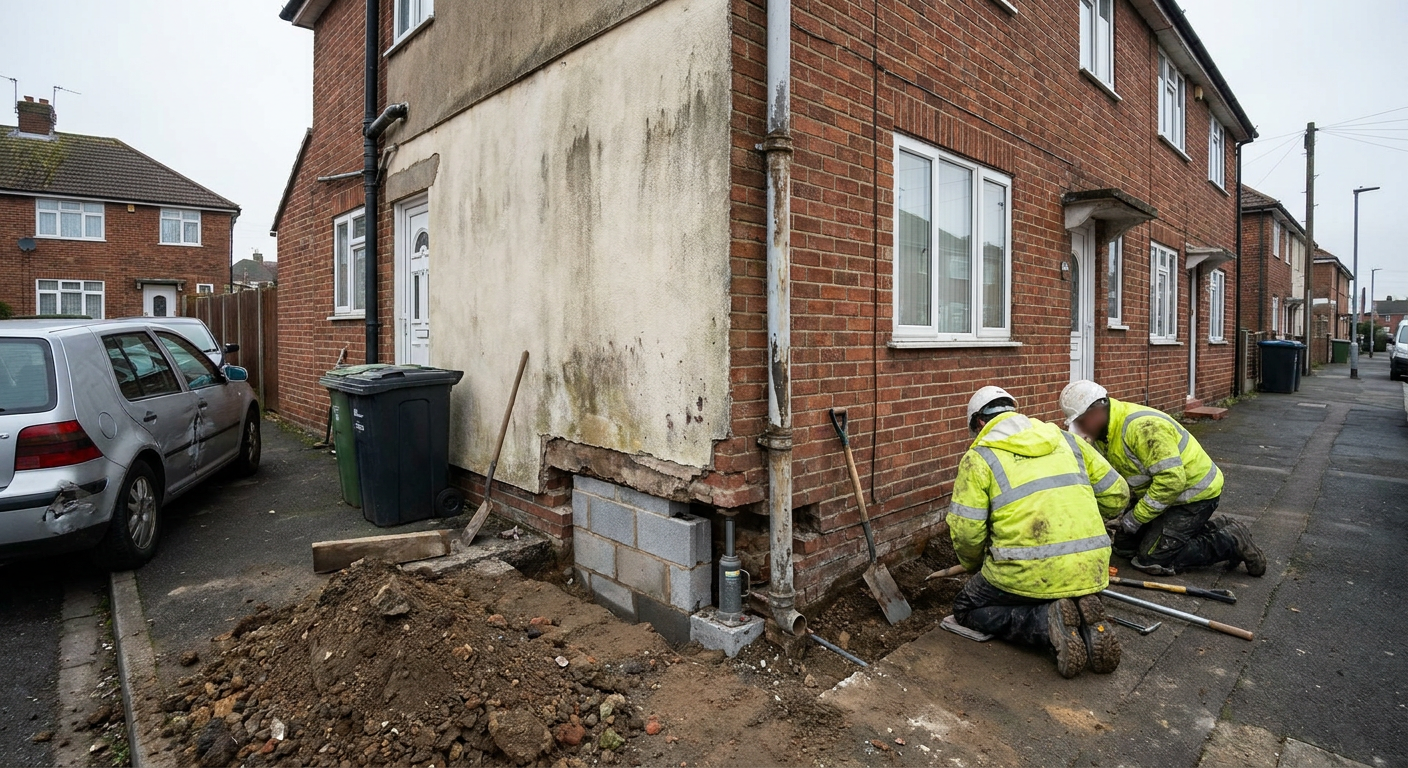
- Depth of the foundations
- Deeper foundations mean more excavation and more material to fill the void below the existing footing.
- Access around the home
- Narrow side returns or terraced streets limit machinery size, so the specialist uses smaller equipment.
- Type of soil beneath
- Clay that shrinks and swells demands a different solution than sand that water has washed away.
- Extent of the movement
- A single cracked corner costs less to address than movement affecting three external walls.
The specialist explains the full cost of your particular job before any work is agreed.
Independent advice or going through your insurer
The route you take affects who controls the investigation and how quickly the repair begins.
A specialist advises which route suits your situation after examining the damage.
Speed of first visit
- Independent specialist
- Arranged directly once you enquire, usually within days.
- Insurance route
- Depends on the insurer appointing a loss adjuster first.
Choice of contractor
- Independent specialist
- You select the firm carrying out the repair.
- Insurance route
- The insurer often nominates their preferred contractor.
Scope of investigation
- Independent specialist
- Focused entirely on your home and its specific ground.
- Insurance route
- May follow standard procedures set by the insurer.
Cost responsibility
- Independent specialist
- You pay the specialist directly for their findings and work.
- Insurance route
- The policy covers approved costs after any excess is met.
Ask about the crack in your wall
Send a description of what you have noticed. The specialist reads it and replies with the next step. Making an enquiry does not commit you to any work or payment.
- No obligation to proceed
- Local to Hastings
- Plain answers given