Subsidence survey in Hastings
Subsidence survey in Hastings
A subsidence survey Hastings homeowners request most often is the first step when a wall moves. A specialist firm examines the house, records levels and cracks, checks drains, and writes a report you can send to your insurer.
- Written report for your insurer
- Levels and crack measurements recorded
- Drain and ground checks included
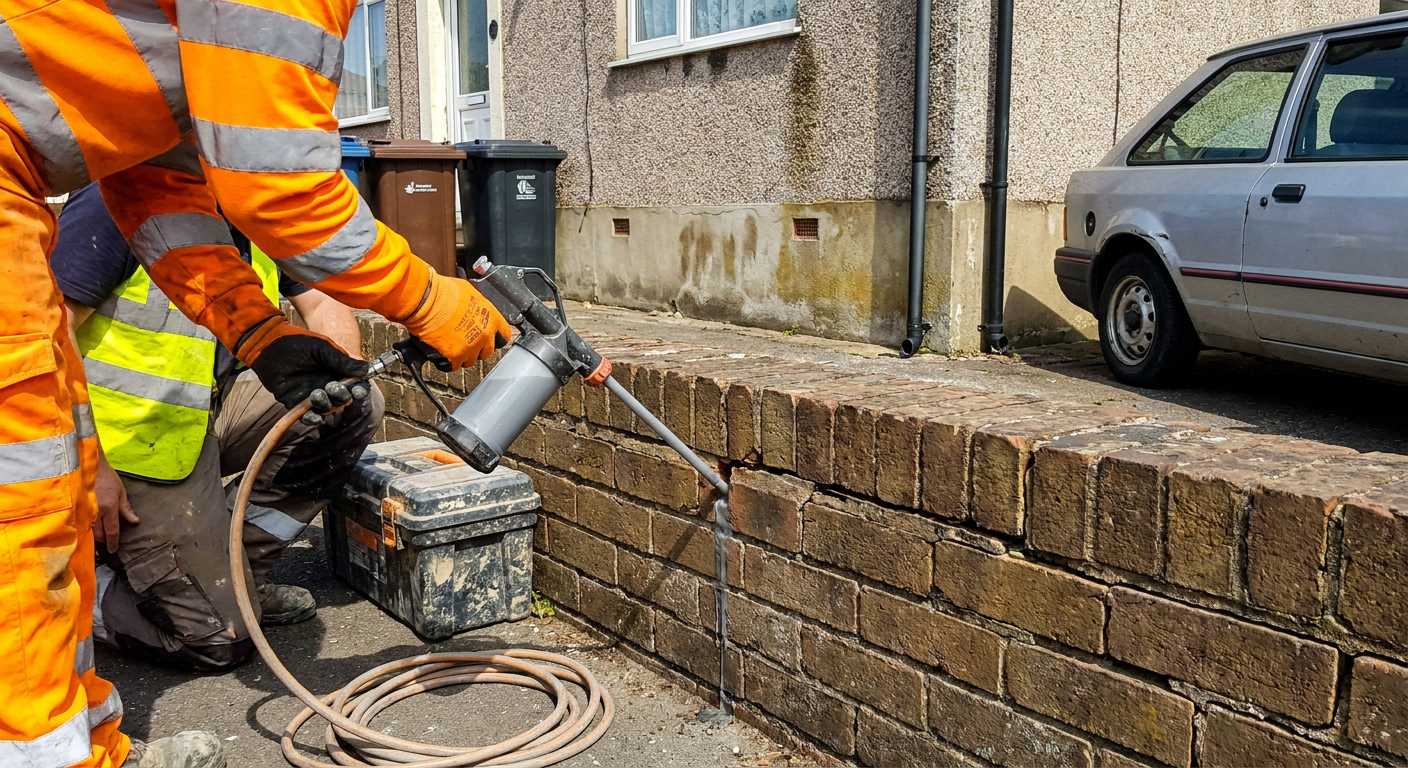
Ask about a survey
What happens during a subsidence survey
The person who checks subsidence on a house looks at the structure, the ground beneath it and any pipes that might be leaking.
- Visual inspection A structural survey for cracks in Hastings homes starts with walking around the inside and outside of the building to map damage and note where walls have moved.
- Level readings The specialist takes precise level readings across floors and sills to see which parts of the home have dropped or tilted since it was built.
- Crack recording Width, direction and position of every crack are logged so future visits can show whether movement is still happening or has stopped.
- Drain checks A drain survey to find a subsidence cause uses cameras pushed through pipes to spot leaks washing soil away from the footings.

Stages of a subsidence survey
The work follows a set order so nothing is missed before the report is written.
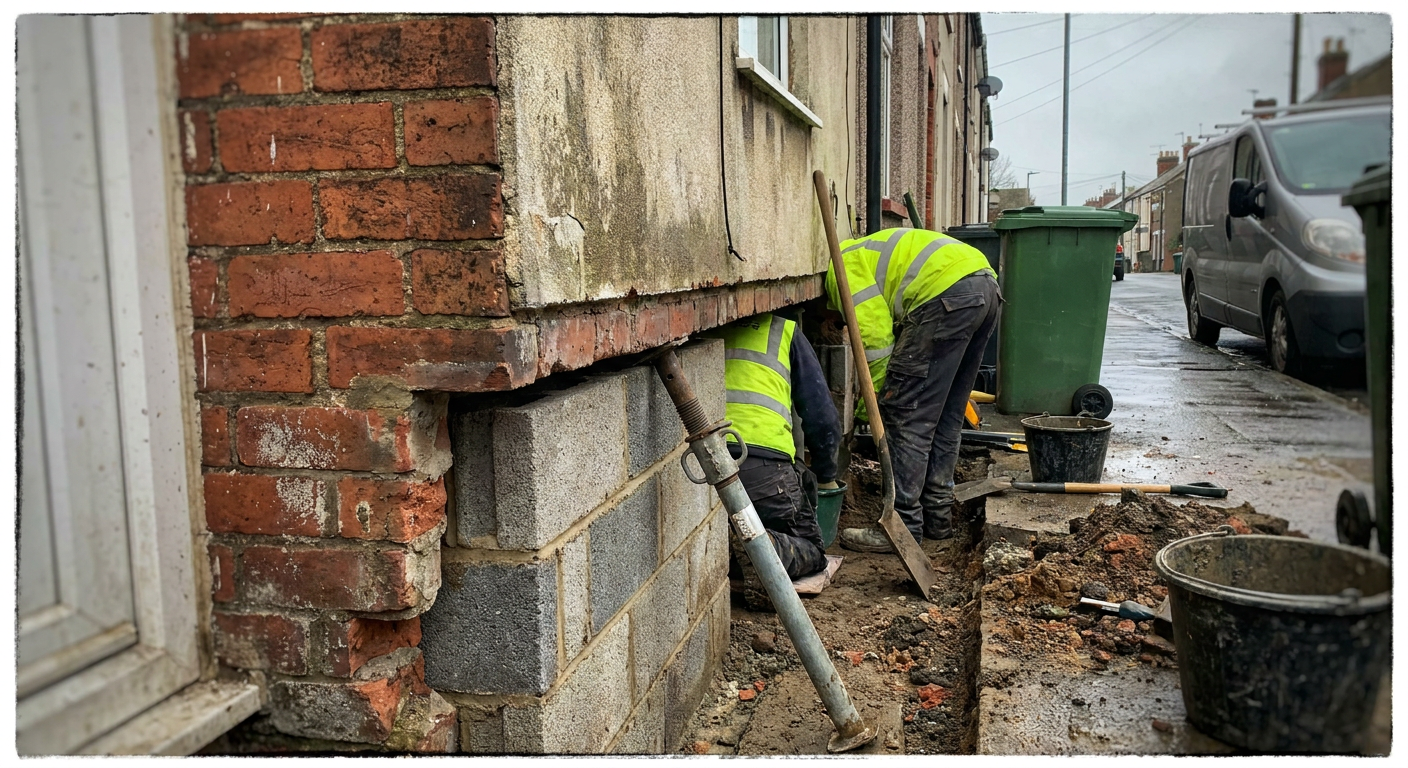
Initial walk-through
The specialist walks the rooms and the garden, noting visible cracks, sticking doors and uneven floors.
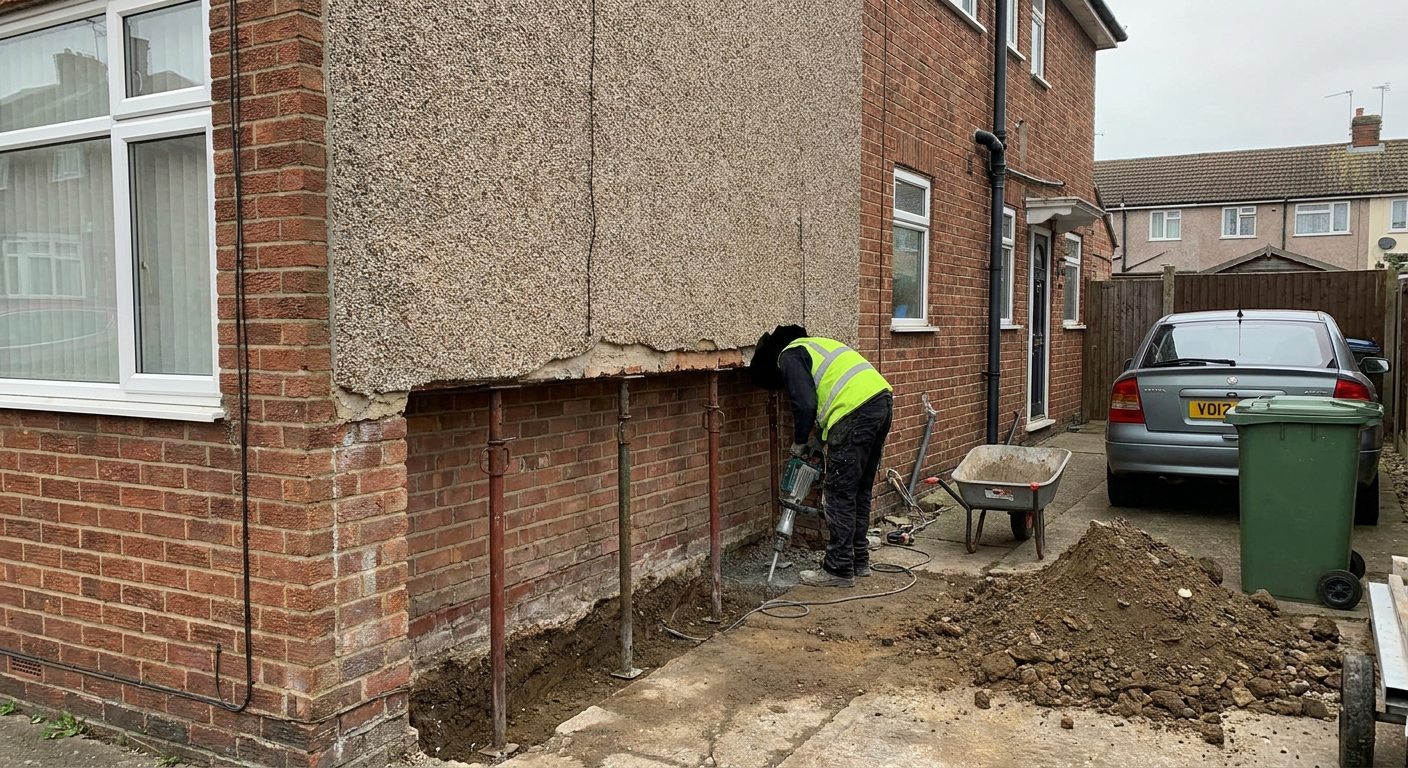
Taking measurements
Levels are read across the building and cracks are measured with gauges or tell-tales fixed to the wall.
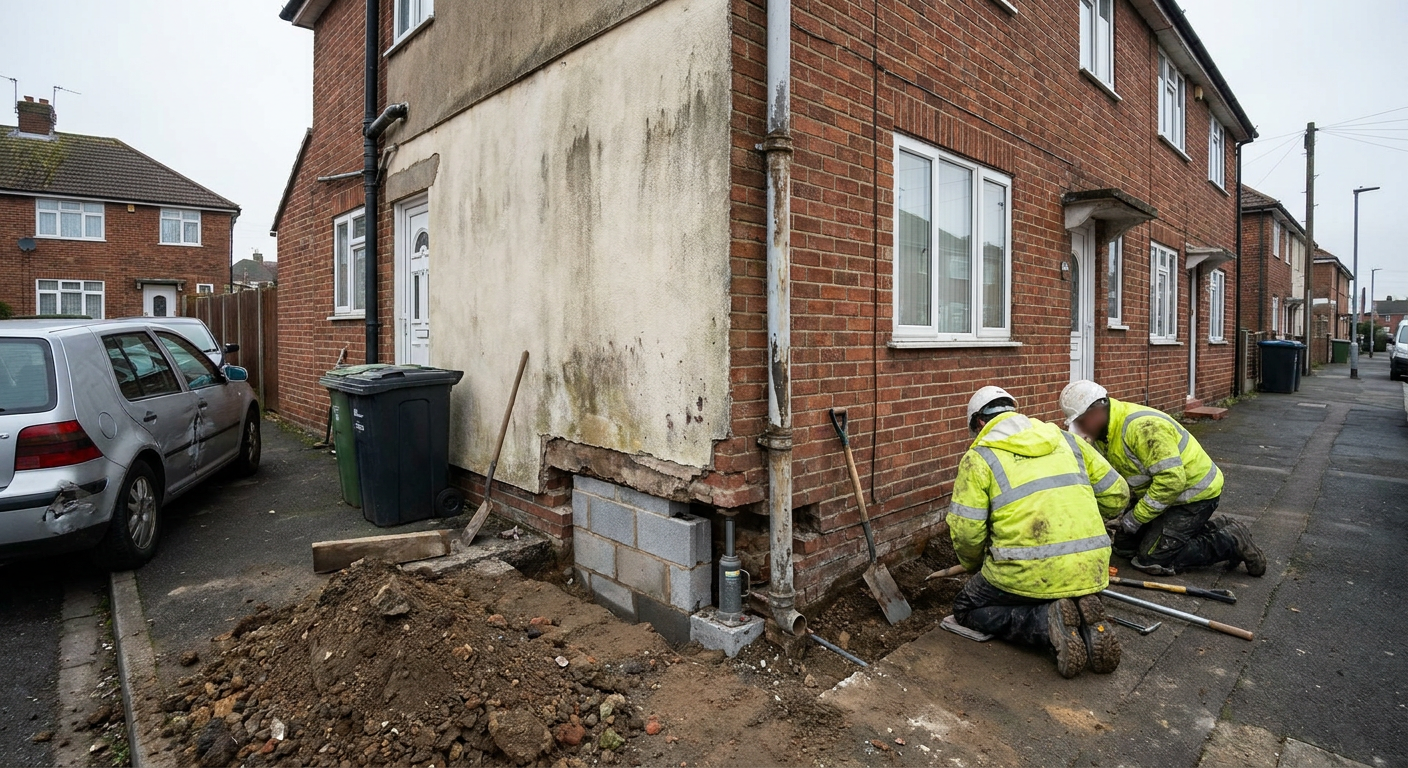
Ground investigation
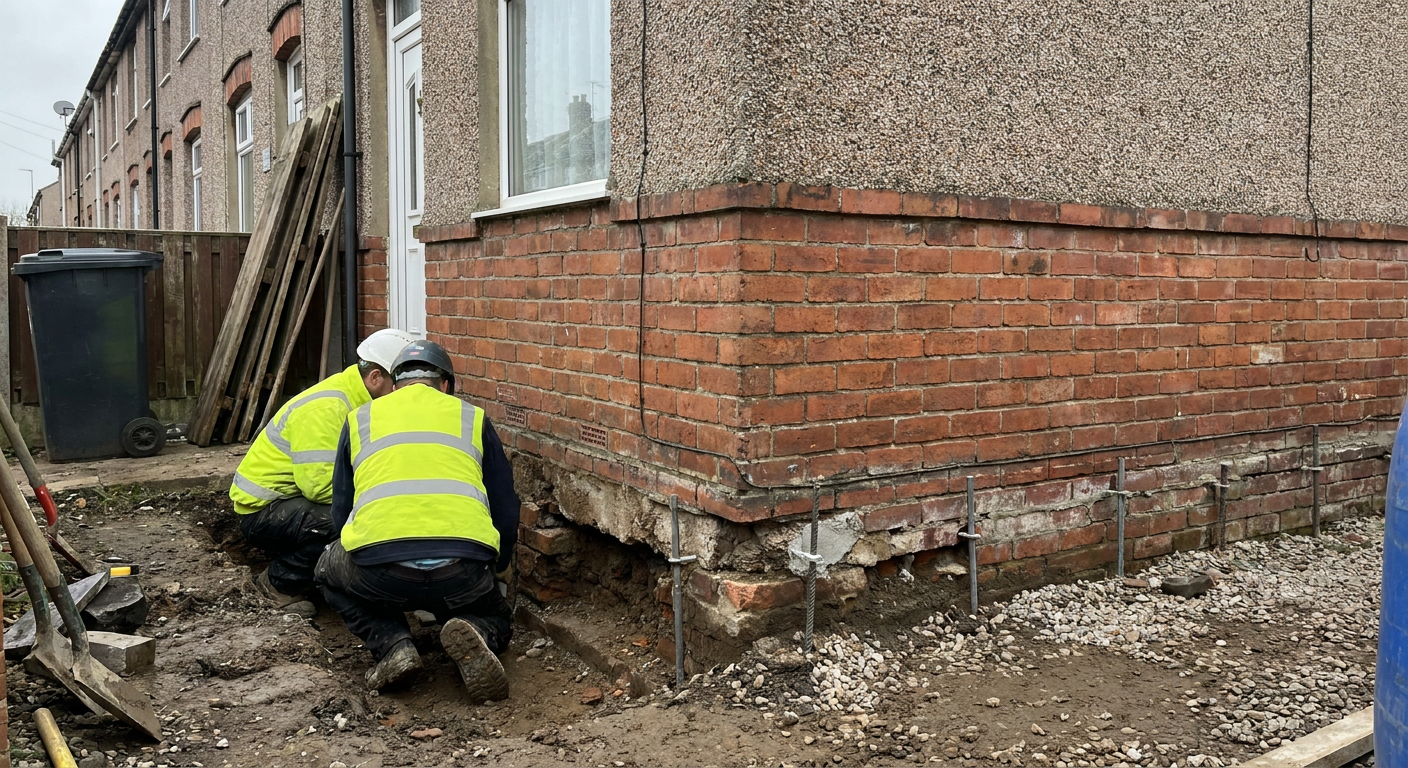
If needed, trial holes are dug near the foundations to check the soil type and look for voids.
Writing the report
All findings go into an independent subsidence report setting out the cause and recommended repair.
Repairs that may follow a survey
Once the report identifies why the home is moving, a specialist firm can carry out the right repair. These are the methods used most often around Hastings.
-
Mass concrete underpinning
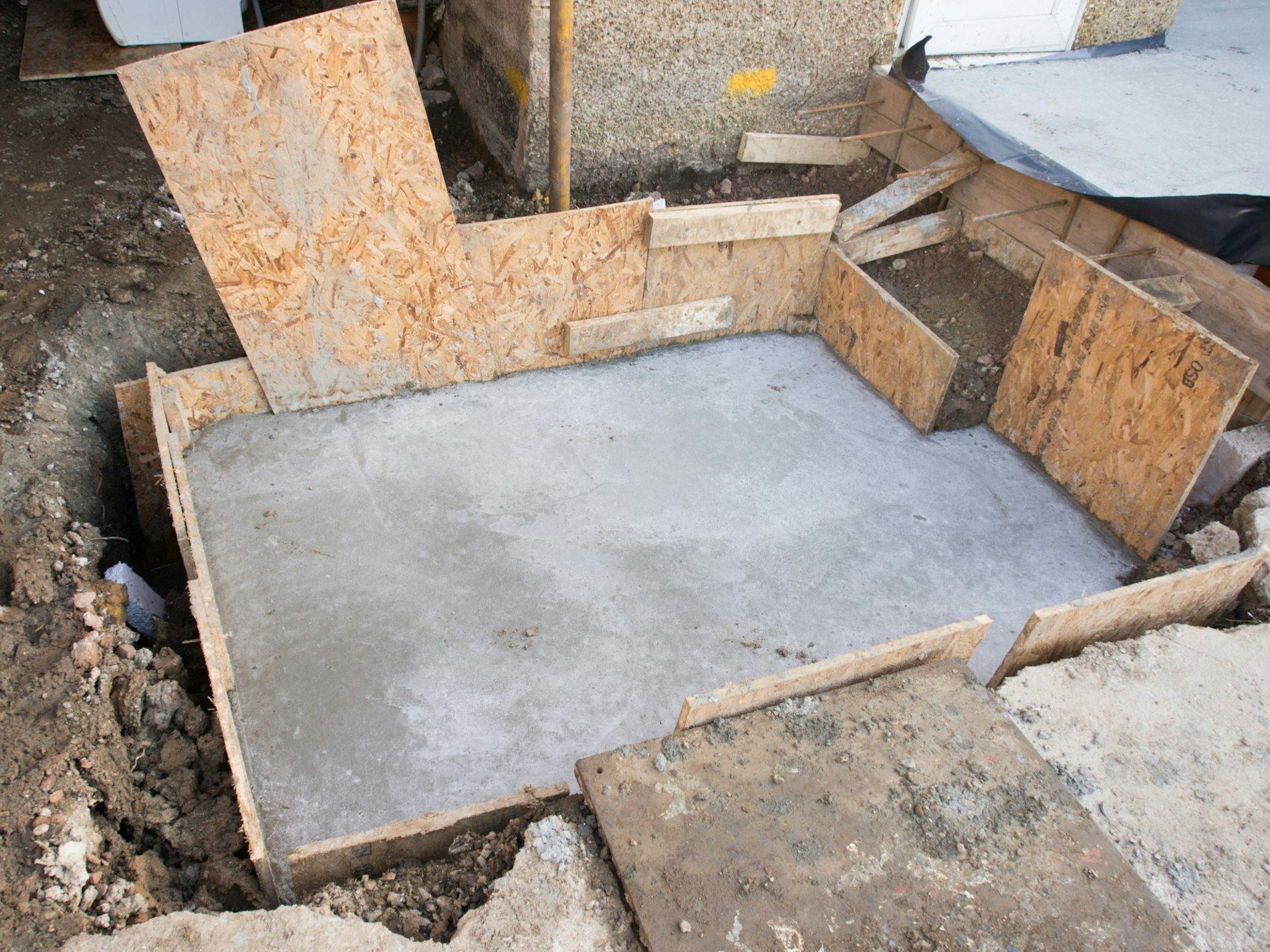
Where shallow foundations have failed, a specialist excavates bays below the existing footing and pours concrete in stages to form a new, deeper base. This method suits older homes in Hastings built on firm ground close to the surface. The homeowner receives a clear sequence of work so they know which wall is being supported at each stage and how long the job will take. Read more about mass concrete underpinning in Hastings.
-
Mini piled underpinning
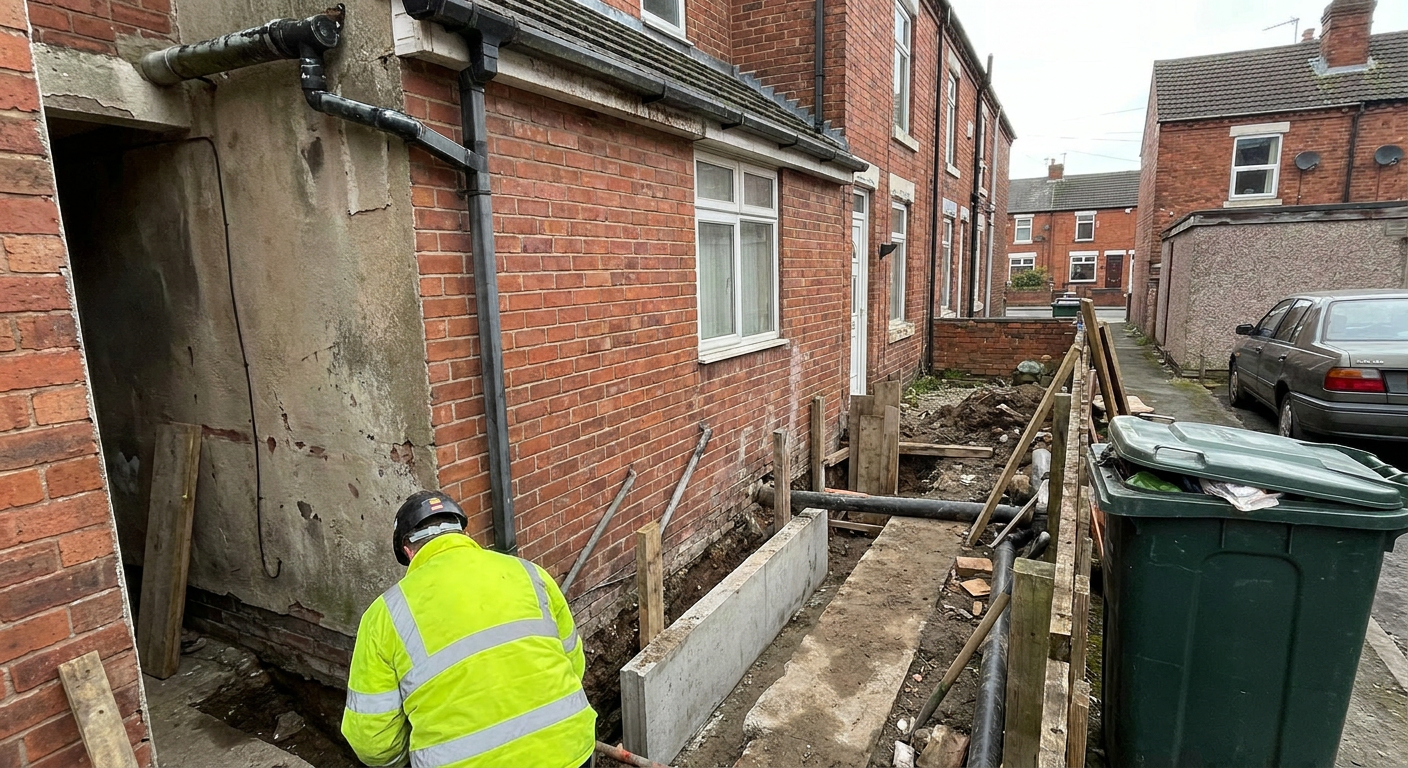
When the good bearing strata lie several metres down, or the ground is too soft for mass concrete, a specialist drives or bores steel-cased piles to reach stable soil. Piles are capped with reinforced concrete beams that support the walls above. This approach is common on made ground or where tree roots have dried the clay deep below a home. Find out how mini piled underpinning works in Hastings.
-
Crack repair
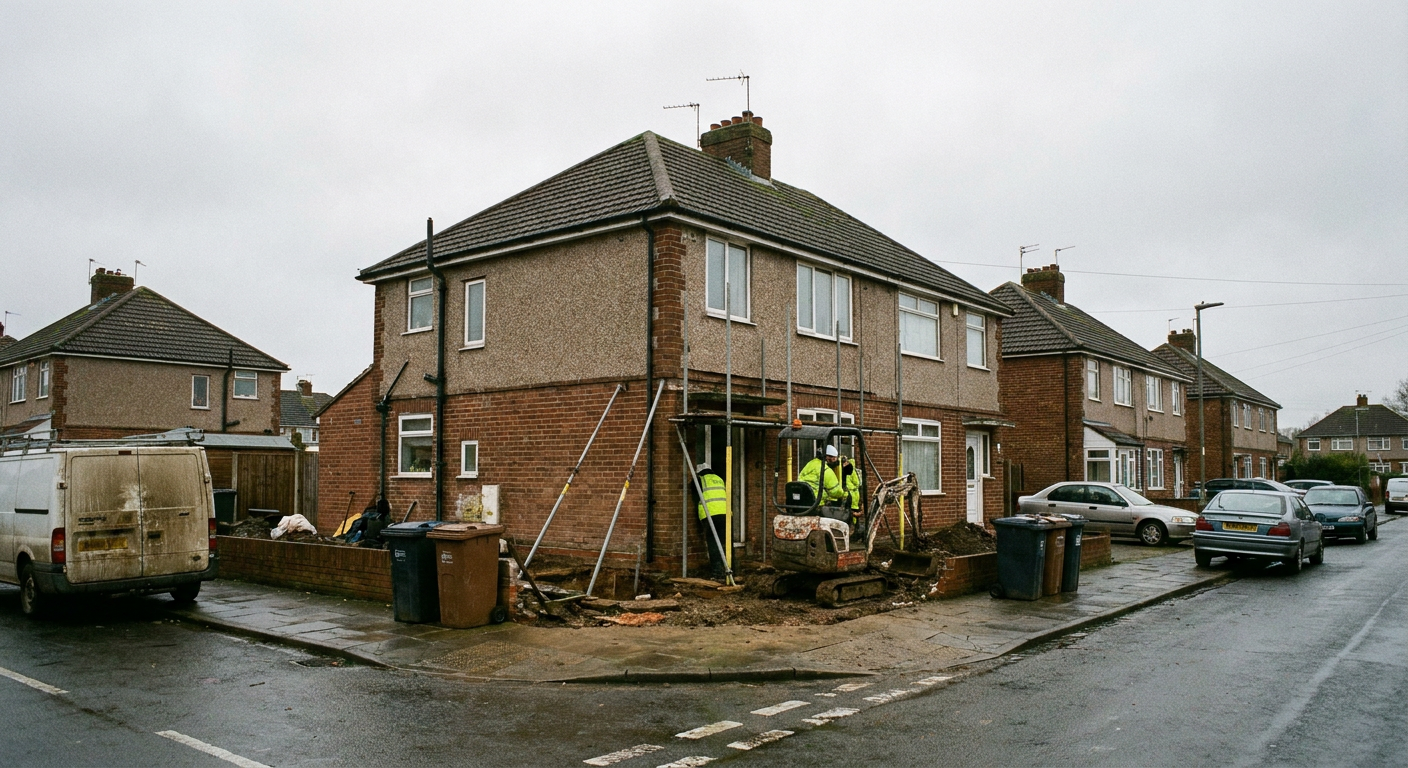
After the foundation is stabilised, the cracks themselves need attention. A specialist stitches masonry back together using helical bars set into mortar joints, then fills the remaining gaps with resin or lime-based filler. This restores strength and weather resistance without rebuilding entire sections of wall. It also removes the visual signs of movement that worry buyers. See how crack repair is carried out in Hastings.
Questions about subsidence surveys
A subsidence survey in Hastings gives you a clear picture of what is happening to your home, why the walls are moving, and what needs to happen next so you can decide how to proceed.
- Survey cost and timing
- Fees depend on the size of the home and whether trial pits are needed. Ask for a price when you enquire; dates are usually available within days.
- Trial holes and drains
- The specialist only digs trial holes if surface checks cannot confirm the cause. Drain cameras run through existing access points without lifting paths.
- How long monitoring takes
- Level monitoring runs over months to prove whether movement is active. Crack tell-tales give earlier clues, but seasonal change needs time to show.
- Sending the report to insurers
- Most insurers accept an independent subsidence report as part of a claim.
- Claiming or surveying first
- Some owners prefer their own report before involving an insurer. Others notify the insurer immediately. Both routes are normal and neither blocks the other.
- Selling after a survey
- Having a report does not stop a sale. Buyers want to know the cause and whether it is fixed. Clear paperwork usually helps a sale progress.
Areas covered around Hastings
Specialist firms take on subsidence surveys across Hastings and the surrounding towns. Enquiries from any of these places are handled the same way, with a local visit and a written report.
If your town is not listed, send an enquiry anyway. Firms cover most of East Sussex.