Guide
The difference between settlement and subsidence
Find out what the words in your survey or insurance letter actually mean. Learn the direction of movement, the usual timing and the typical crack patterns for each, so you know what to ask a specialist about your home.
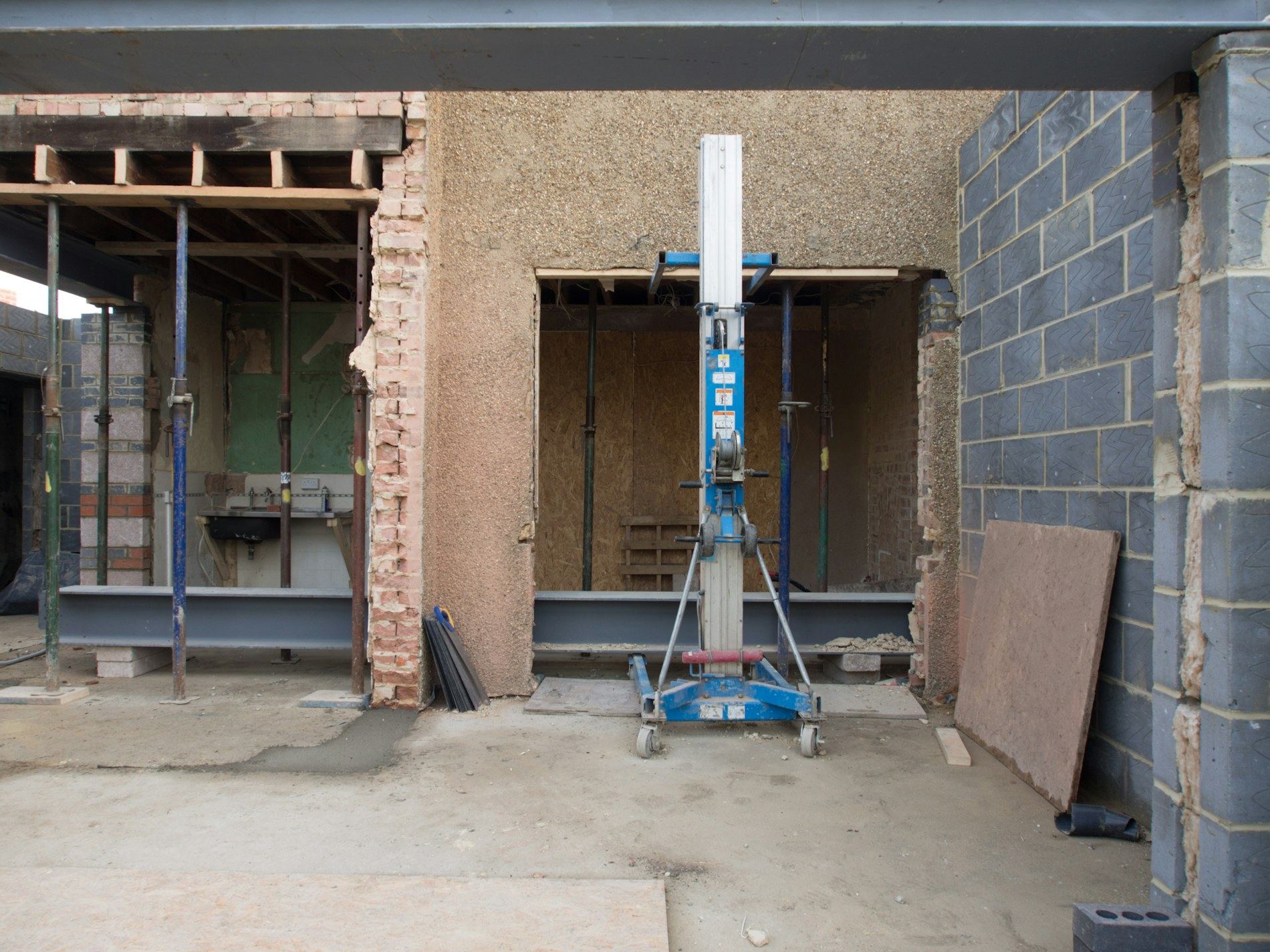
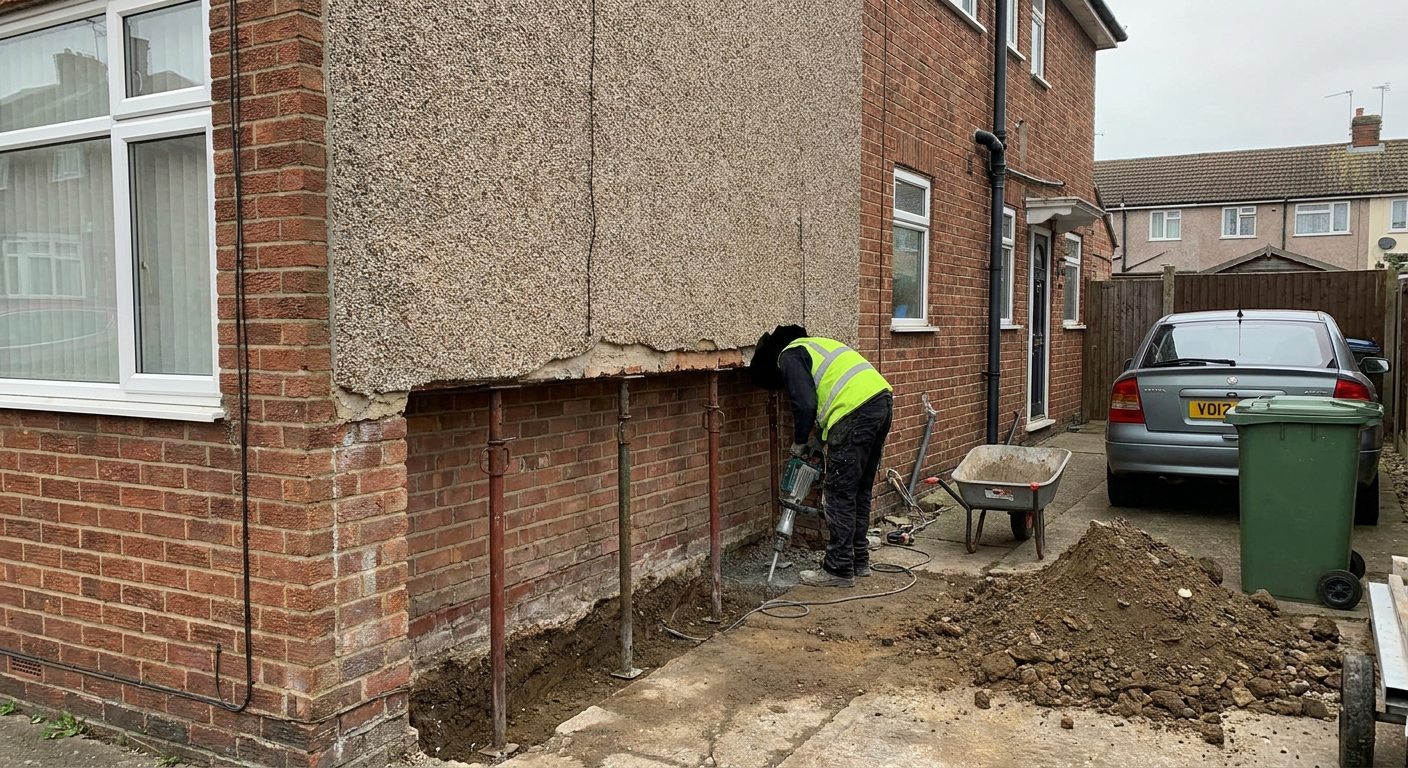
Settlement, subsidence and why the words matter
When a survey report lands on your doormat, the first thing you look for is whether it says subsidence or normal cracking. Understanding the difference between settlement and subsidence matters because one is expected behaviour and the other needs repair.
Settlement happens when the weight of a new building compresses the ground beneath it. The house moves down evenly, usually within the first few years after construction. Subsidence means the ground itself is losing its ability to support the foundations. Soil shrinks, washes away or collapses, and part of the home sinks into the void. In Hastings, where Wadhurst clay sits below many streets, that clay shrinks during dry summers and swells again in winter. A [subsidence survey](/the-repair/subsidence-survey-hastings) establishes which process is at work beneath your walls.
People often wonder if settlement is serious for a house. For a newer build it rarely is. But an older Victorian terrace in St Leonards showing fresh cracks is unlikely to be settling. That points to subsidence, and the [underpinning specialists](/the-repair/house-underpinning-hastings) who work across East Sussex can confirm it.
Reading the shape of a crack in your wall
Crack patterns carry meaning on walls, and their shape tells you the direction of movement. Settlement produces fine, hairline cracks, often running horizontally along mortar joints where a new extension meets an older wall. They tend to stay narrow and stop growing once the building has found its footing.
Subsidence cracks are different. They run diagonally, tapering from wide at the top to thin at the bottom, or vice versa. You will often see them radiating from the corners of windows and doors, because those openings are the weakest points in the masonry. If you notice [cracks above window frames](/cracks-above-windows-and-doors), measure the width. Anything wider than a two pound coin suggests the ground is moving.
Heave pushes walls in the opposite direction. Where subsidence pulls a foundation down, heave forces it up. This happens when soil that was previously dry absorbs water and expands, lifting the structure. Trees removed too close to a house are a common cause. Clay beneath homes in Silverhill or Bulverhythe reacts sharply to these moisture changes, so [foundation repair](/hastings-and-bexhill/bulverhythe) there frequently involves dealing with seasonal swelling.
When new build movement stops being normal
A new home settles as its weight presses the soil particles closer together. Most of this compression finishes within the first two years. After that, any fresh movement is no longer settlement.
If your survey said movement, what next depends on the age of the house and the speed of the cracking. A builder might dismiss early hairlines as drying shrinkage. But if a crack reopens after being filled, or if doors start sticking in frames that used to swing freely, the ground is still shifting. That is when you need a structural assessment rather than a pot of filler.
On sloping sites around Hastings Old Town, gravity adds another force. Downhill creep looks like settlement but behaves differently over time. Homes built on made ground near the coast are particularly vulnerable. Monitoring the [cracks after heavy autumn rain](/cracks-after-heavy-autumn-rain) shows whether water is washing soil away from the footings or simply making existing fractures more visible.
What your insurer means by these terms
Insurance letters use precise language because it determines whether they pay out. Buildings insurance covers subsidence and heave. It does not cover settlement. If your policy adjuster decides the cracking is caused by initial settlement or poor construction, the claim fails.
This is why homeowners facing a rejected claim often seek independent advice. An insurer might send a loss adjuster who spends twenty minutes looking at the walls. A [specialist firm](/the-repair/underpinning-contractors-hastings) takes trial pits, examines the soil and tracks the movement over months. Their report carries weight because it separates normal settling from active ground failure.
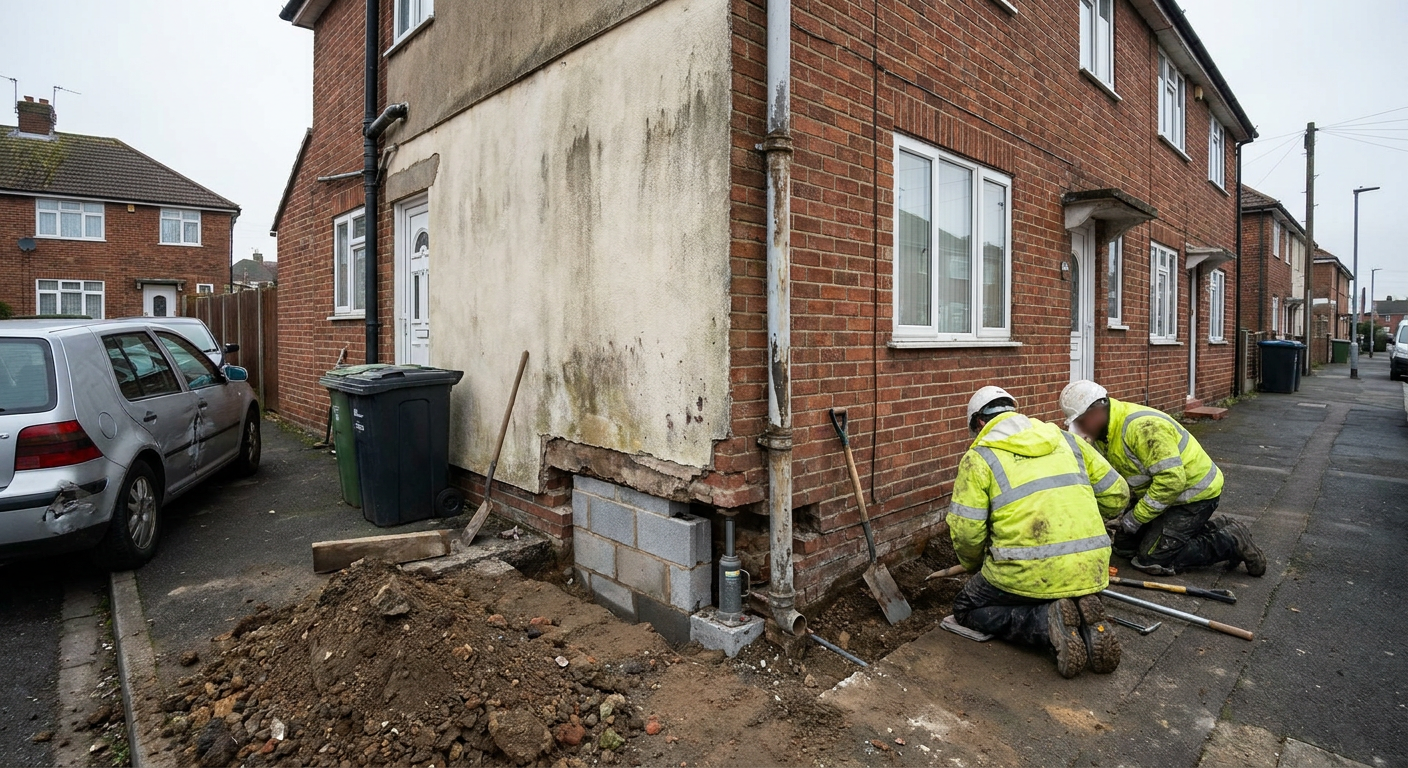
If the diagnosis is subsidence, the insurer typically funds the repair. That might involve [mass concrete underpinning](/the-repair/mass-concrete-underpinning-hastings) to extend the foundations down to stable ground, or [resin injection](/the-repair/resin-injection-hastings) to bind loose soil. The method depends on what lies beneath your specific home.
Watching the walls before calling for help
You can track a crack yourself before anyone visits. Taping a brittle glass tell-tale across the fracture, or marking its ends with a pencil and dating it, costs nothing. If the mark moves over a few weeks, the ground is active.
[Monitoring a wall crack](/how-to-monitor-a-wall-crack) gives you facts instead of anxiety. Photograph it in good light every month. Note whether doors catch on the frame or floors slope more than they did. This record helps a structural engineer read the history of the movement without guessing.
But watching is only useful if it leads to action. Leaving a widening diagonal crack unreported risks turning a repairable problem into major structural damage. If the crack exceeds three millimetres, or if you see stepping through the bricks, arrange a professional visit. Firms providing [structural monitoring](/the-repair/structural-monitoring-hastings) fit gauges that measure movement to fractions of a millimetre, removing the guesswork entirely.
From noticing a crack to getting an answer
- 1
Record the crack
Mark the ends of the fracture with a pencil, write the date beside it, and take a clear photograph in daylight.
- 2
Check the doors
See if internal doors stick in their frames or if gaps appear around skirting boards near the damaged wall.
- 3
Arrange a survey
A specialist firm digs trial holes, examines the soil beneath your home and identifies the exact cause of movement.
- 4
Receive a report
The surveyor writes up their findings, separating settlement from subsidence and recommending the right repair method.
- 5
Plan the repair
If underpinning is needed, contractors schedule the work, handling everything from excavation to reinstating the ground.
Questions about ground movement in Hastings
These are the things buyers and homeowners in Hastings ask when a survey mentions movement or a crack appears.
My survey says settlement, not subsidence, should I worry?
No, if the house is relatively new and the cracks are fine and horizontal. But if the home is old or the cracks are widening, ask a specialist to check. Surveyors sometimes use the safer word until they dig trial pits.
What does heave actually mean and why would ground push up?
Heave is upward movement. It happens when dry clay absorbs water, often after a large tree is felled nearby, and expands. The swelling soil lifts the foundations, causing cracks that taper downwards rather than upwards.
How can I tell from the shape of a crack which one I have?
Settlement leaves thin horizontal lines. Subsidence makes diagonal cracks, widest at the top, often near windows. Heave creates diagonal cracks widest at the bottom. The direction of the taper points to the direction of movement.
When does new build settlement stop becoming a problem?
Most compression finishes within two years of construction. If cracks keep opening after that, or if they exceed three millimetres wide, the movement is no longer normal settlement and needs investigation by a structural engineer.
My insurer uses all these words, which one do they pay for?
Buildings insurance pays for subsidence and heave. It does not cover initial settlement or construction defects. If your claim is turned down, an independent structural report can challenge the decision with physical evidence.
Should I monitor the cracks before calling anyone in?
Yes. Mark the ends with a pencil and date them. Take monthly photographs. But do not wait months if the crack is already wider than a coin or if doors are jamming. Active movement needs prompt professional attention.
Who can tell me which one is happening at my house?
A specialist subsidence surveyor or structural engineer. They dig trial pits, test the soil and fit monitoring equipment. General builders cannot diagnose ground failure reliably. Look for firms experienced with local Hastings geology.
Find out what the crack in your home means
Send a description of what you have noticed. A specialist firm reviews the details and advises whether your home needs a site visit. There is no obligation to proceed with any repair work.
- No obligation to proceed
- Local Hastings knowledge
- Clear plain answers