Local guides
Underpinning and subsidence guides for Hastings homes
Read about the ground beneath Hastings, what cracks mean, how surveys work and the repair methods specialist firms use on local homes. Each piece answers a specific question you might have right now.
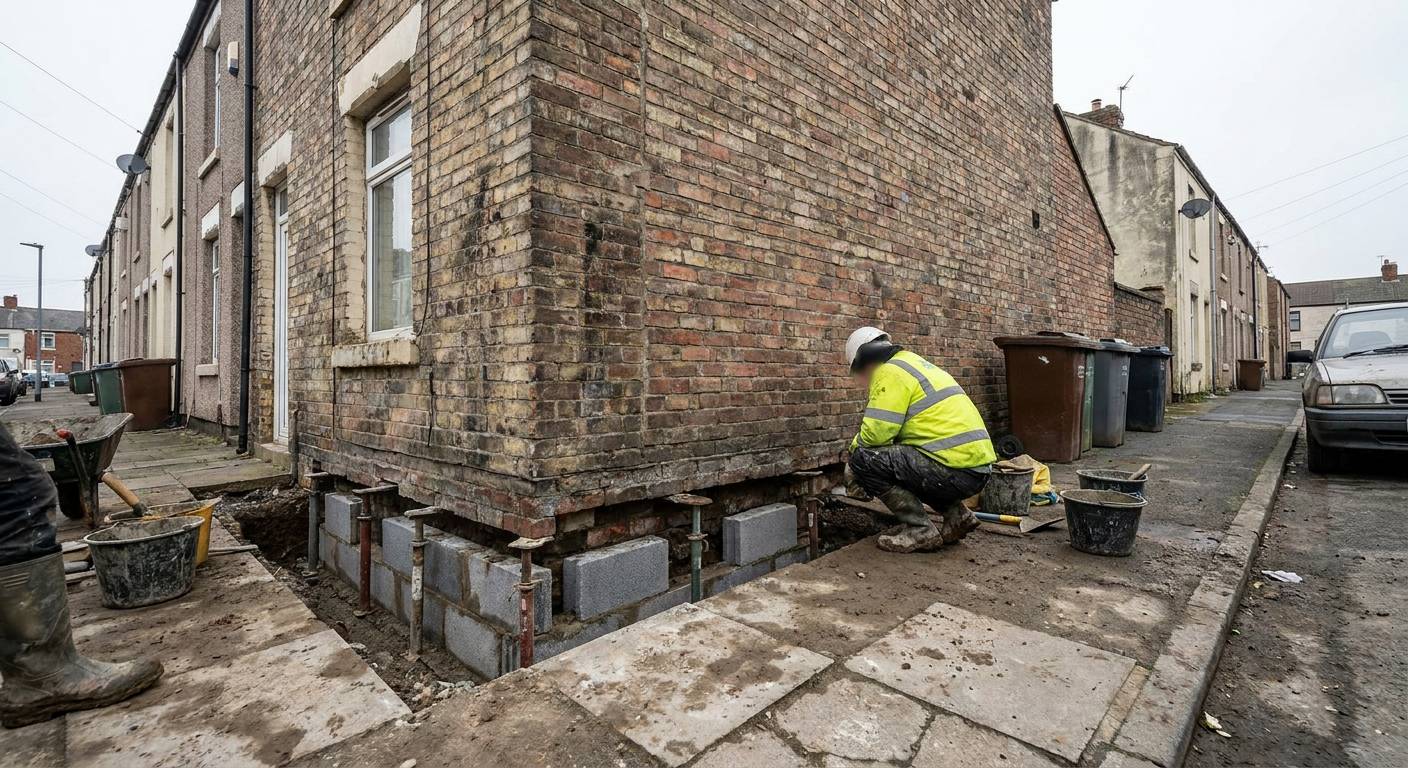
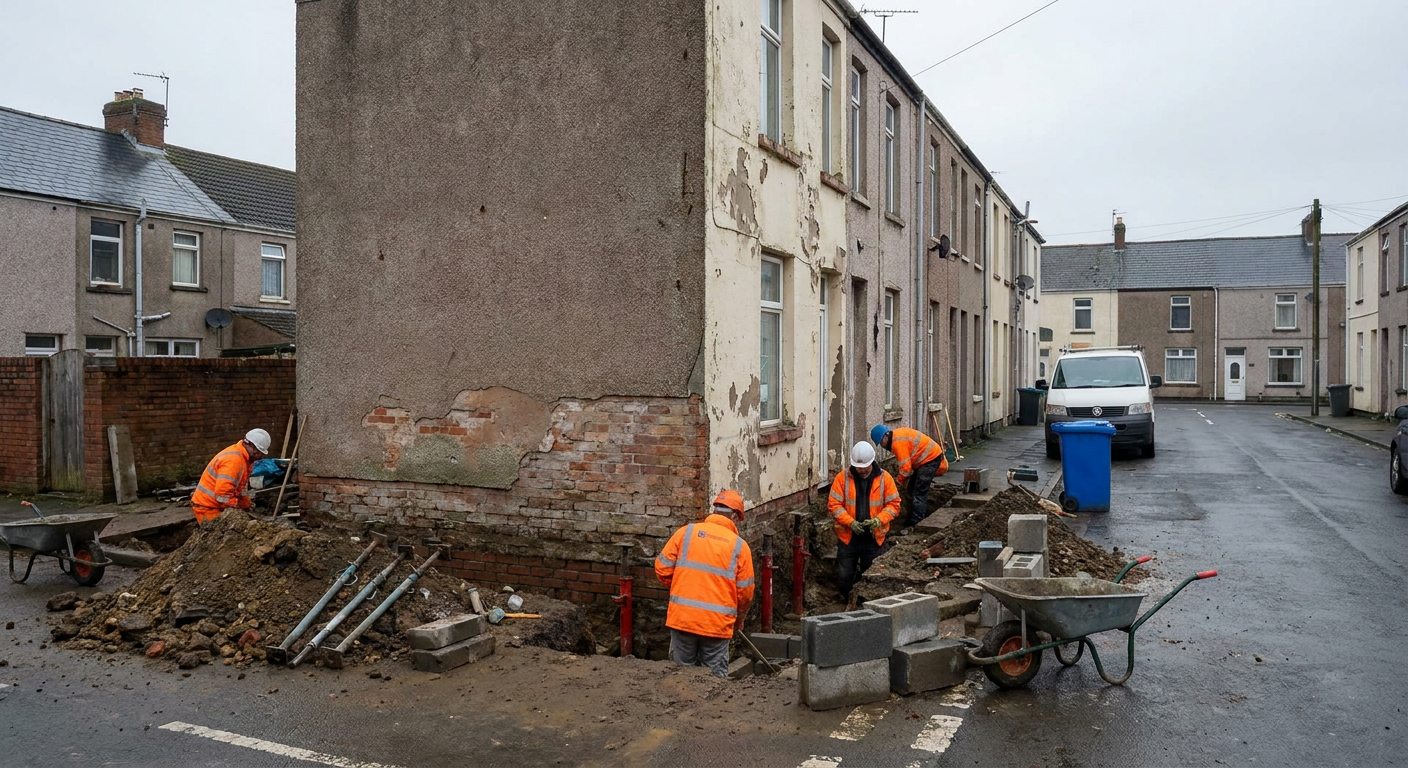
Understanding why walls crack in Hastings
A crack in plaster or brickwork is usually the first sign that something has shifted under your home. The movement might be harmless settlement from when the house was built, or it might be ongoing subsidence caused by failing ground. Telling the two apart matters because the response is completely different.
The geology here does not make things simple. Homes sit on layers of sandstone, clay and loose sand, often within a few streets of each other. The [Hastings Beds sandstone and Wadhurst clay under homes](/stories/hastings-beds-sandstone-and-wadhurst-clay-under-homes) behave differently when wet, and water moving through sandy soil can wash support away from a footing entirely. Heavy autumn rain is a common trigger. When the ground swells and shrinks with the seasons, walls move with it. You can read more about why this happens after storms in the guide to [cracks after heavy rain](/cracks-after-heavy-autumn-rain).
Cracks above window frames deserve particular attention because the lintel carries the wall above. A specialist surveyor will measure their width, direction and position to determine whether the movement is active. If you want to track a crack yourself before anyone visits, the notes on [how to monitor a wall crack](/how-to-monitor-a-wall-crack) explain what to record and how to do it without guessing.
Surveys and finding out what lies below
Before any repair starts, a structural engineer needs to see what is happening underground. A [subsidence survey](/the-repair/subsidence-survey-hastings) records the damage visible inside and outside the house, then looks at the drains, trees and soil type to build a picture of the cause. In Hastings town centre, where buildings stand close together and Victorian drainage still runs beneath many streets, the [survey covers specific local risks](/hastings-and-bexhill/hastings-town-centre) that a generic report would miss.
Sometimes looking is not enough. Trial pits and boreholes let the engineer examine the actual soil strata beneath the foundations rather than relying on maps alone. The write-up on [trial pits and boreholes](/stories/trial-pits-and-boreholes-what-lies-below-your-walls) explains what the digging involves and why the samples matter for choosing a repair method.
If the cause remains unclear, or if the movement is slow, the next step is monitoring. Structural engineers install gauges that measure tiny shifts over weeks or months. The page on [structural monitoring](/the-repair/structural-monitoring-hastings) sets out how these instruments work and what the readings tell you. It is also worth understanding the difference between [settlement, heave and subsidence](/settlement-heave-or-subsidence), since each one points toward a different solution and insurance companies treat them differently.
Repair methods used on local homes
Once the cause is known, a specialist firm chooses the repair. [Mass concrete underpinning](/the-repair/mass-concrete-underpinning-hastings) is the traditional approach: sections of foundation are excavated and filled with concrete in sequence to reach stable ground. It suits heavier buildings and deeper problems. Where access is tight or the good ground is far down, [mini piled underpinning](/the-repair/mini-piled-underpinning-hastings) drives steel-cased piles to a load-bearing layer instead.
Not every problem requires digging. [Resin injection](/the-repair/resin-injection-hastings) stabilises loose soil by pumping expanding material into the ground beneath the footing. It works well where water has washed out sandy subsoil, a problem described in the piece on [water washing out sandy ground](/stories/water-washing-out-sandy-ground-beneath-a-foundation). For cracked masonry that no longer moves, [crack repair](/the-repair/crack-repair-hastings) uses stitching and filling to restore strength.
Some homes need more specific work. [Basement underpinning](/the-repair/basement-underpinning-hastings) lowers an existing cellar floor while supporting the walls around it. [Foundation repair](/the-repair/foundation-repair-hastings) addresses footings that have failed without the whole building dropping. The broader overview of [subsidence repair](/the-repair) ties these options together so you can see which applies to your situation.
How location changes the work
Hastings and Bexhill cover varied terrain, and the ground dictates the approach. Homes in [St Leonards](/hastings-and-bexhill/st-leonards) are largely Victorian, built on clay that shrinks in dry summers. The [underpinning options for those older houses](/hastings-and-bexhill/st-leonards) differ from newer builds. In [Bulverhythe](/hastings-and-bexhill/bulverhythe), settling walls and cracking are common near the coast, and [mass concrete underpinning](/mass-concrete-underpinning-bulverhythe) is frequently specified there.
[Silverhill](/hastings-and-bexhill/silverhill) sits on higher ground where cracked walls often trace back to tree roots or drain leaks. [Resin injection for ground stabilisation](/resin-injection-ground-stabilisation-silverhill) sees regular use in that area. [Bexhill-on-Sea](/hastings-and-bexhill/bexhill-on-sea) has its own patterns of movement, and [comparing quotes from contractors](/underpinning-contractors-bexhill-on-sea) there means understanding what each firm proposes and why.
Old Town presents unique difficulties. [Sandstone caves and cellars beneath Hastings Old Town](/stories/sandstone-caves-and-cellars-beneath-hastings-old-town) mean the ground is not solid where you expect it to be. Narrow streets limit machinery, so [site access for underpinning](/stories/site-access-for-underpinning-on-narrow-hastings-streets) shapes the entire plan. Gardens on slopes add another complication, as [retaining walls in Hastings gardens](/stories/retaining-walls-in-hastings-gardens-bulges-and-cracks) bulge and crack under soil pressure. Further out, [Pett](/hastings-and-bexhill/pett) and [Westfield](/hastings-and-bexhill/westfield) have rural drainage issues that affect foundations differently.
Insurance, selling and practical questions
Money and paperwork worry people as much as the crack itself. Whether [insurance pays for underpinning](/does-insurance-pay-for-underpinning) depends on the policy wording and the diagnosed cause. Insurers often require their own survey before approving a claim, and they may only fund the repair to the damaged section rather than the whole perimeter.
Selling adds pressure. Buyers and their lenders react cautiously to subsidence history. The advice on [selling a house with subsidence](/selling-a-house-with-subsidence) covers disclosure, certificates and what mortgage valuers look for. If the building is listed or in a conservation area, [underpinning a listed building](/stories/underpinning-a-listed-building-in-a-conservation-area) requires planning consent alongside the structural work.
For flats, responsibility splits between leaseholder and freeholder. The notes on [underpinning a converted flat](/stories/underpinning-a-converted-flat-who-arranges-the-work) clarify who arranges and pays. Choosing who does the physical work matters too. The guide to [underpinning contractors](/the-repair/underpinning-contractors-hastings) explains what separates firms that understand local ground from those applying standard methods everywhere. Spring lines running beneath streets also complicate repairs, and the piece on [ghyll streams under Hastings homes](/stories/spring-lines-and-ghyll-streams-under-hastings-homes) describes how hidden water affects foundations year-round.
Ask about a crack or a subsidence worry
Send a description of what you have noticed at home. An adviser reads it and replies with plain guidance. There is no charge and no obligation to book anything.
- No cost to ask
- No obligation to proceed
- Plain advice first