Ask about your home
Mass concrete underpinning in Bulverhythe
If a crack is widening in your home, mass concrete underpinning Bulverhythe is one way to stabilise the walls. A specialist firm surveys the ground and plans the work. You can send an enquiry here to find out what the damage means.
- Plain explanation of the findings
- No commitment when you enquire
- Specialist firms handle the work
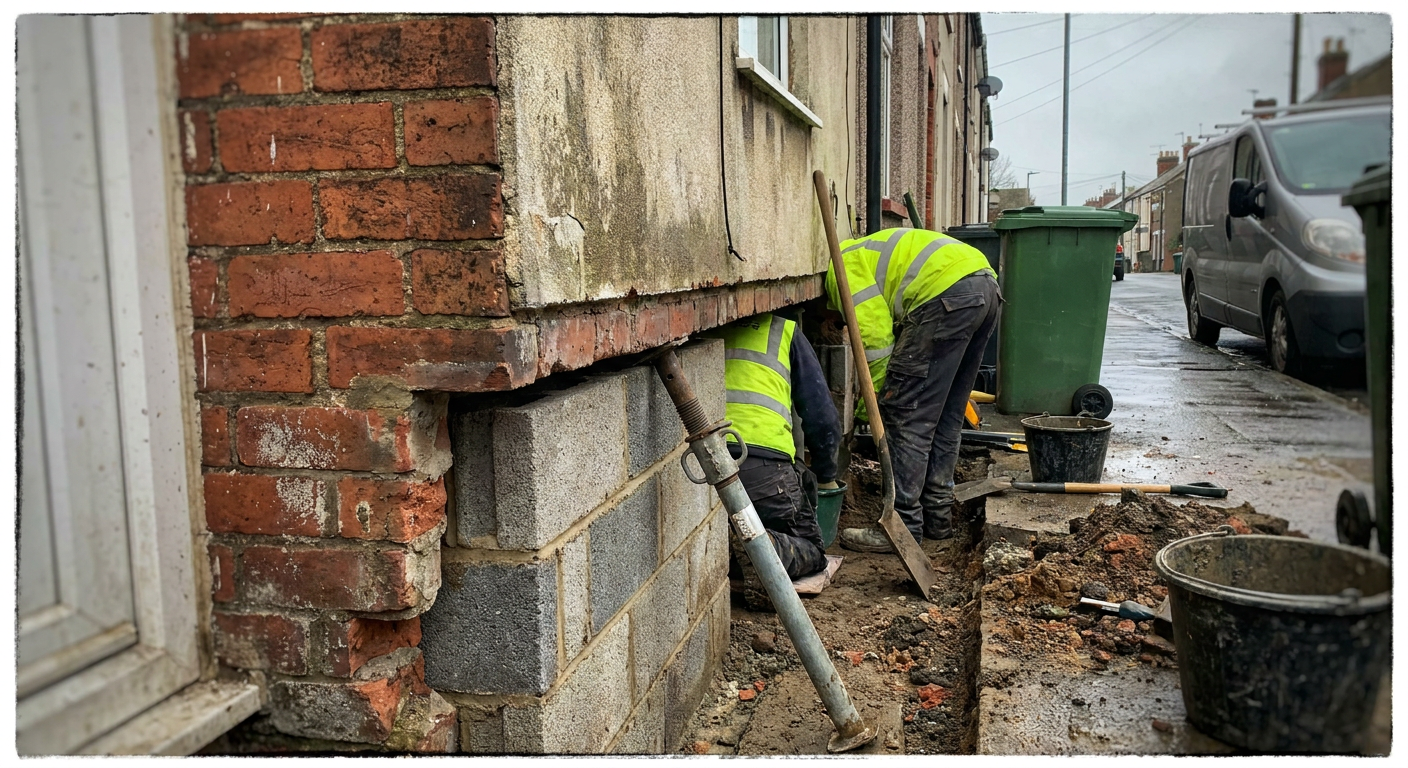
Mass concrete or mini piling for your home
The ground beneath your walls determines which method suits. Each approach stabilises a moving foundation differently.
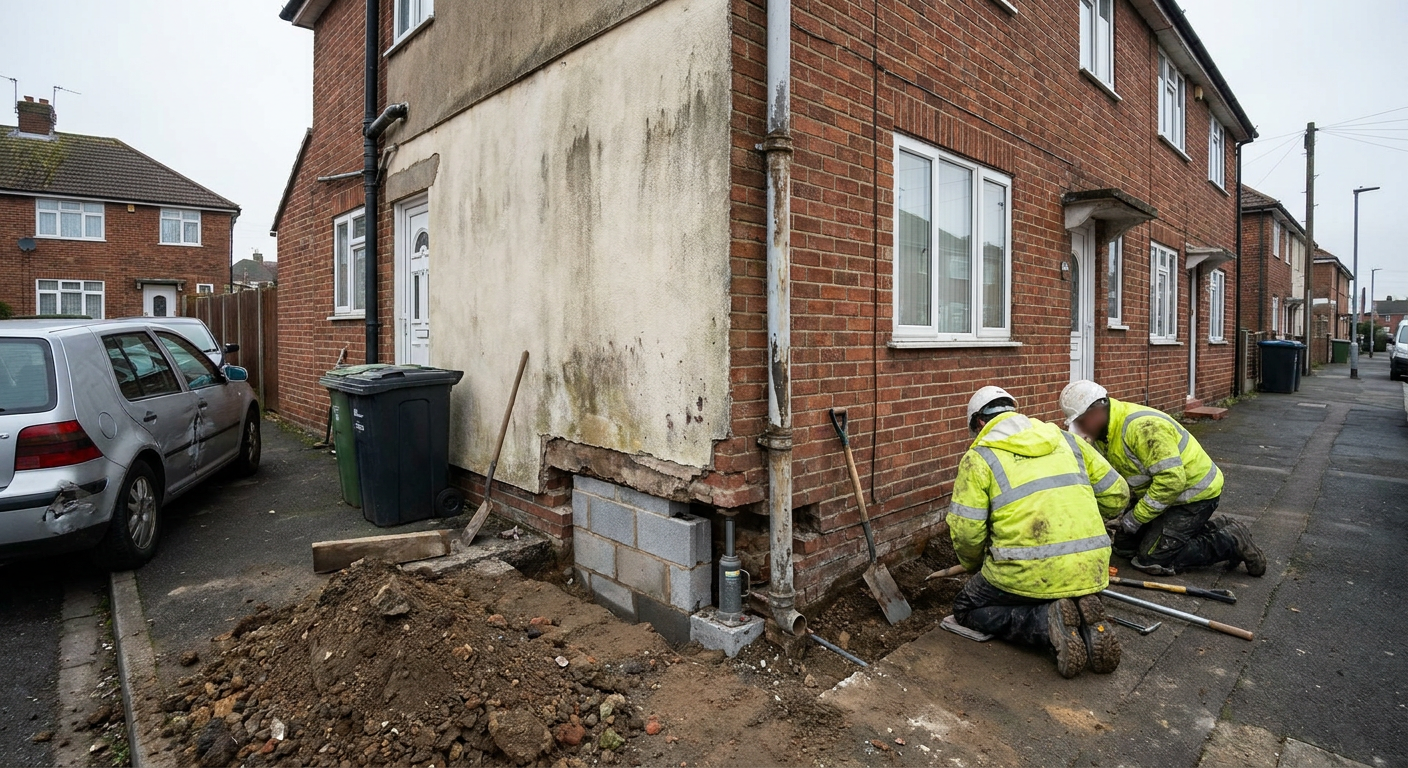
How it works
- Mass concrete underpinning
- Concrete is poured into bays dug below the existing footing.
- Mini piled underpinning
- Steel piles are driven deep into the ground to support the wall.
Ground conditions
- Mass concrete underpinning
- Suits firm soil at a reachable depth below the surface.
- Mini piled underpinning
- Used where soft or wet layers extend far down.
Access needs
- Mass concrete underpinning
- Requires space along the wall for excavation and mixing.
- Mini piled underpinning
- Uses smaller rigs that fit tighter spaces.
Typical housing
- Mass concrete underpinning
- Often used for traditional underpinning old houses with shallow footings.
- Mini piled underpinning
- Chosen where compressible silt makes shallow pours risky.
A structural specialist examines the soil and advises which method suits your home before any work begins.
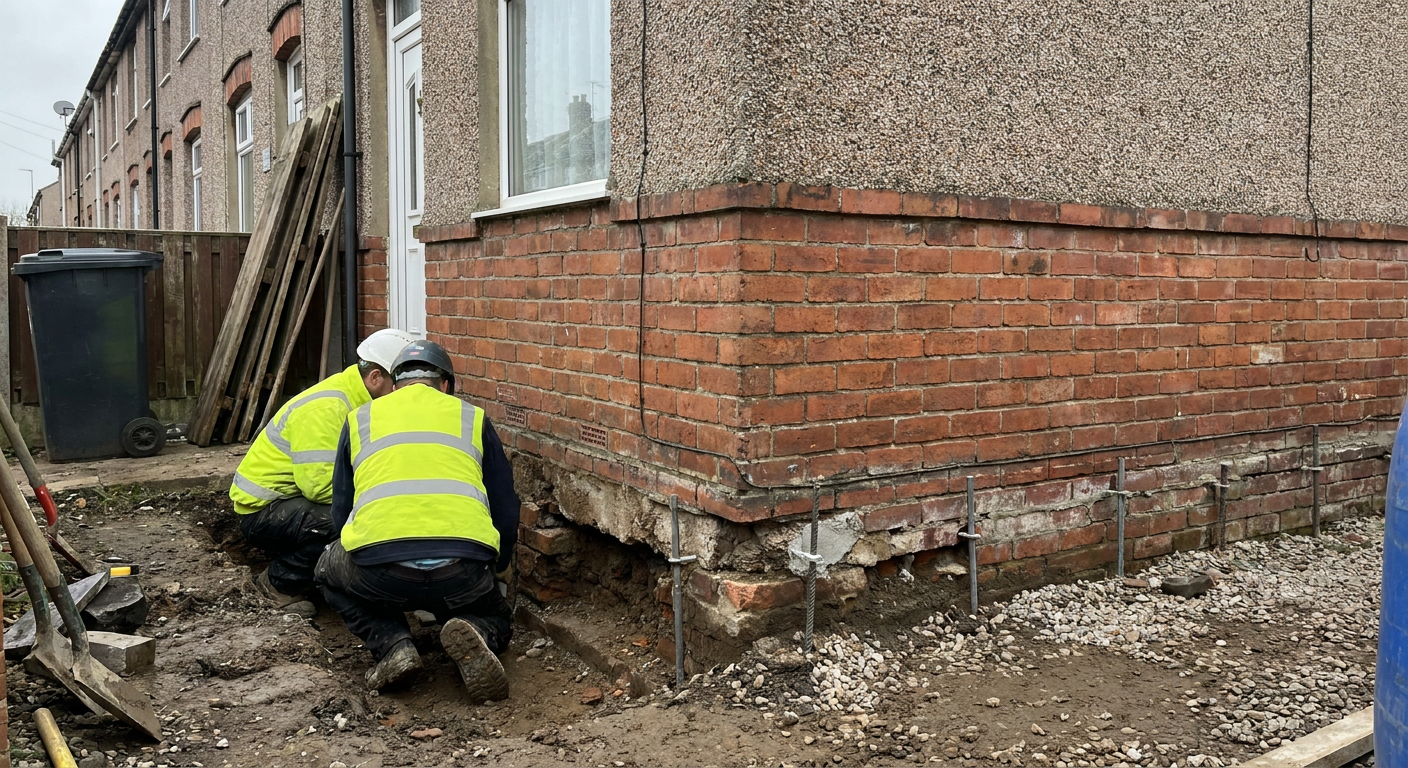
Foundation repair in Bulverhythe
Enquiries about subsidence in this part of the coast are handled locally. The specialist firm assesses the site and carries out the necessary work. Homes near West St Leonards share similar ground conditions, so experience from underpinning west St Leonards properties applies directly here.
- Pre-1919 housing stock
- Around 40.7 percent of homes here were built before 1919, often on shallow brick or stone footings that move over time.
- Marshland and alluvial ground
- Low-lying marshland and alluvial deposits create high water tables and compressible silt strata, sometimes requiring pile and beam methods instead.
What affects the cost of underpinning
Every home settles differently. The extent of the movement, the soil type and the access available all change the scope of the work a specialist must plan.
- Depth of the new concrete
- How deep underpinning dug determines the volume of concrete and the shoring required to keep the wall safe during each pour.
- Number of bays needed
- Bay by bay concrete underpinning proceeds in short sections. More affected wall length means more stages to complete.
- Soil conditions
- Soft or wet ground demands extra support around each pit, adding materials and time to the job.
- Access to the site
- Narrow side returns or small rear gardens limit how spoil is removed and how concrete reaches the trench.
The specialist explains the full cost of your particular job before anything is agreed or signed.
Find out what the crack in your wall means
Sending an enquiry costs nothing. You are not committing to any work. A specialist firm reviews the details and explains what the movement in your home requires.
What happens next
- You describe the cracks or movement you have noticed at home
- A specialist firm reviews the details and arranges a survey if needed
- They explain their findings and set out the recommended repair