Local geology
Hastings Beds sandstone and Wadhurst clay under homes
The rock and clay beneath your home determine how the ground reacts to water and weight. Find out why Hastings Beds sandstone and Wadhurst clay cause specific crack patterns, and what a specialist looks for when investigating movement.
The layers beneath Hastings
Hastings sits on alternating bands of sandstone and clay known as the Hastings Beds. These layers were laid down millions of years ago and now sit directly beneath streets in areas like Silverhill, St Leonards and the Old Town. The two main materials behave in completely different ways when they get wet or dry out.
Sandstone is rigid. It holds its shape under the weight of a house and drains water through its pores. Clay does the opposite. Wadhurst clay swells when it absorbs rain and shrinks during dry spells. A house built where both materials meet sits on ground that moves unevenly.
Knowing which layer supports your foundations matters because it dictates the type of movement you will see. A subsidence survey identifies the soil profile so the right repair method can be chosen. Without that information, work might address the symptom rather than the cause.
How Wadhurst clay moves a wall
Wadhurst clay responds slowly to changes in moisture. After heavy autumn rain, the ground absorbs water and expands. During a long summer, tree roots draw moisture out and the clay contracts. This seasonal cycle repeats every year, but the damage accumulates over decades.
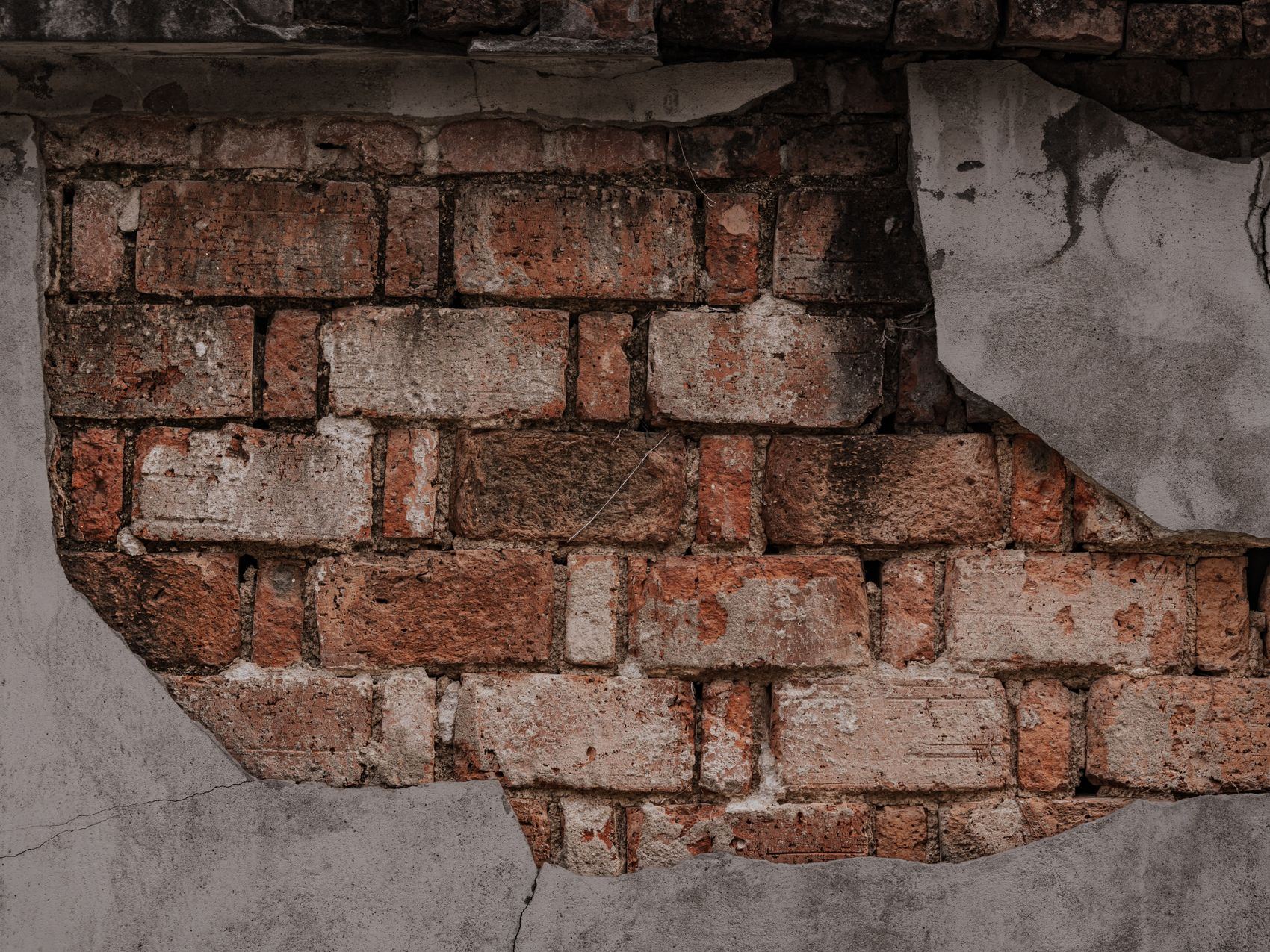
When clay shrinks beneath one corner of a house, that section drops while the rest stays put. The result is usually a diagonal crack, wider at the top than the bottom, running from a window or door frame toward the eaves. If you notice this pattern, monitoring the crack with tell-tales shows whether the movement is still active or happened years ago.
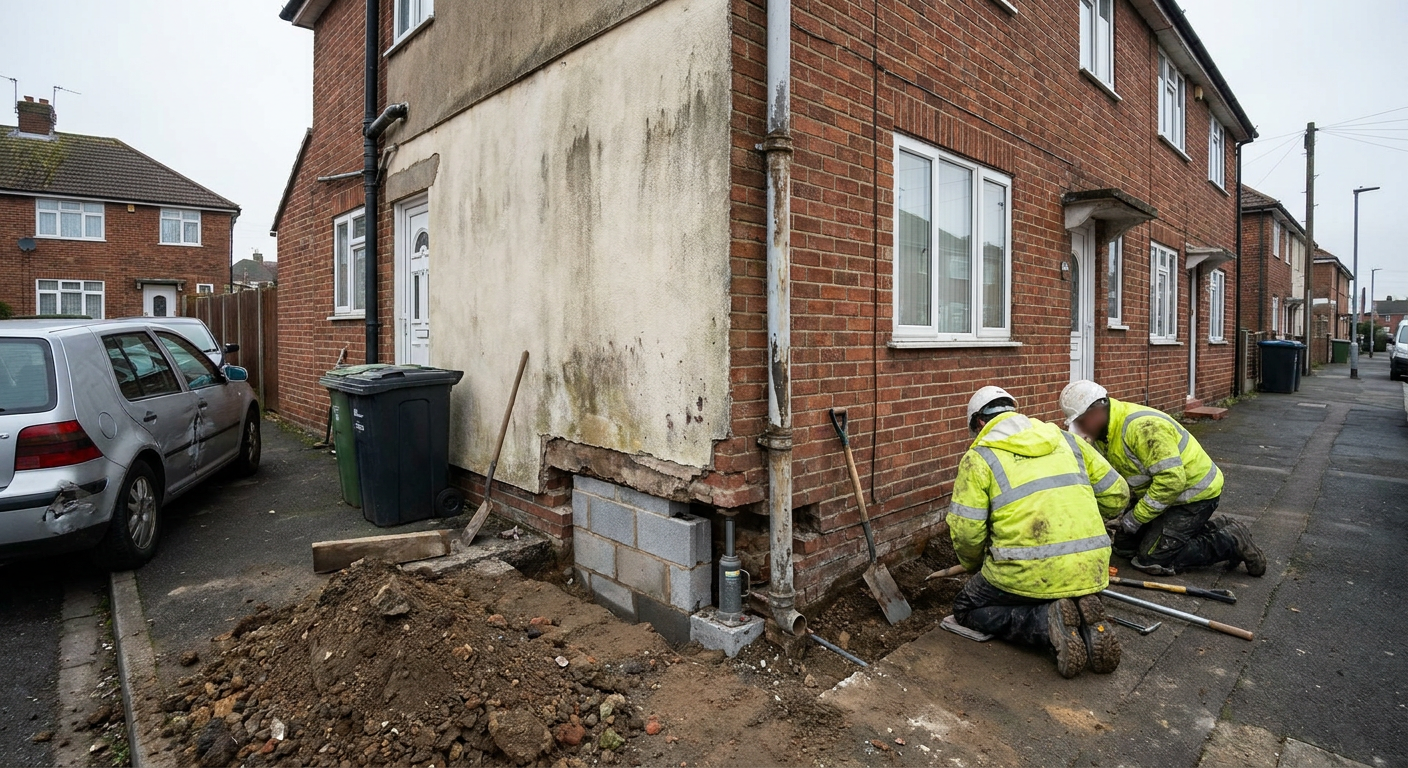
Because the shrinkage is driven by moisture loss, the repair must stabilise the ground below the affected footing. Mass concrete underpinning replaces the shallow foundation with a deeper one that reaches stable clay. Alternatively, resin injection compacts the loose material without excavating large trenches. The choice depends on how deep the active clay extends and how much access the site allows.
Sandstone and the risk of washout
Hastings Beds sandstone is strong, but it is porous. Water flows through it easily, especially where the rock is fractured or sits close to the surface. Over time, running water carries fine sand particles away from beneath a footing. This process leaves voids that the foundation eventually sags into.
Homes near ghyll streams or natural spring lines are particularly exposed. The water table in these areas fluctuates, and the constant flow accelerates erosion. Unlike clay shrinkage, which produces predictable diagonal cracks, washout often causes sudden settlement. Doors jam overnight, or a floor develops a noticeable slope within weeks.
Repairing this kind of movement requires stopping the water first. Drainage work redirects the flow away from the foundations. Once the ground dries, mini piled underpinning can transfer the load of the house past the weakened sandstone to a firmer stratum below. A specialist contractor assesses the depth required before any piling begins.
Why the boundary between layers matters
Many houses in Hastings are built across the line where sandstone meets clay. One end of the building rests on solid rock while the other sits on shrinking soil. The differential movement twists the structure, producing cracks that run horizontally along mortar joints or step diagonally up a brickwork face.
This mixed geology makes standard repairs difficult. Underpinning the clay side alone might leave the sandstone side unsupported if washout occurs later. Structural monitoring tracks both ends of the house simultaneously, recording which sections move and when. The data tells the specialist firm exactly where to concentrate their work.
Foundation repair on split ground often combines methods. Concrete pads might support the clay end while resin stabilises the sandy sections. Understanding the local geology prevents wasted effort and ensures the repair addresses the actual behaviour of the ground beneath your home.
What happens after an enquiry
Spotting a crack linked to clay shrinkage or sandstone washout means the ground needs investigation. Sending details about the location, size and direction of the crack allows a specialist firm to determine whether a site visit is necessary. They bring equipment to measure levels, dig trial pits or install monitoring points.
The survey findings dictate the repair. Shallow movement on clay might need only crack stitching and seasonal observation. Deeper instability could require full underpinning. Every recommendation ties back to the specific geology beneath the walls, because treating Hastings Beds sandstone the same way as Wadhurst clay leads to failed repairs and returning cracks.
Describe the cracks you have noticed
Send details about the movement in your home. A specialist reviews the description and advises whether a site visit or further monitoring is needed. There is no obligation to proceed with any repair.
- No commitment required
- Reviewed by a specialist
- Advice based on facts