Local guide
Sandstone caves and cellars beneath Hastings Old Town
Hastings Old Town sits on sandstone riddled with old caves and cellars. These voids affect how the ground supports a home. Find out what signs to look for in your walls and how a specialist firm checks the ground below.
Why Old Town ground is different from the rest of Hastings
The sandstone under Hastings Old Town is not solid rock all the way down. For centuries, people cut into it to store goods, smuggle cargo or simply extend a cellar. Those excavations left voids that run beneath streets and houses.
A home built over one of these spaces rests on ground that behaves differently from the clay found elsewhere in town. The sandstone itself is strong, but an empty space below a footing changes how weight transfers through the soil. Read more about the local geology in the guide to [Hastings Beds sandstone and Wadhurst clay under homes](/stories/hastings-beds-sandstone-and-wadhurst-clay-under-homes).
Rainwater finds its way into these cavities too. Over decades, water washes loose material out of the sandstone, widening gaps that started as small tunnels. A subsidence survey in this part of town must account for both human excavation and natural erosion before anyone decides what repair the home needs.
Signs that a void is affecting your home
Cracks caused by underground voids tend to appear suddenly rather than slowly widening over years. You might notice a door that used to close properly now catching on the frame, or a floor that slopes towards one corner of the room.
Look at the external brickwork near the ground. Diagonal cracks stepping through the mortar joints often point to a specific area where support has been lost. Inside, check where walls meet ceilings. Gaps opening up there suggest the wall is rotating away from the structure above it. The guide on the [difference between settlement and subsidence and heave](/settlement-heave-or-subsidence) explains why the pattern matters.
Not every crack means a cave is collapsing underneath you. Seasonal movement happens everywhere. But if a crack opens wider after heavy rain, or if you can see daylight through a gap in an external wall, the ground below needs investigation. A structural engineer will want to know exactly when you first noticed the movement.
How specialists investigate what lies below
Finding a void requires physical access to the ground. A specialist firm digs trial pits next to the affected walls to expose the foundation and the soil directly beneath it. They also use boreholes to sample deeper layers where caves are suspected. The process is described in the notes on [trial pits and boreholes](/stories/trial-pits-and-boreholes-what-lies-below-your-walls).
Ground penetrating radar helps map larger cavities without digging everywhere, but it cannot replace a physical inspection of the footing itself. The specialist needs to see whether the concrete or brickwork of the foundation is intact, cracked or suspended over empty space.
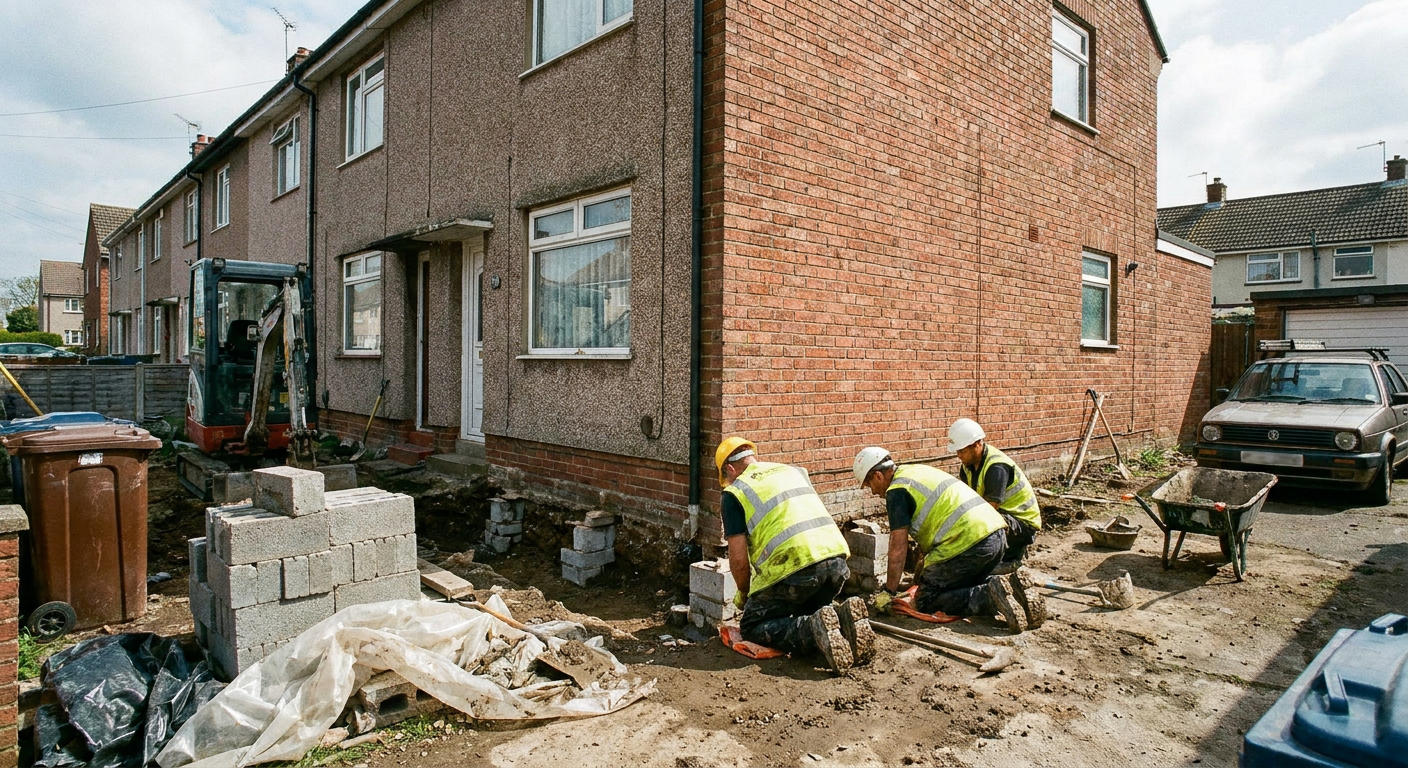
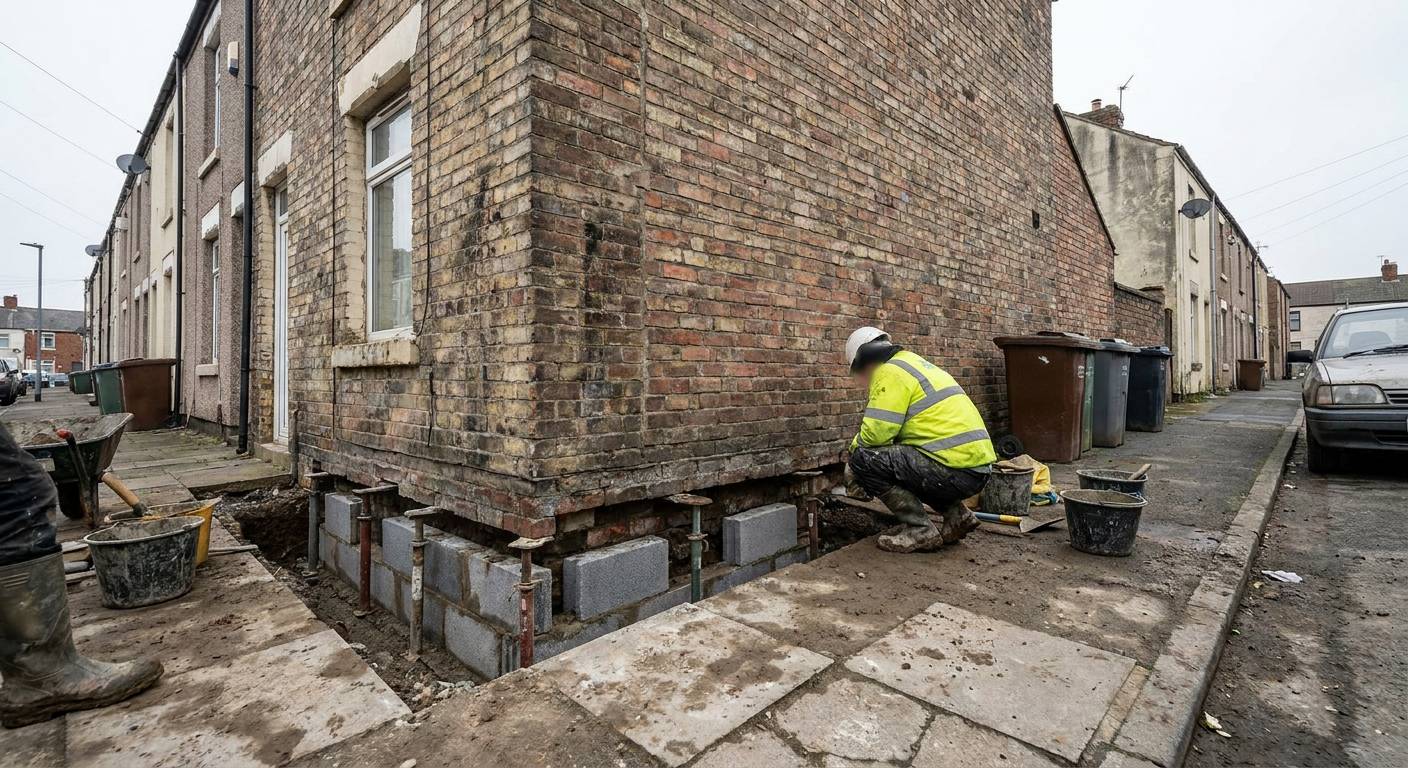
In Old Town, access complicates this work. Streets are narrow and gardens are small. Bringing machinery in to dig trial pits requires planning, especially around listed buildings. The realities of [site access for underpinning on narrow Hastings streets](/stories/site-access-for-underpinning-on-narrow-hastings-streets) shape which investigation methods are practical for any given house.
Repairing foundations over sandstone voids
Once a void is mapped, the repair depends on its size and depth. Shallow cellars directly under a footing are sometimes filled with mass concrete to restore solid support. This method works where the space is accessible and the surrounding rock is stable enough to hold the new weight. The steps involved in [mass concrete underpinning](/the-repair/mass-concrete-underpinning-hastings) apply here, though the presence of old stonework adds complexity.
Deeper caves call for piles driven past the void into competent ground below. Mini piling bypasses the empty space entirely, transferring the load of the house to rock that has not been disturbed. Homes in the tightest parts of Old Town often need [mini piled underpinning](/the-repair/mini-piled-underpinning-hastings) because the rigs are smaller and fit into confined yards.
Resin injection stabilises loose sand around a void but does not fill a large cave. It is useful where water has washed out fine particles and left the remaining ground spongy. A specialist firm decides which approach suits the specific conditions they find during the survey.
Living in a conservation area while work happens
Old Town falls within a conservation area, and many homes carry listed status. Any ground investigation or foundation repair must follow rules that protect the historic fabric of the building. Planning consent is usually required before a specialist firm starts digging.
The constraints affect everything from the size of the trial pit to the type of concrete used. Work on a [listed building in a conservation area](/stories/underpinning-a-listed-building-in-a-conservation-area) takes longer to arrange because drawings and method statements go through additional scrutiny. A contractor experienced in heritage buildings will build this timeline into their programme from the start.
If you own a converted flat rather than a whole house, responsibility for arranging the work splits between leaseholders and the freeholder. Understanding [who arranges underpinning for a converted flat](/stories/underpinning-a-converted-flat-who-arranges-the-work) prevents delays once the structural problem is confirmed.
Ask about the ground beneath your home
Send details of what you have noticed. An adviser will read them and explain whether the signs point to a void, without committing you to any work or cost.
- No obligation to proceed
- Read by a local adviser
- Plain advice, no jargon