Local guide
Spring lines and ghyll streams under Hastings homes
Ghyll streams run through steep valleys across Hastings, and spring lines seep from the hillsides above them. Both keep the ground wetter than you might expect. Find out what that water means for your foundations.
What a ghyll stream is and where it runs
A ghyll is a narrow, steep-sided valley carved by water over thousands of years. Hastings has many of them, running down from the high ridges toward the coast. Some are obvious, lined with trees and crossed by footbridges. Others have been culverted or built over, so the water still flows but you cannot see it from the street.
The ground beside a ghyll is made up of material the stream has moved and deposited. It tends to be loose, sandy and saturated. Houses built on or near these old channels sit on soil that behaves differently from the firmer ground a few streets away. The sandstone and clay layers beneath the town hold water in specific bands, and a ghyll often follows the line where those bands meet. Read more about the [Hastings Beds sandstone and Wadhurst clay under homes](/stories/hastings-beds-sandstone-and-wadhurst-clay-under-homes) to see how the geology shapes the problem.
Spring lines and why they soften the ground
A spring line is the level on a hillside where groundwater reaches the surface. In Hastings, rain soaks into the permeable sandstone at the top of a slope until it hits a layer of clay it cannot pass through. The water then travels sideways along that clay until it seeps out, often in a garden or under a road.
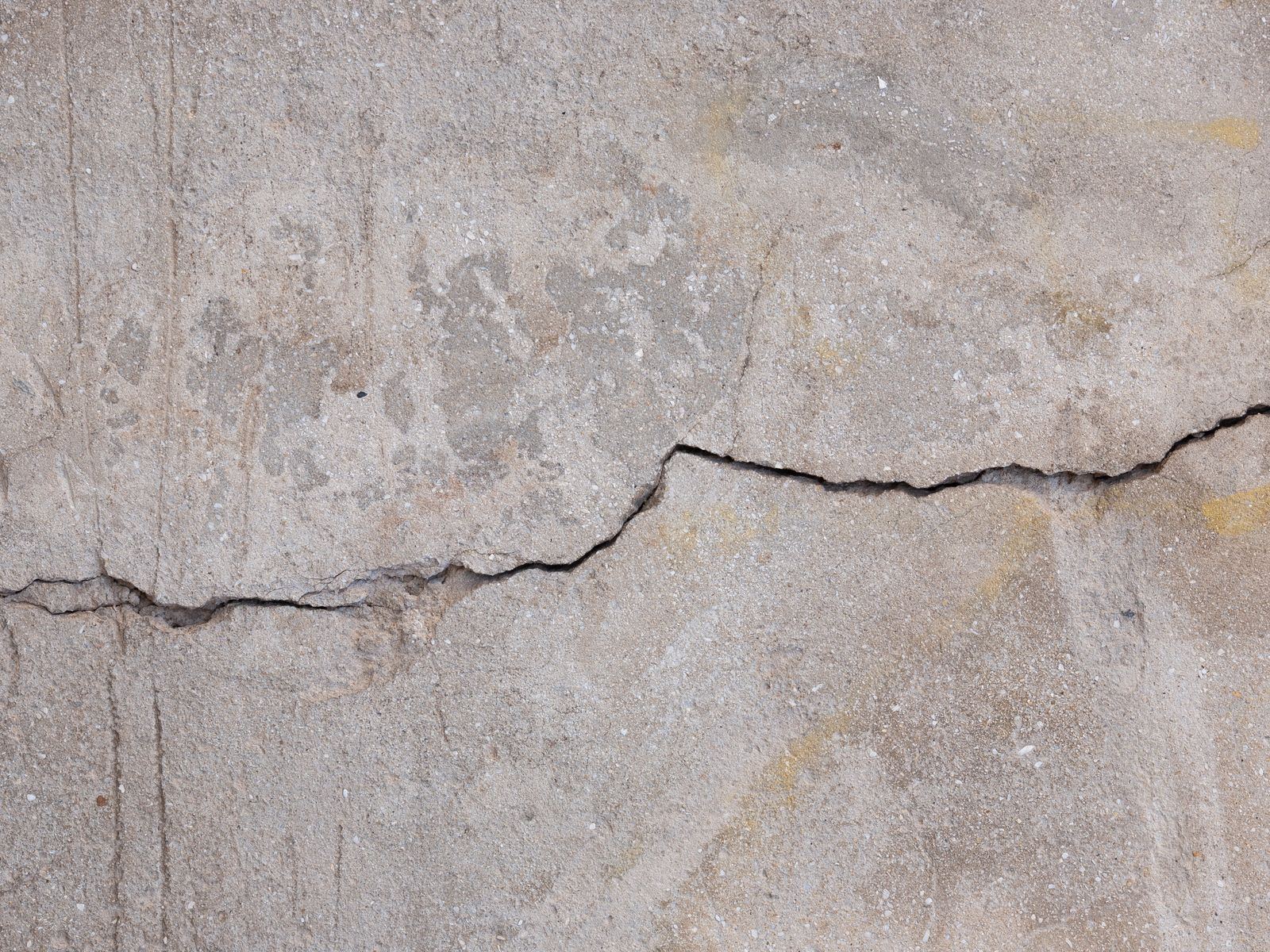
That constant seepage keeps the surrounding earth soft. Foundations bearing on this softened ground can settle unevenly. You might notice a door sticking, a crack opening above a window frame, or a floor sloping toward one side of the room. Because the water source is continuous, the movement does not stop after a dry summer. A specialist firm carrying out a [subsidence survey in Hastings](/the-repair/subsidence-survey-hastings) will look for these seepage points and record how much moisture the soil holds at different depths.
How moving water affects shallow foundations
Many older homes in the town were built with shallow brick or stone footings. They rely on the soil staying firm. When a ghyll stream or a spring line washes fine particles away, the soil loses volume. The footing drops into the space left behind.
This process speeds up after heavy rain. Water that normally trickles through the ground arrives in larger volumes, picking up more sand and carrying it downhill. Cracks that appear or widen in autumn often follow this pattern. Understanding [why walls move after heavy rain](/cracks-after-heavy-autumn-rain) helps separate seasonal shrinkage from something caused by flowing water.
If the loss of support continues, the wall above begins to rotate. Tapering cracks, wider at the top than the bottom, are a common sign. Knowing the [difference between settlement, subsidence and heave](/settlement-heave-or-subsidence) matters here, because the repair method depends on which process is actually happening beneath your home.
Finding out what lies below your walls
You cannot fix a foundation problem without knowing what the ground is doing. Specialist firms dig trial pits or sink boreholes to inspect the soil directly beneath the footings. This reveals whether the clay is shrinking, whether sand is being washed out, or whether an old culvert has collapsed.
[Trial pits and boreholes show what lies below your walls](/stories/trial-pits-and-boreholes-what-lies-below-your-walls) in a way that surface surveys cannot. In areas where ghyll streams have been buried, the investigation might uncover a channel filled with soft silt that was never compacted properly when the houses went up.
Once the cause is clear, the right repair can be specified. Sometimes the solution is [resin injection to stabilise the ground](/the-repair/resin-injection-hastings), filling voids and binding loose particles together. Where the damage is deeper, [mini piled underpinning](/the-repair/mini-piled-underpinning-hastings) drives piles past the soft zone into stable strata below.
Repairing foundations on wet, sloping ground
Homes on slopes face extra forces. Gravity pulls the building downhill while the softened soil offers less resistance. Retaining walls in gardens often show the strain first, bulging or cracking as the earth behind them becomes waterlogged. [Retaining walls in Hastings gardens](/stories/retaining-walls-in-hastings-gardens-bulges-and-cracks) fail for exactly this reason.
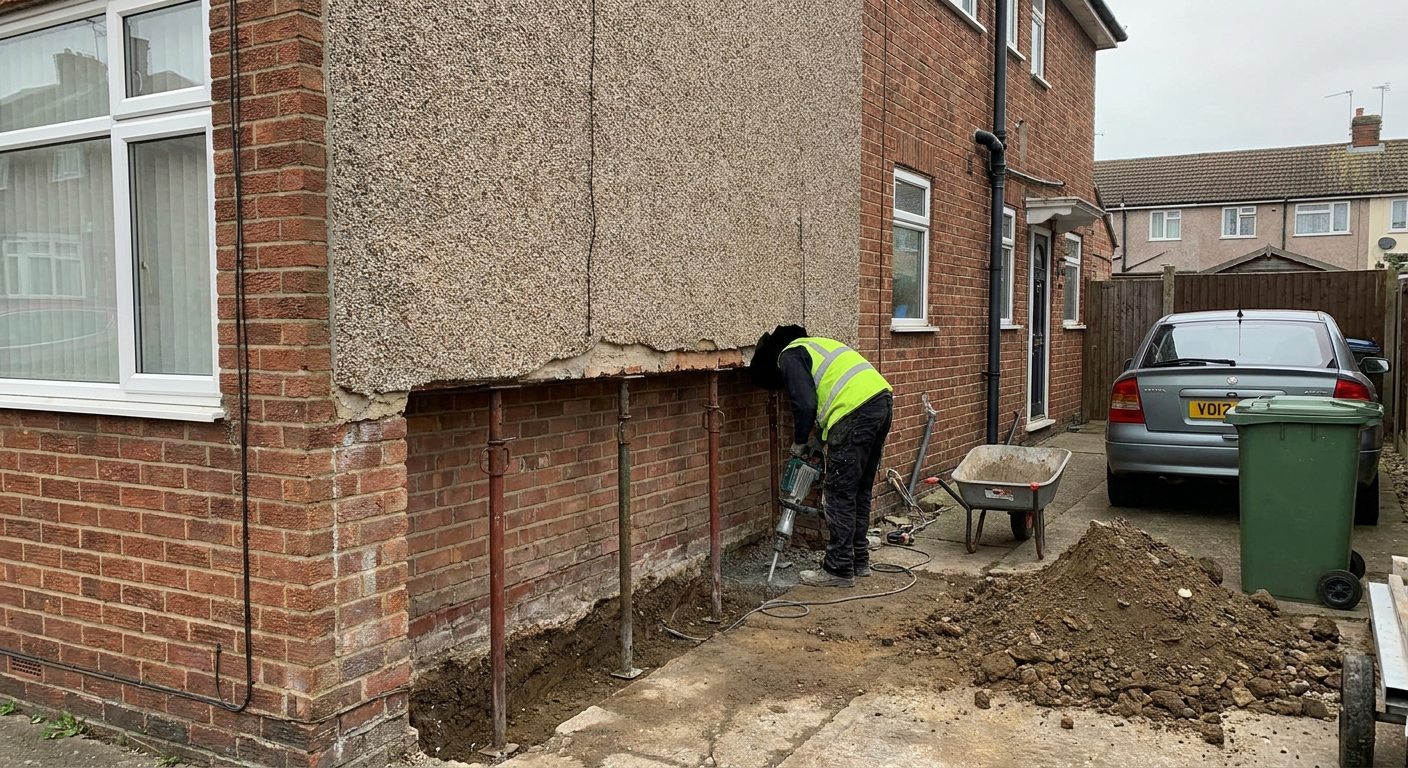
When the main house needs work, the specialist contractor will choose a method suited to the site. [Mass concrete underpinning](/the-repair/mass-concrete-underpinning-hastings) involves excavating sections beneath the existing footing and pouring new concrete in a controlled sequence. On very steep sites, access becomes the main constraint. Narrow streets and stepped paths limit the size of machinery that can reach the work area, so the [site access for underpinning](/stories/site-access-for-underpinning-on-narrow-hastings-streets) must be planned carefully before any digging starts.
After the structural work is done, the visible damage inside the home still needs attention. [Crack repair](/the-repair/crack-repair-hastings) restores the plaster and brickwork once the movement has stopped.
Keeping watch after the repair
Fixing the foundation does not change the fact that water still flows through the ghyll or seeps along the spring line. The ground will always be wetter here than on a ridge. So monitoring the repair tells you whether the chosen method is holding.
Specialist firms install gauges across cracks or set reference points on walls to measure tiny movements over months. [Structural monitoring](/the-repair/structural-monitoring-hastings) produces a record you can read. If the numbers stay flat, the repair is working. If they creep, the specialist knows early enough to adjust the approach rather than wait for another visible crack.
For anyone living above a ghyll or near a spring line, understanding where the water goes is the first step. The ground under Hastings is shaped by it, and the homes built on that ground have to live with the consequences.
Ask about subsidence near a ghyll or spring
Send a description of what you have noticed at home. A specialist firm will review it and advise whether a site visit is needed. There is no obligation to proceed.
- No obligation to proceed
- Read by a local specialist
- Plain advice, not sales talk