Guide
Water washing out sandy ground beneath a foundation
Sandy soil washes away when water flows through it, leaving voids under footings. Find out how leaking drains and heavy rain move the ground beneath your home and what a specialist firm does to stop it.

How water moves sand beneath a home
Sand holds together when dry or damp, but flowing water carries the grains away. Beneath a home in Hastings, this happens slowly. A small leak in a drain pipe, or groundwater moving along a natural path, picks up fine particles and takes them downhill.
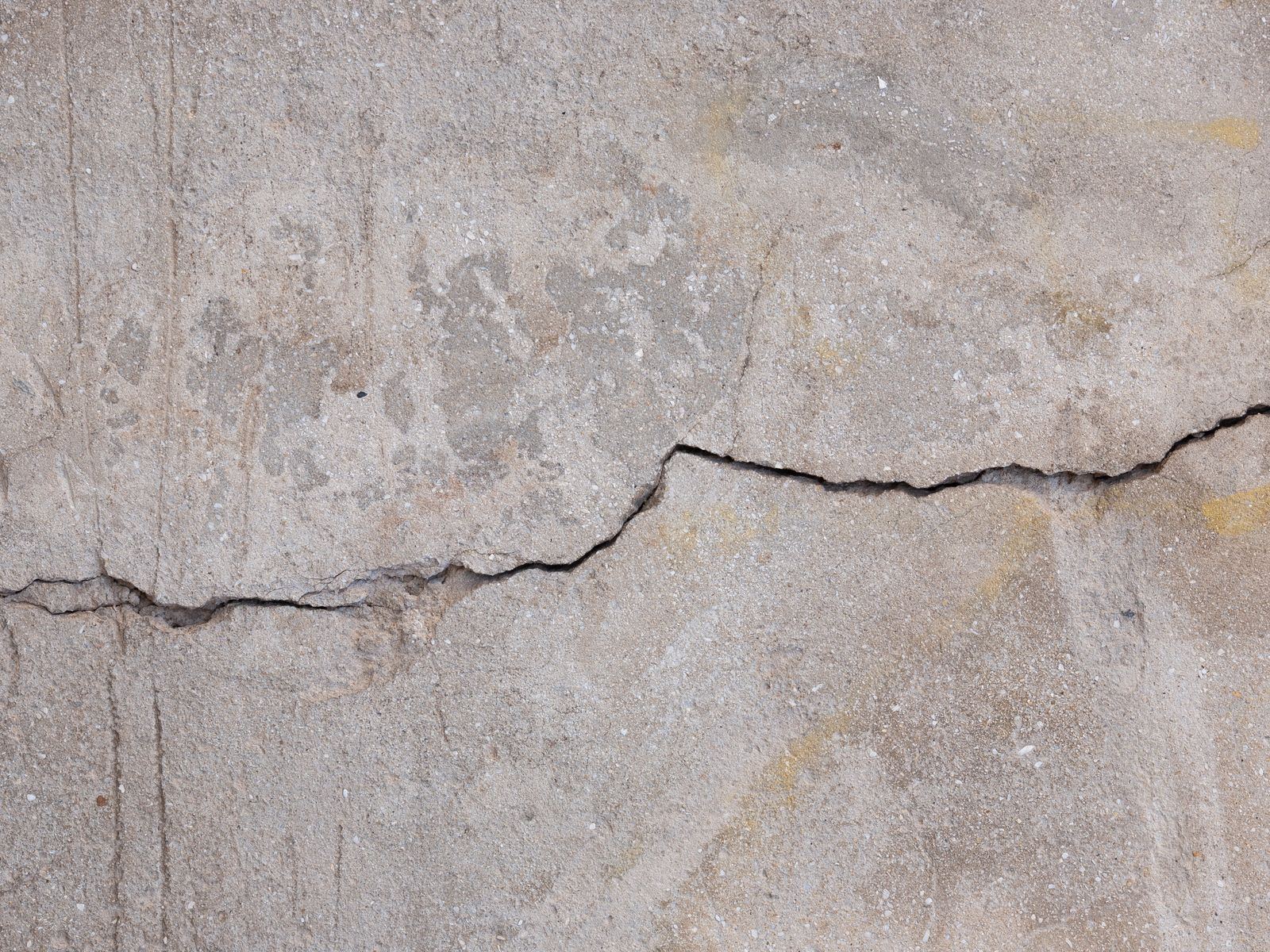
Over months, the space left behind grows. The footing above it loses support. Walls settle into the gap, and cracks open where the masonry bends. This is different from clay shrinking in summer. Sand does not swell back when it gets wet again. Once the grains are gone, the void stays until something fills it.
Many older streets sit on the Hastings Beds, where layers of sandstone and loose sand alternate. You can read more about the local geology in the guide to [Hastings Beds sandstone and Wadhurst clay under homes](/stories/hastings-beds-sandstone-and-wadhurst-clay-under-homes). Homes built on these mixed layers are especially prone to material being washed out from under shallow foundations.
Leaking drains and broken pipes
A cracked clay drain is the most common source of moving water under a house. Joints fail, tree roots push through old pipes, and wastewater escapes into the surrounding soil. Because the flow is constant, even a small leak transports a surprising amount of sand over time.
The first sign is often a crack near a downpipe or along an internal wall close to the bathroom. If you notice one, learning [how to monitor a wall crack](/how-to-monitor-a-wall-crack) gives you a way to track whether it is still growing before anyone arrives.
A subsidence survey pinpoints the leak and maps the void below the floor. The specialist firm digs trial pits or uses cameras inside the drainage run to find the exact failure point. You can see what that investigation involves on the [subsidence survey in Hastings](/the-repair/subsidence-survey-hastings) page. Fixing the pipe stops the water, but the missing ground still needs replacing or stabilising before the wall settles further.
Heavy rain and surface runoff
Autumn storms push large volumes of water across gardens and against external walls. If gutters overflow or ground levels have been raised against brickwork, that water sinks straight down beside the footing. On sandy sites, it acts like a river in miniature, pulling grains out from under the edge of the foundation.
Cracks that appear after heavy autumn rain often follow this pattern. They tend to be wider at the top than the bottom, showing that the corner of the house has dropped. The guide on [cracks after heavy rain](/cracks-after-heavy-autumn-rain) explains why walls move during the wettest weeks of the year.
Surface water problems are worse on sloping sites. Gravity pulls the runoff toward the lower side of the house, concentrating the erosion there. Homes built into hillsides around Hastings sometimes show movement only on their downhill face, because that is where the water collects and the sand washes out fastest.
Spring lines and underground streams
Some parts of Hastings have natural springs where groundwater reaches the surface. These spring lines follow the boundary between impermeable clay and permeable sand. Water travels along the sand until it hits the clay, then rises. If a house sits on that path, the constant flow can hollow out the ground beneath the footings without any broken pipe causing it.
The guide to [spring lines and ghyll streams under Hastings homes](/stories/spring-lines-and-ghyll-streams-under-hastings-homes) describes how these hidden watercourses behave. They are difficult to spot because the flow happens entirely underground, but the damage they leave is familiar: uneven floors, sticking doors, and diagonal cracking in plaster.
Dealing with a spring line usually means redirecting the water rather than just filling the void. A specialist firm installs land drains or French drains to intercept the flow before it reaches the foundation. Without that step, any repair to the ground will eventually wash out again.
Filling the void and repairing the ground
Once the water source is stopped or redirected, the empty space under the footing must be dealt with. Leaving it risks further settlement every time the ground vibrates or gets wet. Two common approaches are resin injection and mass concrete underpinning.
Resin injection pumps expanding material into the void through small drilled holes. It compacts loose sand and fills gaps without large excavations. The page on [resin injection for subsidence in Hastings](/the-repair/resin-injection-hastings) sets out what to expect when a specialist firm uses this method. It works well where access is tight or the void is relatively shallow.
Where the ground loss is deep or the footing itself has failed, mass concrete underpinning replaces the missing support entirely. Sections of soil are dug out below the existing foundation and filled with fresh concrete in stages. The guide to [mass concrete underpinning in Hastings](/the-repair/mass-concrete-underpinning-hastings) walks through how the work proceeds bay by bay so the wall never loses all its support at once.
Monitoring movement after the repair
Stopping the water and filling the void does not mean the wall instantly returns to its original position. Masonry that has settled rarely lifts back up. The goal is to halt further movement so the cracks stop growing.
After the ground repair, a specialist firm monitors the wall to confirm it has stabilised. Small gauges fixed across a crack record tiny changes over weeks or months. The [structural monitoring in Hastings](/the-repair/structural-monitoring-hastings) page explains how these readings prove whether the problem is resolved or if more work is needed.
Only when the movement has stopped should cosmetic repairs begin. Filling and stitching a crack too early means doing it twice. The [crack repair in Hastings](/the-repair/crack-repair-hastings) guide covers how specialists restore the wall once the structure is steady again.
Ask about a crack or a sinking floor
Send a description of what you have noticed at home. Someone will reply with plain advice on whether it needs a survey, with no obligation to book any work.
- No obligation to proceed
- Plain advice first
- Local knowledge